[pageLogInLogOut]

#Digital Printing

Keeping print inclusive: Empowering women in the print industry
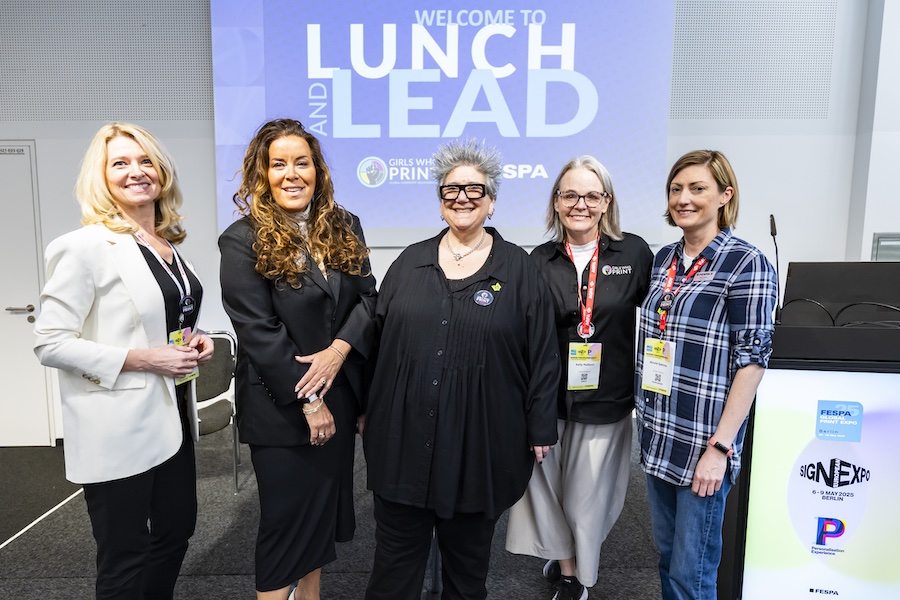
Danna Drion (second from left) hosting the FESPA Lunch & Lead session at FESPA 2025, alongside the Board members of Girls Who Print Europe
Across all industries, cultivating a diverse and inclusive workplace is increasingly recognised as valuable and essential to long-term success. However, despite the print industry’s significant advancements in technology and innovation, visible representation of women remains limited. As the sector grapples with low recruitment, it’s important to challenge outdated perceptions. Creating real change, however, requires collective effort - no single company can do it alone.

By Danna Drion, General Manager Marketing and Product Management at Mimaki Europe

As we mark International Women’s Day on 8th March, it is an important moment not only to celebrate the achievements of women across industries, but also to reflect on the tangible actions we can take to build a more inclusive and representative future for print.

The importance of empowering women in the print industry

So, how can we empower the women already working within the industry, and provide them with the visibility and support they need to succeed?

Studies have identified that the lack of female representation can leave female employees feeling isolated. According to the KPMG Women’s Leadership Study, over 80% of women felt encouraged to pursue leadership positions when they saw women already in those positions. Ensuring that both women and men are equally recognised is essential in transforming the face of what the print industry is. This can take many forms – from hosting seminars and talks to simply showcasing female talent on company social media platforms. In light of that, women-led organisations like Girls Who Print are also crucial in bridging these gaps. They offer mentorship, provide advice, and a sense of community that helps women navigate the unique challenges of the industry with confidence. Mentorship programmes are especially valuable, offering aspiring female professionals the chance to learn from seasoned print leaders and further their own career and skillset.

Creating change also means looking beyond the companies themselves – to customers and collaborators. Supporting women-led initiatives and creatives is key. Mimaki, for example, has collaborated with several inspiring female artists and designers, such as Tessa Koops, Claire Vos and Sigrid Calon. Furthermore, supporting non-profits like Tiny Miracles, which employs women from marginalised backgrounds in India by providing a steady income, helps create more opportunities for women globally.

Attracting women to the industry: Changing perceptions

Another challenge arises in how to encourage a more diverse workplace in the first place. Print is often overlooked as a career path, unless you know of someone working within the industry, and this poses a problem in hiring diversely across the board. This is especially true for women, as print is frequently perceived as a traditional manufacturing sector, which has historically been male dominated. Such misconceptions can discourage women from seeing print as a viable or inspiring career option.

In reality, the print industry is incredibly diverse and creative, spanning interior décor, signage, medical 3D printing prototypes and more. It’s not just about production, it’s about technology, innovation, and design. With the growing use of cutting-edge technologies like robotics and artificial intelligence, the industry now requires highly skilled employees who can operate and manage complex machinery.

To attract more women – and more diverse talent in general—it’s crucial to shift the narrative. Print is no longer just about machines and manufacturing – it’s a forward-looking, technology-driven industry where people with diverse skillsets can thrive. Rebranding the print industry as a dynamic and creative career path is essential to attracting a more diverse workforce for a more inclusive future.

At Mimaki, we believe in leading by example. Personally, I’ve been mentoring students for many years at the University of Amsterdam, with a particular focus on empowering young women as they take their first steps into the job market. This experience has given me the opportunity to highlight the diversity, creativity, and technological innovation that define today’s print industry – and to inspire more women to see themselves as part of its future. Over the years, we have also developed an internship programme that continues to grow and deliver excellent results, helping young talent gain hands-on experience and contribute new perspectives to our teams.

A step in the right direction

While the print industry still faces challenges when it comes to female representation, the developments made in recent years are encouraging. More women are entering the field, taking on high-level positions and in general helping to shape the industry’s future. However, achieving true inclusivity and diversity will require continued effort from companies, organisations, and individuals. By supporting female talent, offering mentorship opportunities, and breaking down outdated perceptions about the industry, we can ensure that the print sector becomes a place where all employees, regardless of gender, feel valued and empowered.

To continue this conversation, check out Mimaki’s Women in Print episode, part of Mimaki’s Print Different podcast series: https://www.youtube.com/watch?v=Bt5XHbo-8Wk
More News from Mimaki Europe B.V.

#Digital Printing

Mimaki takes DTF performance to the next level with TxF300-75Plus

Mimaki Europe, a leading manufacturer of industrial inkjet printers and cutting plotters, announces the TxF300-75Plus, an upgraded model within its high-productivity direct-to-film (DTF) printing portfolio. Following on from the success of the original TxF300-75, this enhanced version reflects Mimaki’s commitment to continuously evolving its solutions to meet the changing demands of the market.

#Digital Printing

Express Print boosts production using an expanded fleet of Mimaki technologies

Express Print, a fast-growing Bulgarian provider of visual communication and soft signage solutions, has significantly enhanced its production workflow with a comprehensive portfolio of Mimaki digital printing systems. Based in Varna and active for more than 10 years, the company maintains a strong focus on the advertising sector. Over the years, it has steadily expanded its operations, driven by a clear vision to bring the full spectrum of large-format printing services in-house, avoiding outsourcing and ensuring complete control over production quality.

#Digital Printing

Erreà upgrades sportswear printing operations with seven high-performance Mimaki digital textile printers

Mimaki Europe, a leading manufacturer of industrial inkjet printers and cutting systems, has supported renowned Italian sportswear brand, Erreà in upgrading its digital textile printing operations with the installation of seven high-performance Mimaki systems. The new installation includes three Tiger600-1800TS industrial dye-sublimation printers and four TS330-1600 solutions, replacing a previous fleet of 28 digital printers. This major upgrade marks a significant step forward in Erreà’s production strategy, enabling the company to streamline its printing infrastructure while improving efficiency, colour consistency and overall production control.

#Digital Printing

Maximising print efficiency exploring ink saving features for modern print production

In today’s print industry, balancing quality, efficiency, and environmental responsibility is a growing priority. With increasing pressure on margins and sustainability, solutions that streamline production without sacrificing results are more relevant than ever.

More News on Digital Printing

#Digital Printing

Former ASOS CEO Nick Beighton joins Kornit Digital to help shape the future of on-demand fashion

Kornit Digital LTD. (NASDAQ: KRNT) ("Kornit" or the "Company"), a global leader in sustainable, on-demand digital fashion and textile production technologies, today announced it has appointed Nick Beighton, former Chief Executive Officer of ASOS, as a strategic advisor to the Company and its Board of Directors. His appointment reflects Kornit’s continued focus on strengthening its connection to global brands, retailers, and digital commerce platforms as the industry transitions toward on-demand production. The Company plans to nominate Mr. Beighton for election to the Board at Kornit’s 2026 Annual Shareholder Meeting.

#Digital Printing

FESPA confirms participation from leading exhibiting suppliers and brands for inaugural textile event

FESPA has confirmed a strong exhibitor line-up for its inaugural Textile show, a dedicated new event that will run as part of FESPA 2026, alongside co-located events: Global Print Expo, Personalisation Experience, European Sign Expo, WrapFest and the brand-new Corrugated.

#Digital Printing

UK Manufacturer Basic Prints commits to digital-first production model with dual investment in Kornit Digital’s Apollo

Kornit Digital, a global leader in sustainable, on-demand digital fashion and textile production technologies, today announced that UK clothing manufacturer Basic Prints has expanded its digital production capacity with a second Kornit Apollo Direct-to-Garment (DTG) system. This marks a strategic shift supporting Basic Prints’ digital-first manufacturing model.

#Digital Printing

Hybris Productions scales licensed apparel production moving from screen to digital with Kornit Digital

Kornit Digital, a global pioneer in sustainable, on-demand digital fashion and textile production technologies, today announced that Hybris Productions has adopted Kornit’s direct-to-garment (DTG) digital production technology to scale licensed apparel manufacturing with greater speed, design flexibility, and on-demand production capabilities supporting retail and e-commerce growth.

Latest News

#Raw Materials

New study shows low environmental impact by Cotton made in Africa Organic Cotton from Tanzania

Today, the Aid by Trade Foundation (AbTF) is announcing the results of a comprehensive life-cycle analysis (LCA) for cotton produced in Tanzania under the Cotton made in Africa Organic (CmiA Organic) standard. The study emphasises the small ecological footprint of CmiA Organic verified cotton. This can largely be traced back to the absence of synthetic pesticides, artificial fertilisers, and artificial irrigation. Consequently, CmiA Organic cotton can help the textile industry meet regulatory requirements as well as science-based targets. The results also show that the consequences of climate change threaten the livelihoods of these cotton farmers, even though the type of agriculture they practise barely contributes to climate change.

#Raw Materials

Better Cotton Initiative strengthens regenerative focus in standard update

The Better Cotton Initiative (BCI) has strengthened the regenerative focus of its field-level standard with the launch of a new version of its Principles & Criteria (P&C), which marks the next step in the organisation’s journey to becoming a regenerative standards system.

#Man-Made Fibers

Selenis and Kintra Fibers partner to scale 100% bio-based synthetic fiber technology

Selenis, a leading global specialty polyester manufacturer, today announced a strategic manufacturing partnership with materials science company Kintra Fibers to scale Kintra’s patented fiber-grade PBS resin - a 100% bio-based and biodegradable material designed for textile applications.

#Functional Fabrics

PERFORMANCE DAYS proves its relevance as the industry’s key meeting point

Held on March 18–19, 2026, PERFORMANCE DAYS once again confirmed its position as a leading international platform for functional textiles. A total of 3.366 trade visitors and around 560 exhibitors gathered in Munich, with the event already kicking off successfully on DAY 0, which received highly positive feedback for its interactive format. Despite challenging conditions caused by the public transport strike in Munich, the event saw strong attendance and a consistently high level of activity across both exhibition days.

TOP