[pageLogInLogOut]

#EU Textile Strategy

2024 is a turning point for the European textiles and clothing industry

From 6 to 9 June 2024, European citizens will vote for a new European Parliament and, based on the results, a new European Commission will be formed. In view of this important election, EURATEX publishes a Manifesto, presenting 15 requests which will help to ensure a competitive European textiles and clothing industry.

The textile and apparel industry is making a substantial contribution to European wealth, jobs and growth. Europe counts 192,000 companies employing 1.3 million workers with a turnover of €167 billion and over €67 billion of exports. Entrepreneurship should be recognised as the foundation for a competitive textile industry, offering high quality and sustainable products, based on innovation, creativity and design. European policy makers should recognise such role to textiles and apparel companies and have an open dialogue to create better framework conditions to operate in the internal and global markets.

To realise that vision, the industry and policy makers need to work together on a mix of policy measures and initiatives, which are coherent and offer a transparent and predictable framework for our companies, and make them more resilient and competitive.

These policies should focus around four points:

Develop and implement a “smart” EU industrial policy

Europe should create policies which enhance competitiveness, instead of creating administrative burdens. To EURATEX, each new piece of legislation should undergo a “competitiveness test” to critically look at the impact of the new rules. Europe should also create a favourable environment to promote education and jobs in the industry. The EU textile industry currently employees 1,3 million people, 30% of which is above 50 years old. A critical bottleneck for the textile industry is to attract (young) people and make sure these people have the right set of skills, to operate in a changing textile ecosystem. EURATEX also asks the EU to invest in innovation and digitalisation as they are key to the European competitive advantage. Not only, as the last years have proved, Europe should provide companies with access to sustainable energy at lower prices.


No sustainability without competitiveness

The EU Strategy for Sustainable Textiles is pushing our sector towards new business models with a lower environmental footprint. To realise that ambition, no less than 16 regulatory proposals are on the table, each of them with a different timetable, managed by different departments of the European Commission. EURATEX is committed to sustainability, but asks for economic realism. This set of new regulations needs to be coherent, enforceable, feasible and applicable for SMEs, and not push textile companies out of the market. Moreover, some member states are moving forward faster and some legislations will be decided at national level, creating fragmentation of the market. Such scenarios will hamper Europe and its possibilities to grow.

Ensure free and fair trade

With $224 billion in sold merchandise, Europe is the second major world exporters of textiles and clothes after China ($321 billion). It is therefore important that the global market should be open, free and fair for our industry to continue to thrive. Besides the support to FTAs in general, EURATEX wants to emphasise that all trade agreements should offer effective market access for EU companies and a level playing field in these markets. A free and open market should go hand in hand also with protection against free riders. The EU must always consider enforcement and enforceability when making new laws; it should also take action together with the member states for a better coordination with harmonised criteria for action among Customs Authorities.

Incentivise the Demand for sustainable textiles

Sustainable textile products typically come at a premium price, making it difficult for many consumers and buyers to purchase such products. Many surveys across Europe confirm that around 50% of interviewees do not purchase sustainable fashion products and the main reason is price. EURATEX believes that, to create a demand and help consumers to buy a (genuine) sustainable textile product, there should be standard requirements and fiscal incentives. Public authorities should also implement green public procurements, by increasing the importance of sustainability criteria in their evaluation grids.

According to Alberto Paccanelli, EURATEX President, “these elections are a turning point for the future of Europe and its industrial base. While some regions of the world are already taking measures to support their industry, Europe has been lagging behind. We need now a clear vision which bring us towards a greener and wealthy future. We need to reconcile these two objectives and bring with us major global partners, because this transformation cannot be done by one Region only”.

Read our full Manifesto:

https://euratex.eu/wp-content/uploads/EURATEX-Manifesto-2024-Final.pdf


More News from European Apparel and Textile Confederation (EURATEX)

#Europe

Antwerp Declaration community urges EU leaders to deliver emergency measures as Europe’s competitiveness crisis deepens

EURATEX, representing the European textile and fashion industry, joins the Antwerp Declaration Community’s call on EU Heads of State and Government to adopt emergency measures that restore industrial competitiveness and deliver tangible results for Europe’s manufacturing base in 2026.

#Europe

FITA, ABIT and EURATEX underline strategic importance of Mercosur – EU Partnership Agreement for the textile and apparel industry

The Argentine Textile Industry Federation (FITA), the Brazilian Textile and Apparel Industry Association (ABIT), and the European Apparel and Textile Confederation (EURATEX) continue to monitor the process of internalizing the Mercosur-European Union Partnership Agreement. This agreement is essential for the competitiveness of our industries, on both sides of the Atlantic.

#Associations

Industry associations warn against state-run EPR models in the EU

European industry associations, led by Euratex, have raised concerns over a growing trend in several EU Member States to introduce state-run Producer Responsibility Organisations (PROs) within Extended Producer Responsibility (EPR) schemes.

#Associations

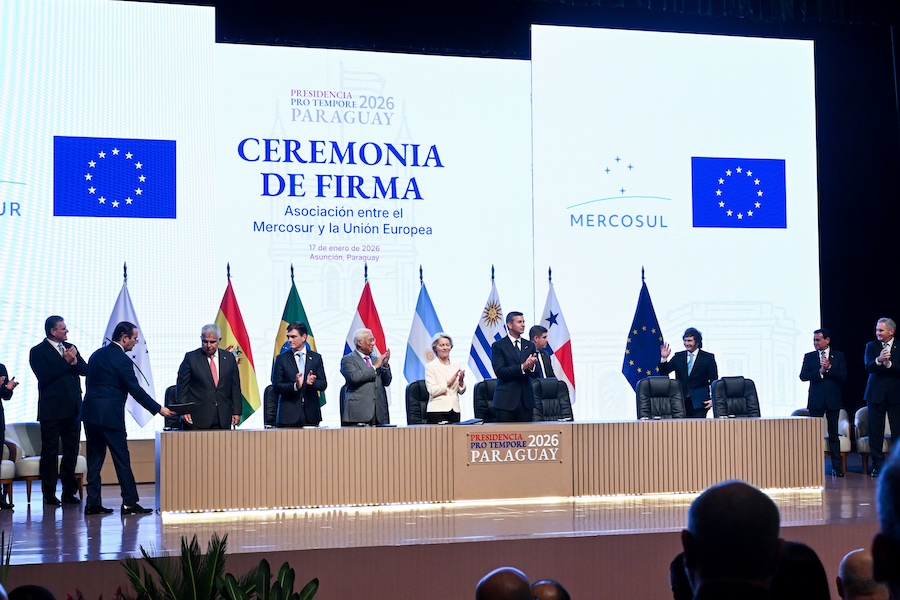
European business associations celebrate the signature of the EU-Mercosur FTA

The 17th January marks a historic milestone with the signing of the EU-Mercosur Trade Agreement, creating the biggest trading block in the world. European business – represented by more than 28 associations across a wide range of sectors – warmly welcomes this signature. It sends a strong and timely signal that the EU remains open and is committed to rules-based global trade. In a time of global uncertainty, this agreement is a key growth booster.

More News on EU Textile Strategy

#Sustainability

Textile Exchange Conference 2025 kicks off next week in Lisbon

From October 13 to 17, 2025, the Textile Exchange Conference will take place at the Lisbon Congress Centre, bringing together brands, supply-chain partners, innovators, farmers, NGOs, academics, and more for a week of collaborative learning and exchange. Under the theme “Shifting Landscapes”, this year’s agenda highlights the urgent need for the textile industry to adapt rapidly to changing environmental, political, and economic conditions, while linking adaptation to broader systems transformation.

#EU Textile Strategy

CEMATEX strengthens EU representation and advocacy for the European textile machinery industry

CEMATEX, the European Committee of Textile Machinery Manufacturers, has reinforced its role as the voice of the EU textile machinery industry by enhancing its presence and engagement with EU institutions and stakeholders.

#EU Textile Strategy

Germany pushes ahead with Producer Responsibility for Textiles

Germany is taking a leading role in shaping extended producer responsibility (EPR) for textiles – a regulatory concept that is gaining traction across the European Union. EPR requires companies that manufacture or sell products such as clothing, home textiles, and shoes to take financial and operational responsibility for the end-of-life management of these goods.

#EU Textile Strategy

Textile ETP at the European Commission's event on the Textiles Ecosystem Transition Pathway

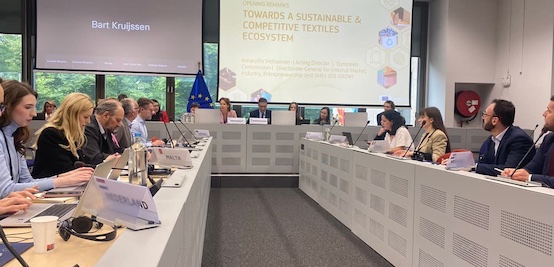
On 4 June 2024, the Textile ETP Secretary General Lutz Walter participated in the European Commission’s Directorate-General for Internal Market, Industry, Entrepreneurship & SMEs (DG GROW) stakeholder event for the Textiles Ecosystem Transition Pathway.

Latest News

#Recycling / Circular Economy

Circulose restarts commercial-scale production at Ortviken plant in Sundsvall

Circulose today announced the restart of its commercial-scale production plant at Ortviken in Sundsvall, Sweden, marking a significant step in scaling next-generation materials for the global fashion industry. The company plans to resume production of CIRCULOSE®, a recycled pulp made entirely from discarded cotton textiles, in the fourth quarter of 2026.

#Textiles & Apparel / Garment

VIATT 2026 to debut German Pavilion, strengthening European participation alongside key Asian textile hubs

Vietnam’s textile and garment sector continues to be a major contributor to the country’s economic growth, with export revenues expected to reach USD 46 billion in 2025, a 5.6% increase from 2024 . From 26 – 28 February, the Vietnam International Trade Fair for Apparel, Textiles and Textile Technologies (VIATT) is set to contribute to economic growth opportunities by accelerating digital transformation and green transition across the entire textile value chain. The upcoming edition will respond to the rising demand for advanced technologies and sustainable materials with the introduction of the German Pavilion, alongside strong exhibitor participation from key Asian sectors, as well as several high-profile fringe events.

#Sustainability

Ying McGuire becomes new CEO of Cascale

Cascale today announced the appointment of Ying McGuire as Chief Executive Officer, effective June 1, 2026.

#Technical Textiles

Sustainable, lightweight, and sound absorbing: Polyester-based front trunk solution for BEVs

As car manufacturers look to further reduce their carbon footprint, Autoneum has developed an innovative front trunk solution for battery electric vehicles (BEVs), made entirely from polyester-based textile. The Ultra-Silent Frunk offers significant weight reduction, improved acoustic and thermal insulation, and uses up to 70 percent recycled material, supporting sustainable and efficient vehicle design. Autoneum, global technology leader in acoustic and thermal management for vehicles, has already received orders for the new frunk from three major OEMs in Asia and Europe to be built in three BEV models. Series production for two BEVs has been underway in China and Germany since last year.

TOP