[pageLogInLogOut]

#Europe

EU ban on destroying unsold clothing and footwear now in force

Large companies must prioritise reuse, resale or recycling instead of destroying unsold products
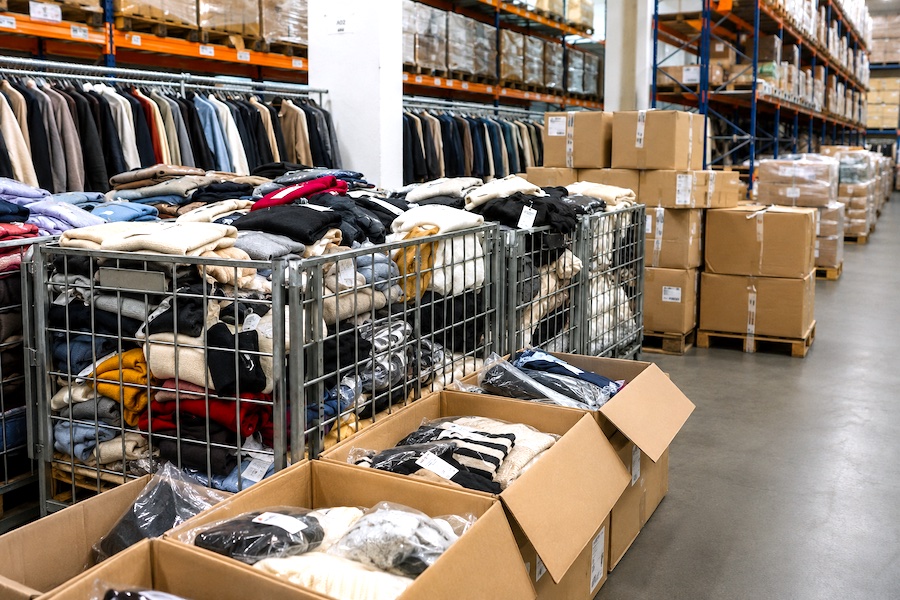
The European Union's ban on the destruction of unsold clothing, clothing accessories and footwear has entered into force. Since July 19, 2026, large companies across the EU have been prohibited from destroying unsold textile products, while medium-sized companies will be required to comply with the same rules from 2030.

The measure forms part of the Ecodesign for Sustainable Products Regulation (ESPR) and is intended to prevent the unnecessary destruction of usable products and the waste of valuable raw materials, water, energy and labour invested in their production. By encouraging reuse, repair and more resource-efficient business practices, the regulation supports the transition towards a more circular and competitive European economy.

Reuse before destruction

Under the new rules, companies must prioritise keeping products in use. Unsold goods should first be offered for sale, including through discounts or alternative markets, donated to charities or social enterprises, or prepared for reuse through repair, refurbishment or remanufacturing.

Destruction is only permitted under specific circumstances and must follow the waste hierarchy, giving priority to recycling wherever possible.

Limited exemptions

The regulation allows exemptions in clearly defined cases, including products that are unsafe or damaged, counterfeit or infringing intellectual property rights, or items that have been rejected by charities or donation schemes.

Companies relying on these exemptions must be able to provide supporting evidence, such as documentation or test results, and are required to publish annual reports on discarded products.

Enforcement and reporting

National authorities are responsible for enforcing the regulation and may impose penalties for non-compliance. Companies must retain relevant records for five years to facilitate inspections.

To reduce administrative burden, reporting requirements are based on existing customs and logistics codes. Small and micro-enterprises are exempt from these obligations.

First concrete ESPR measure

The ESPR, which entered into force in 2024, establishes a framework for making products more durable, repairable, recyclable and resource-efficient throughout the European Union.

The ban on destroying unsold textiles is one of the first concrete measures implemented under the regulation. According to the European Environment Agency (EEA), between 4% and 9% of all textile products placed on the European market are destroyed before ever being used, corresponding to an estimated 264,000 to 594,000 tonnes of textiles every year.
More News from European Commission

#Europe

The Digital Product Passport registry is now live

On 20 July, the European Commission launched the Digital Product Passport Registry together with a testing environment, marking an important milestone in making the Digital Product Passport (DPP) a practical reality for businesses placing products on the EU market.

#Recycling / Circular Economy

Commission clarifies rules on plastic bottles recycling

The European Commission today adopted new rules on recycling of single-use plastic beverage bottles made primarily of polyethylene terephthalate (PET bottles). These rules establish, for the first time, a methodology to calculate, verify and report chemically recycled content. This is part of the Commission’s December 2025 plastics package.

#Europe

EU and Australia strengthen relations with Security and Defence Partnership and Trade Agreement

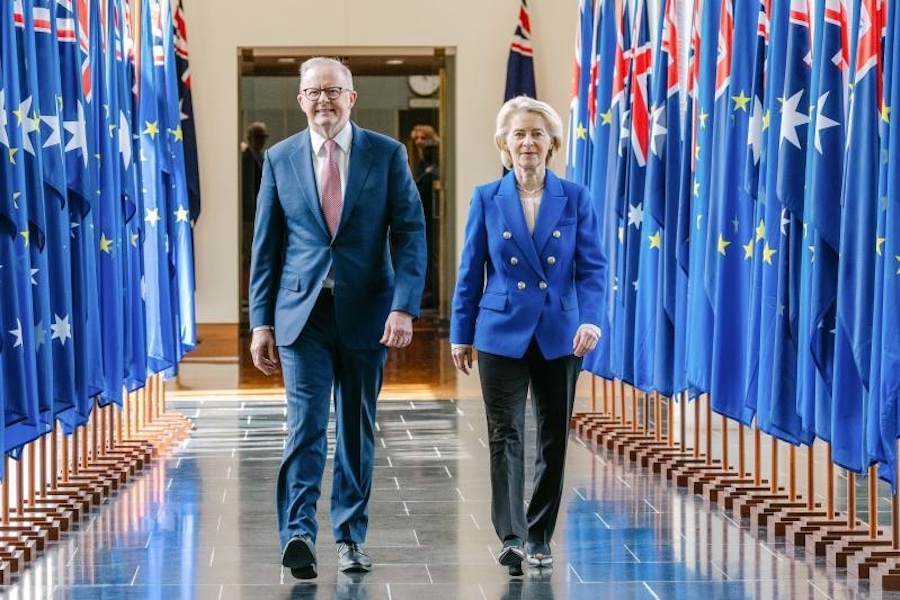
The EU and Australia have today announced the adoption of a groundbreaking Security and Defence Partnership. They have also concluded negotiations for an ambitious and balanced free trade agreement (FTA) and agreed to launch formal negotiations for the association of Australia to Horizon Europe, the world's largest funding programme for research and innovation. With these steps, the EU and Australia are delivering mutually beneficial outcomes and further reinforcing their already close relations in a time of geopolitical uncertainty.

#Europe

Commission presents proposal for EU Inc. - unlocking the full potential of the Single Market for Europe's entrepreneurs

Today, the European Commission presented its proposal for EU Inc., a new single set of corporate rules, building the cornerstone and starting point for the EU's 28th regime. EU Inc. is an optional, digital-by-default European corporate framework. It will make it easier for businesses to start, operate and grow across the EU – incentivising them to stay in Europe, and encourage those who once looked elsewhere to return.

More News on Europe

#Europe

Textile ETP launches bioeconomy strategy for Europe’s textile industry

On 22 September 2026, Textile ETP's Circular & Biobased Textiles Innovation Hub published its strategy for the biobased and circular transformation of Europe's textile and apparel industry.

#Europe

European textile industry calls for €10 handling fee on ultra-fast-fashion imports

The introduction of the €3 customs duty on low-value imports marks an important milestone in Europe’s efforts to address the challenges created by the rapid growth of ultra-fast-fashion imports. Together with the abolition of the €150 customs duty exemption, it demonstrates that policymakers are willing to act when market distortions become impossible to ignore. However, the European textile and clothing industry considers this a first step rather than the final destination.

#Europe

Circular economy offers the EU win-win on environment and economy

Stepping up a circular economy offers the European Union the potential for significant positive impacts on Europe’s environment and poses an untapped and strategic economic opportunity in terms of better access to materials and the creation of new businesses. Three new assessments on circularity, published today by the European Environment Agency (EEA), also stress the need to accelerate investment in circularity efforts to meet EU climate and environment policy targets.

#Associations

European Business Coalition welcomes provisional application of EU–Mercosur Agreement and calls for Swift and full implementation

With the European Commission’s decision to provisionally apply the EU–Mercosur Interim Trade Agreement, a process spanning more than 25 years now moves decisively into its implementation phase.

Latest News

#Knitting & Hosiery

KARL MAYER invites the Global Textile Industry to celebrate its 90th anniversary at its German Headquarters in 2027

KARL MAYER is turning its anniversary year 2027 into a milestone for the textile sector. To mark its 90th anniversary, the industry leader is inviting customers, partners, and experts from around the world to a unique event series in September aimed at pushing boundaries, unlocking new opportunities, and jointly setting the course for a new era in textiles – just as KARL MAYER has done throughout its history. The company’s headquarters in Obertshausen, near Frankfurt, is the place to be.

#Associations

ITMF names three winners of the Sustainability & Innovation Award 2026

Three projects from the UK, Korea and China have been selected as winners of the ITMF Sustainability & Innovation Award 2026. The projects address textile-to-textile recycling, chemical recycling for automotive textiles and a regenerative approach combining silk production with ecological restoration.

#Recycling / Circular Economy

nova-Institute launches groundbreaking Advanced Recycling Database for strategic market insight

The new Advanced Recycling Database reduces complexity by providing industry stakeholders with up-to-date expert-reviewed intelligence on companies, technologies, plants, capacities, locations, products and partnerships across the global advanced recycling landscape.

#Yarns

Durak Maxibalance thread supports users’ movement and balance comfort

Durak Tekstil, a leading brand in its industry, has developed Durak Maxibalance, a new product engineered with bio-ceramic and FAR IR technology. Ushering in a new era for sportswear, activewear, and medical textiles, this technology offers features designed to support balance and movement comfort by reflecting the energy absorbed from the body back into it.

TOP