[pageLogInLogOut]

#Europe

Strategic policy can drive a clean and competitive European industry

Europe can strengthen its industrial competitiveness while cutting climate and environmental pressures, but progress needs to accelerate. A new report from the European Environment Agency (EEA) finds that the transition of key industrial sectors offers opportunity and explores the policies, investments and enabling conditions needed to drive clean, circular and decarbonised production at scale, delivering prosperity.


The easier wins are behind us and deep industrial decarbonisation must now accelerate, shows the EEA report 'Europe’s industrial transformation — from environmental progress to clean competitiveness'.

European policy has delivered significant environmental improvements over the past 15 years. Industrial pollutant emissions have declined markedly and greenhouse gas emissions have fallen even as economic activity has continued to grow.

Yet the sectors responsible for the largest share of industrial emissions remain far from a net-zero pathway. In particular, progress on emissions per tonne of product in cement, iron and steel production has been moderate since 2010. Reaching climate neutrality will require the deployment of transformative technologies at scale.

The challenge is no longer technology, but scaling its deployment

Further efforts are needed, at a faster pace and greater scale, given industry’s significant contribution to environmental pressures and the EU’s renewed ambition to strengthen industrial activity. Europe's clean industrial transformation is increasingly constrained by a lack of system readiness rather than technology readiness.

To achieve a clean industrial transformation, the European Union needs to support a strong enabling environment. This will require:

  • an ambitious policy framework and support to close the EUR 30 to 60 billion annual funding gap for industrial transformation by 2030 by attracting private capital;
  • measures to overcome slow infrastructure development, including for electricity, hydrogen and carbon capture and storage, insecure access to materials needed for the transition, and systemic weaknesses in the EU’s technical skills base; and
  • accelerating access to low-cost renewable electricity. Electrification offers a key pathway to strengthen energy security while improving industrial competitiveness.

Although it is clear that, in the long run, a clean, resource-efficient industry will be a competitiveness asset, the up-front costs to industry will be high. This means that, in the short to medium term, industry may face competitiveness challenges, and stricter environmental regulation, an ambitious carbon price or even a stronger enabling environment may not be sufficient on their own.

EU industrial policy matters

A clean industrial policy framework presents a critical opportunity to provide direction and align the EU’s competitiveness policies with environmental and climate objectives. This requires a carefully designed and integrated policy approach that balances:

  • shielding: protecting industry during the transition;
  • scaling: creating markets and accelerating investments; and
  • restructuring: changing the EU’s industrial model.

Looking ahead, Europe’s clean industrial transformation will depend increasingly on its ability to turn available technologies into change at scale. This requires a coherent policy approach that provides long-term certainty, mobilises investment and develops the infrastructure, clean energy, materials and skills needed for transformation. Combining measures that protect industry through the transition, create markets and scale up clean solutions, and reshape industrial activity around clean value chains can help Europe align its competitiveness and resilience with its climate and environmental ambitions.


Europe's industrial transformation — from environmental progress to clean competitiveness


More News from European Environment Agency

#Sustainability

Renewables lower energy prices and play key role to reduce vulnerability to fossil fuel supply shocks

Renewables lower energy prices and play key role to reduce vulnerability to fossil fuel supply shocks Boosting the use of homegrown renewable electricity is Europe’s best way to reduce its vulnerability to volatile international energy supplies and rising energy prices according to a European Environment Agency (EEA) assessment published today.

#Europe

Circular economy offers the EU win-win on environment and economy

Stepping up a circular economy offers the European Union the potential for significant positive impacts on Europe’s environment and poses an untapped and strategic economic opportunity in terms of better access to materials and the creation of new businesses. Three new assessments on circularity, published today by the European Environment Agency (EEA), also stress the need to accelerate investment in circularity efforts to meet EU climate and environment policy targets.

#Europe

State of Europe’s environment not good: threats to nature and impacts of climate change top challenges

State of Europe’s environment not good: threats to nature and impacts of climate change top challenges Significant progress has been made in reducing greenhouse gas emissions and air pollution, but the overall state of Europe’s environment is not good, especially its nature which continues to face degradation, overexploitation and biodiversity loss. The impacts of accelerating climate change are also an urgent challenge, according to the European Environment Agency’s (EEA) most comprehensive, ‘state of environment’ report, published today. The outlook for most environmental trends is concerning and poses major risks to Europe’s economic prosperity, security and quality of life.

#Europe

EEA Scientific Committee elects new chair and vice-chairs

The European Environment Agency’s (EEA) Scientific Committee has elected a new chair and two vice-chairs at its spring meeting held over two days at the EEA headquarters in Copenhagen.

More News on Europe

#Nonwovens

EU imposes definitive anti-dumping duties on Chinese PET spunbond imports

The European Commission has introduced definitive anti-dumping duties ranging from 39.8% to 48.1% on imports of PET spunbond from China. The measures, which entered into force on 31 October 2026, will remain in place for five years and are intended to address unfairly priced imports that have caused injury to European manufacturers. The EU market for these nonwoven materials is valued at approximately €200 million.

#Associations

European and Canadian textile associations call for stronger transatlantic cooperation

Ahead of the EU–Canada Summit in Montréal on 29–30 October 2026, EURATEX, the Canadian Textile Industry Association (CTIA) and the Canadian Apparel Federation (CAF) have issued a joint statement calling for closer industrial cooperation, improved implementation of the CETA trade agreement and stronger partnerships in innovation, sustainability and advanced textile technologies.

#Europe

Textile ETP launches bioeconomy strategy for Europe’s textile industry

On 22 September 2026, Textile ETP's Circular & Biobased Textiles Innovation Hub published its strategy for the biobased and circular transformation of Europe's textile and apparel industry.

#Europe

European textile industry calls for €10 handling fee on ultra-fast-fashion imports

The introduction of the €3 customs duty on low-value imports marks an important milestone in Europe’s efforts to address the challenges created by the rapid growth of ultra-fast-fashion imports. Together with the abolition of the €150 customs duty exemption, it demonstrates that policymakers are willing to act when market distortions become impossible to ignore. However, the European textile and clothing industry considers this a first step rather than the final destination.

Latest News

#India ITME 2026

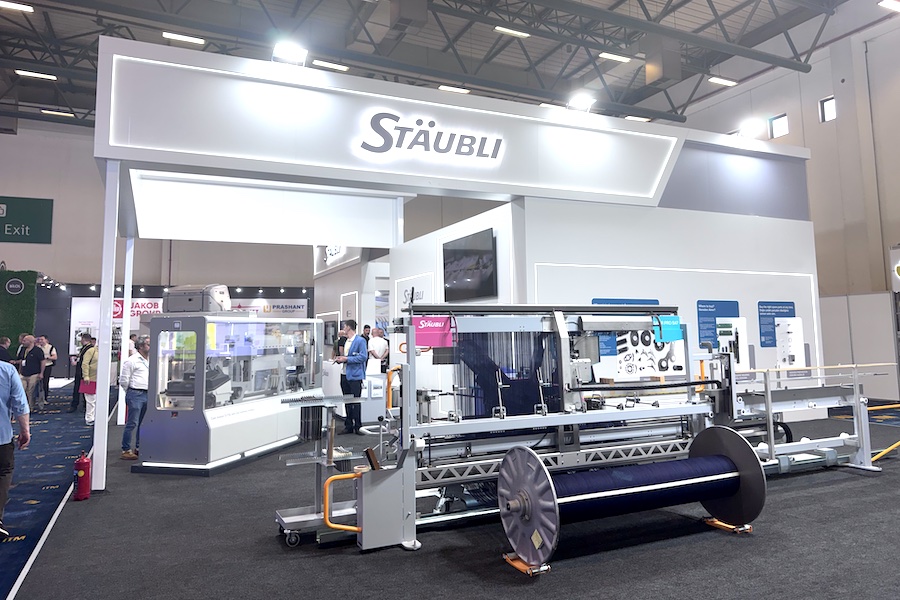
Stäubli to introduce new S3292 dobby for high-speed weaving at ITME India 2026

Stäubli will introduce its new S3292 dobby at ITME India 2026, taking place from December 4 to 9 at the India Expo Centre & Mart in Greater Noida, Uttar Pradesh. Designed for high-speed air-jet weaving, the new machine will be among the highlights of the company's presentation, which also includes warp preparation systems, cam motions, Jacquard technologies and digital services.

#Research & Development

DITF develops bio-based binding fibers for wood-fiber insulation materials

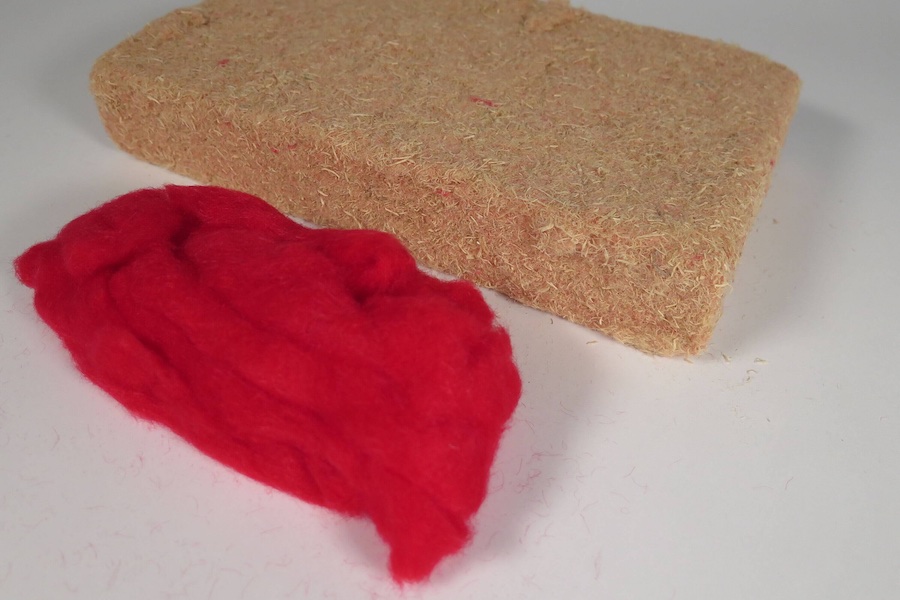
As part of the CelluWoodFlex project, the German Institutes of Textile- and Fiber-Research in Denkendorf (DITF) are developing bio-based cellulose ester fibers as alternative binding fibers for flexible wood fiber insulation materials. In addition to the spinning process and the production of suitable staple fibers, the institute is also investigating how wood and cellulose fibers can be separated and recycled at the end of their useful life.

#Recycled Fibers

Reju expands textile-to-textile recycling network with six international fabric manufacturers

Reju, a textile-to-textile regeneration company, is expanding its industrial network through collaborations with six fabric manufacturers in Europe and the Americas. The initiative aims to accelerate the integration of regenerated polyester into textile manufacturing and support the development of finished fabrics for commercial applications.

#Nonwovens

Magnera highlights HighPleat™ filtration media technology at FiltXPO 2026

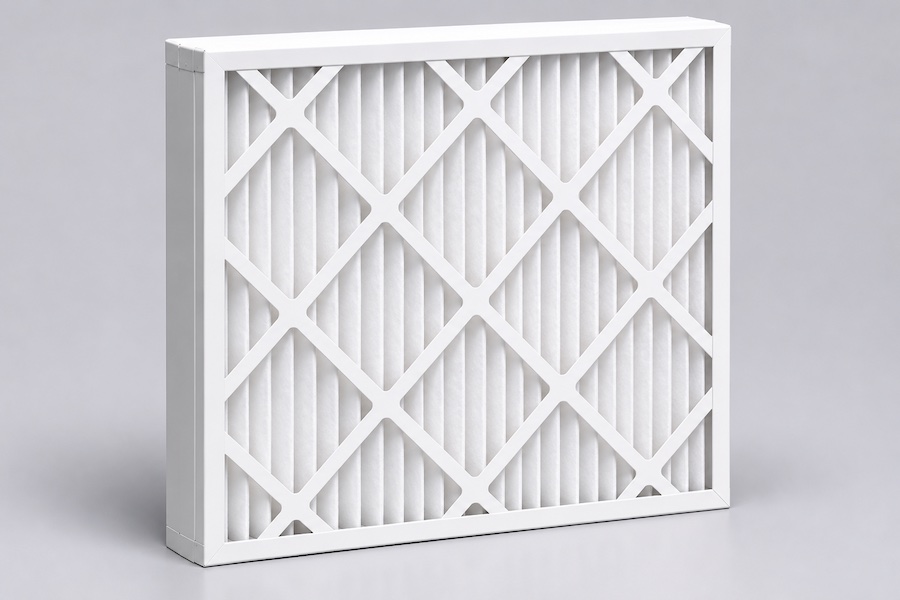
At FiltXPO 2026, held on October 28–29 at the Minneapolis Convention Center in Minneapolis, Minnesota, Magnera highlighted advances in air filtration media architecture, with a particular focus on its HighPleat™ platform for MERV 8–10 applications. The technology combines a lofted fiber structure with optimized pore architecture to address the challenge of balancing filtration efficiency, airflow resistance and contaminant-holding capacity.

TOP