[pageLogInLogOut]

#Sustainability

Renewables lower energy prices and play key role to reduce vulnerability to fossil fuel supply shocks

Renewables lower energy prices and play key role to reduce vulnerability to fossil fuel supply shocks Boosting the use of homegrown renewable electricity is Europe’s best way to reduce its vulnerability to volatile international energy supplies and rising energy prices according to a European Environment Agency (EEA) assessment published today.

Global gas price spikes this year cost the European Union an additional €13 billion by mid-April, while renewables saved €29 billion. This means renewable energy sources are already shielding Europe from price shocks — and could do so far more — acting as a powerful buffer against gas price volatility, as highlighted in the EEA briefing ‘Renewable electricity: best buffer against gas price volatility'.

Europe’s fossil vulnerability

With around 85% of all gas and 97% of all oil products consumed in the EU in 2024 imported, Europe remains exposed to externa supply shocks with direct implications for competitiveness and strategic autonomy. This continued dependence on fossil fuel imports means European consumers are paying a considerable gas volatility premium especially in wake of external political and economic shocks. In the last five years these have included the war in Ukraine and the closure of the Strait of Hormuz due to the recent the US-Israel-Iran conflict.

Renewables: Europe’s future proofing on prices and beyond

Stepping up the deployment of renewables like wind and solar, could lessen Europe’s fossil fuel import dependence and prevent a potential 125% rise in wholesale prices by 2030, according to the briefing which involves assessing price and renewable rollout scenarios. This is based on a 68% growth of renewable energy use of total EU electricity generation, according to projections from EU Member States in the most recent 10-year network development plans.

The EEA briefing cautions, however, that renewables alone will not deliver price gains. As renewable electricity shares rise, price benefits increasingly depend on grids, storage and demand response to integrate variable solar and wind. Faster electrification of buildings, transport and industry must be matched by parallel progress in renewables, grids, storage, efficiency and demand response to avoid locking in additional gas-fired capacity.

Balanced progress across supply, demand, grids and storage — supported by pricing that favours electrification — is essential to deliver sustained price reductions, the briefing says.

These measures are explored at greater detail in the EEA report ‘Renewables, electrification and flexibility -

For a competitive EU energy system transformation by 2030’.


More News from European Environment Agency

#Europe

Circular economy offers the EU win-win on environment and economy

Stepping up a circular economy offers the European Union the potential for significant positive impacts on Europe’s environment and poses an untapped and strategic economic opportunity in terms of better access to materials and the creation of new businesses. Three new assessments on circularity, published today by the European Environment Agency (EEA), also stress the need to accelerate investment in circularity efforts to meet EU climate and environment policy targets.

#Europe

State of Europe’s environment not good: threats to nature and impacts of climate change top challenges

State of Europe’s environment not good: threats to nature and impacts of climate change top challenges Significant progress has been made in reducing greenhouse gas emissions and air pollution, but the overall state of Europe’s environment is not good, especially its nature which continues to face degradation, overexploitation and biodiversity loss. The impacts of accelerating climate change are also an urgent challenge, according to the European Environment Agency’s (EEA) most comprehensive, ‘state of environment’ report, published today. The outlook for most environmental trends is concerning and poses major risks to Europe’s economic prosperity, security and quality of life.

#Europe

EEA Scientific Committee elects new chair and vice-chairs

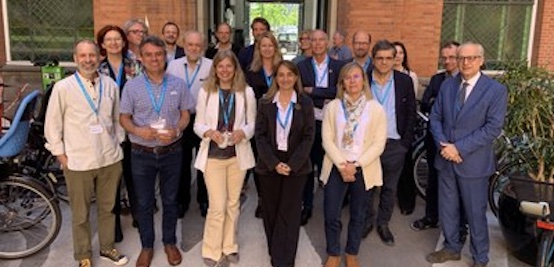
The European Environment Agency’s (EEA) Scientific Committee has elected a new chair and two vice-chairs at its spring meeting held over two days at the EEA headquarters in Copenhagen.

#Sustainability

What are the impacts of PFAS polymers on our health and the environment?

The widespread use of PFAS polymers in everything from consumer products to green technologies can lead to contamination of water, air, soil, food and people. A European Environment Agency (EEA) assessment, published today, says that these chemicals can also contribute to global warming and ozone depletion.

More News on Sustainability

#Associations

ITMF names three winners of the Sustainability & Innovation Award 2026

Three projects from the UK, Korea and China have been selected as winners of the ITMF Sustainability & Innovation Award 2026. The projects address textile-to-textile recycling, chemical recycling for automotive textiles and a regenerative approach combining silk production with ecological restoration.

#Europe

Textile ETP launches bioeconomy strategy for Europe’s textile industry

On 22 September 2026, Textile ETP's Circular & Biobased Textiles Innovation Hub published its strategy for the biobased and circular transformation of Europe's textile and apparel industry.

#Research & Development

180 years of TESTEX: From Zurich silk testing to global certification

For 180 years, TESTEX has developed alongside the textile industry while maintaining the same underlying purpose: creating trust through independent and reliable measurement. Founded in Zurich in 1846 as the Zurich Silk Conditioning Institute, TESTEX has grown from a local institution serving the silk trade into an international Swiss testing and certification institute for textiles and leather.

#Sustainability

Cascale launches member-led process to shape 2030 strategy

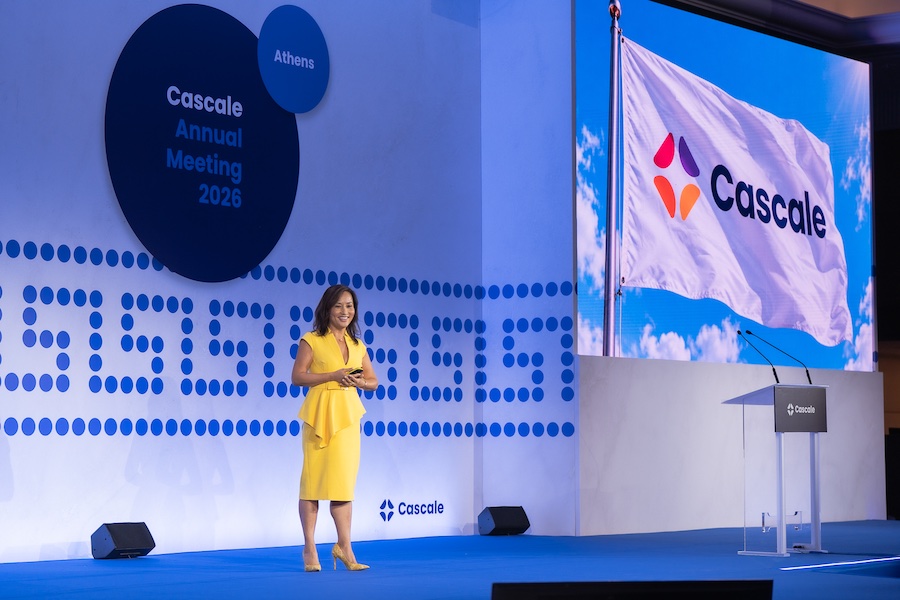
Cascale has launched a member-led process to define the industry alliance’s strategic direction for the next decade. At the Cascale Annual Meeting 2026 in Athens, CEO Ying McGuire announced that members will contribute to an industry system map that will inform Cascale’s 10-year vision, its 2030 strategy and priorities for 2027. The new strategy is scheduled to be finalized in December.

Latest News

#Knitting & Hosiery

KARL MAYER invites the Global Textile Industry to celebrate its 90th anniversary at its German Headquarters in 2027

KARL MAYER is turning its anniversary year 2027 into a milestone for the textile sector. To mark its 90th anniversary, the industry leader is inviting customers, partners, and experts from around the world to a unique event series in September aimed at pushing boundaries, unlocking new opportunities, and jointly setting the course for a new era in textiles – just as KARL MAYER has done throughout its history. The company’s headquarters in Obertshausen, near Frankfurt, is the place to be.

#Recycling / Circular Economy

nova-Institute launches groundbreaking Advanced Recycling Database for strategic market insight

The new Advanced Recycling Database reduces complexity by providing industry stakeholders with up-to-date expert-reviewed intelligence on companies, technologies, plants, capacities, locations, products and partnerships across the global advanced recycling landscape.

#Yarns

Durak Maxibalance thread supports users’ movement and balance comfort

Durak Tekstil, a leading brand in its industry, has developed Durak Maxibalance, a new product engineered with bio-ceramic and FAR IR technology. Ushering in a new era for sportswear, activewear, and medical textiles, this technology offers features designed to support balance and movement comfort by reflecting the energy absorbed from the body back into it.

#Yarns

Yarn Expo Autumn 2026 draws to a close, weaving sustainable innovation into global sourcing

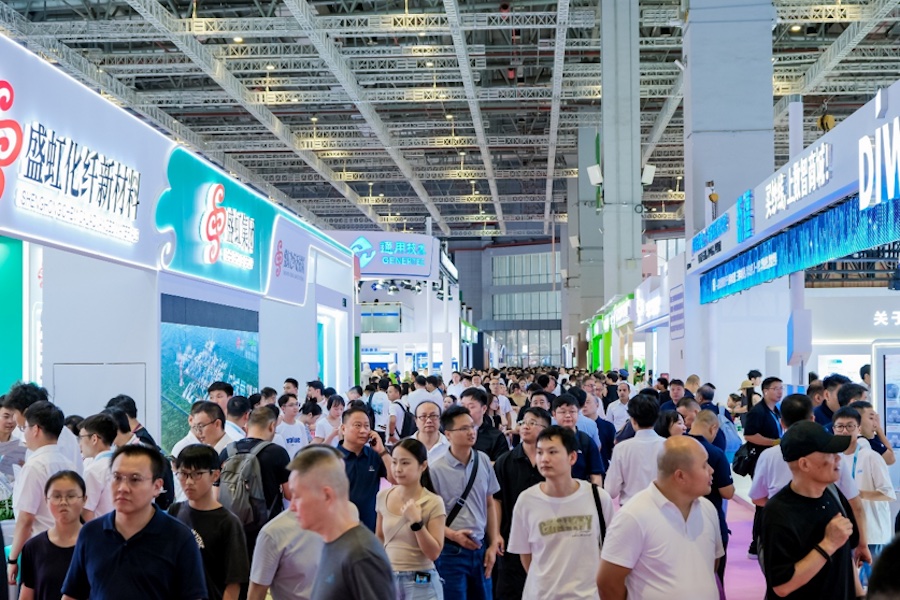
Yarn Expo Autumn 2026 concluded with approximately 600 exhibitors from 14 countries and regions, connecting with nearly 22,000 visitors from 110 represented markets, bringing the textile industry’s evolving material agenda into sharper focus. Held alongside Intertextile Shanghai Apparel Fabrics – Autumn Edition, CHIC and PH Value, the fair connected upstream fibre and yarn innovation with fabric development, garment production and fashion-market demand.

TOP