[pageLogInLogOut]
USTER Think Quality

#Recycled Fibers

C&A and Zalando join Altag® Fiber Club to accelerate adoption of agricultural waste-based fibres

C&A and Zalando have joined the Altag® Fiber Club to support the commercial adoption of next-generation fibres made from agricultural waste. The initiative aims to bring innovative, resource-efficient materials into mainstream fashion.© 2026 Fashion for Good
Fashion for Good and AltMat announced today that C&A and Zalando have joined the Altag® Fiber Club as its first brand signatories, marking a critical commercial milestone in the journey to mainstream adoption of next-generation fibres derived from agricultural waste.

The fashion industry has long grappled with a gap between its sustainability ambition and commercial execution. Materials account for 91% of the fashion industry’s total emissions and 30% of a product’s cost of goods sold, making them the single most consequential lever for both climate impact and long-term competitiveness. However, brands struggle to commit without proven supply, and innovators can’t scale without committed demand.

The Altag® Fiber Club, launched in June 2025 through a strategic partnership between Fashion for Good and Altmat, was built to break this dilemma: by pooling resources and minimum order commitments, it aims to distribute risk and create the conditions for real commercial scale for Altag®. Altag® is a natural fibre developed by Altmat that upcycles agricultural waste from food, medicinal, and non-textile crops, ie., residues that would otherwise go unvalued or be burned in the field. The result is a versatile, renewable fibre, offering an alternative to conventional materials without requiring dedicated land or water use. This collaborative model, which builds on Fashion for Good’s successful first Fiber Club with textile-to-textile recycler Circ in 2024, in collaboration with Canopy, aims to overcome key barriers to adoption such as scalability, processing compatibility, and cost competitiveness.

Today, that ambition has found its bridge: C&A and Zalando, through its private labels, have now confirmed their participation as founding brand signatories. The two brands, among Europe’s most established fashion retailers, have committed to producing their first styles featuring Altag® fibre, bringing fashion made from upcycled agricultural residue into mainstream retail, at scale.

But founding membership goes beyond a purchasing commitment: it is a two-way relationship. C&A and Zalando bring the real-world demands of high-volume retail: technical requirements, consumer expectations, and manufacturing realities that are directly shaping the ongoing development of Altag® fibre. In return, they gain early influence over a next-generation material at the moment it is being built for commercial scale, ensuring it works for their supply chains, their products, and their customers, making Altag® fibre stronger, faster.

Katrin Ley, Managing Director at Fashion for Good, emphasised the importance of early commitments from major brands: “Next-gen materials will only deliver on their promise if they reach volume. That requires brands with the scale and conviction to commit early, and that is exactly what Zalando and C&A bring to the Altag® Fiber Club. This is the kind of partnership that changes the trajectory of an innovation.”

Shikha Shah, Founder & CEO at Altmat, highlighted the requirements for bringing alternative materials into mainstream fashion: “Fashion’s impact on the environment underscores the urgent need to shift to better materials. But for these next-generation materials to succeed, they must do more than be responsibly made; they must match the aesthetics and performance that brands and consumers expect, while integrating seamlessly across global supply chains. Altag® has been relentlessly built to tick all boxes. We’re excited to welcome C&A and Zalando on this journey as we work together to bring better materials to more wardrobes and help shape the future of fashion.”

Pascal Brun, VP Sustainability at Zalando, underlined the importance of collaboration across the value chain: “Scaling next-gen materials requires the whole value chain to move together. The Altag® Fiber Club gives us a concrete chance to co-develop the material and test its adoption with customers across all Europe. This is a very important step to build an infrastructure that the whole industry can benefit from.”

Brands ready to move from ambition to action are invited to join the Altag® Fiber Club now. As a signatory, you will gain access to an established supply chain consortium, a proven collaborative framework, and the opportunity to shape the commercial future of next-generation materials alongside some of Europe’s leading retailers.

Find out more about the Fiber Club and register your interest.

If you are a brand interested in Altmat, please reach out directly to their team at admin@altmat.in.


More News from Fashion for Good

#Recycling / Circular Economy

Fashion for Good launches Cotton Reloop Matrix Project to unlock commercial scale for recycled cotton

Fashion for Good today announces the launch of the Cotton Reloop Matrix Project, a cross-industry initiative that will map and physically validate the quality of commercially available recycled cotton yarns against brand specifications, giving the industry a data-backed overview of how quality, price, and recycled content intersect. The project is convened with Fashion for Good partners Arvind, BESTSELLER, C&A, Interloop, Reformation, and Shahi, together with ecosystem partner Uster.

#Sustainability

Wendy Woods named Chair of the Fashion for Good BV Board

Fashion for Good is pleased to welcome Wendy Woods as its new board chair, succeeding Jill Beraud as of 1 September 2026, who had led the board since 2022.

#Textile chemistry

Fashion for Good launches DW(O)R-X to navigate the emerging landscape of PFAS-free finishes

Fashion for Good announced the launch of Project DW(O)R-X, a collaborative initiative designed to benchmark PFAS alternative durable water- and oil-repellent (DW(O)R) chemistries. Responding to growing market demand for alternatives to PFAS‑based finishes, the project aims to generate reliable, comparable data that can support informed sourcing decisions and the assessment of emerging chemistries.

#Sustainability

Closing the Footwear Loop reveals challenges and opportunities for circular footwear

The footwear industry faces one of the most complex circularity challenges in the fashion sector. A new Phase 1 report from the Fashion for Good initiative Closing the Footwear Loop, developed together with Circle Economy, provides new insights into the composition, condition and recycling potential of post-consumer footwear waste.

More News on Recycled Fibers

#Recycled Fibers

Reju expands textile-to-textile recycling network with six international fabric manufacturers

Reju, a textile-to-textile regeneration company, is expanding its industrial network through collaborations with six fabric manufacturers in Europe and the Americas. The initiative aims to accelerate the integration of regenerated polyester into textile manufacturing and support the development of finished fabrics for commercial applications.

#Recycling / Circular Economy

ReHubs calls on industry experts to shape Textiles Recycling Expo 2027 conference programme

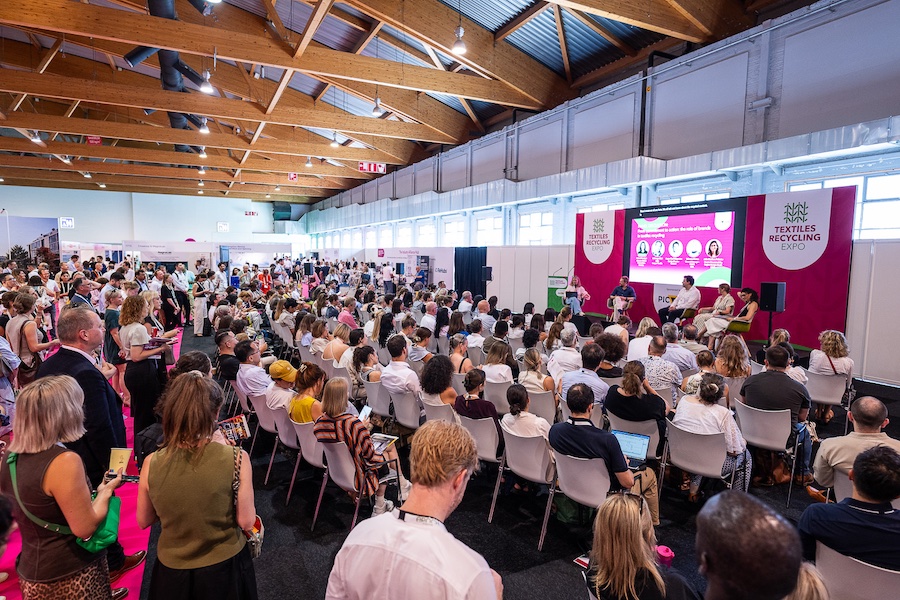
ReHubs is proud to continue its collaboration with Textiles Recycling Expo as the Structural Partner for the third consecutive year, reinforcing its commitment to bringing together the organisations, expertise and solutions needed to scale textile-to-textile recycling across Europe.

#Recycled Fibers

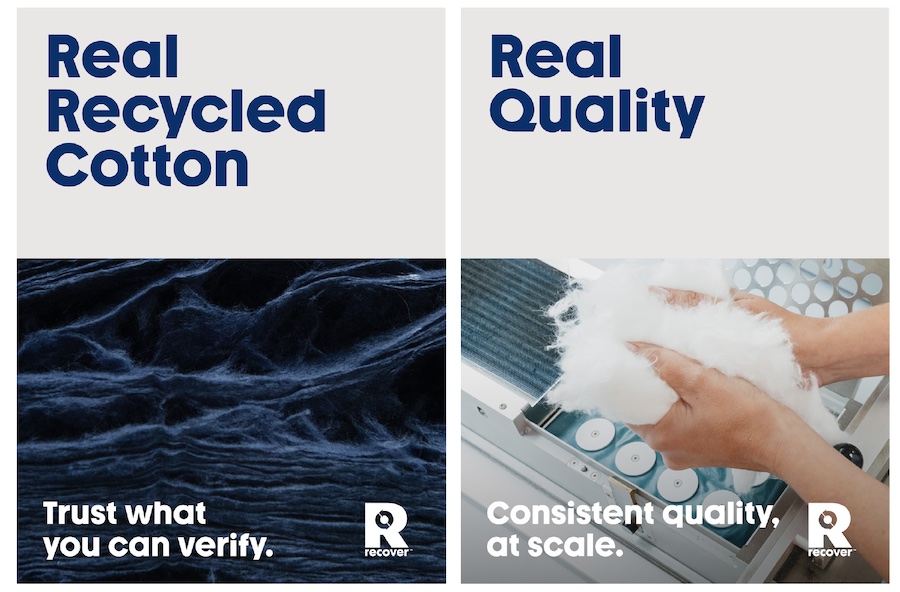
Recover launches global campaign highlighting industrial-scale recycled cotton solutions

Under the motto “REAL. Today, Not Someday.”, Recover aims to shift attention towards recycling technologies already operating at commercial scale. In 2025, the company's recycled cotton was used in more than 200 million garments worldwide.

#Recycled Fibers

Eastman Naia™ highlights circularity and responsible sourcing at Textile Exchange 2026

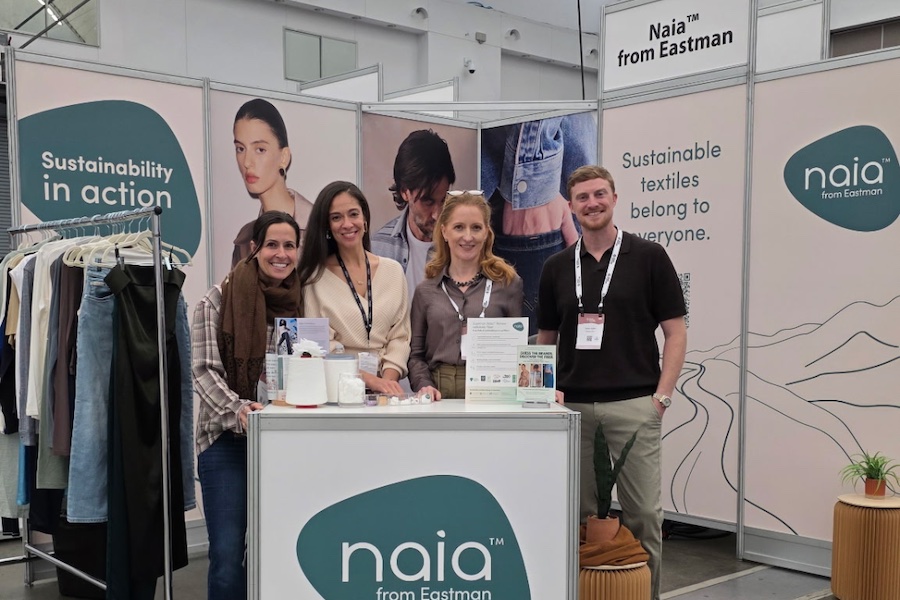
Scaling sustainable practices across businesses, supply chains and landscapes is one of the defining challenges facing the textile industry. At the 2026 Textile Exchange Conference, held October 12–16 in Vancouver under the theme “The Implementation Era,” Eastman Naia™ showcased how its commitments to circularity, responsible sourcing and forest conservation translate into practical action.

Latest News

#India ITME 2026

Stäubli to introduce new S3292 dobby for high-speed weaving at ITME India 2026

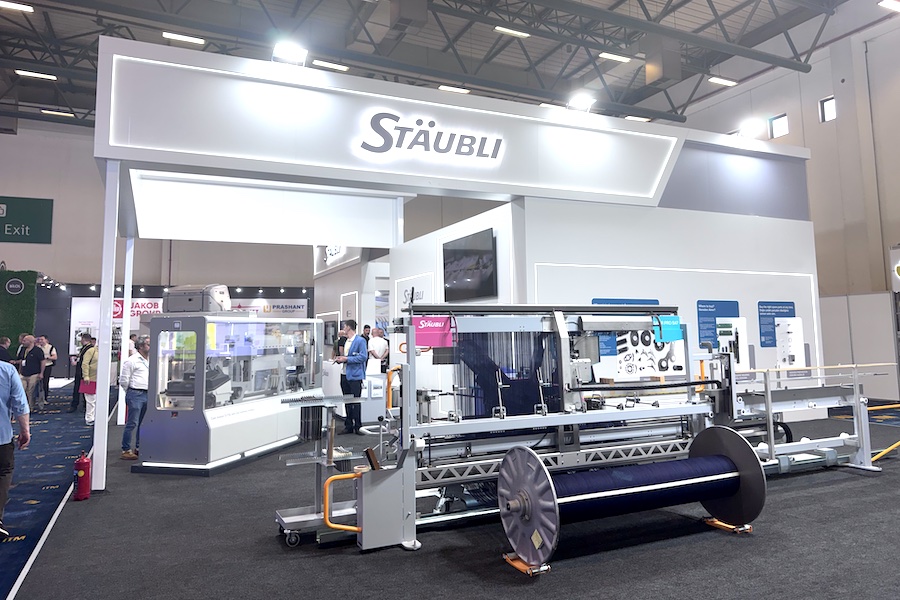
Stäubli will introduce its new S3292 dobby at ITME India 2026, taking place from December 4 to 9 at the India Expo Centre & Mart in Greater Noida, Uttar Pradesh. Designed for high-speed air-jet weaving, the new machine will be among the highlights of the company's presentation, which also includes warp preparation systems, cam motions, Jacquard technologies and digital services.

#Research & Development

DITF develops bio-based binding fibers for wood-fiber insulation materials

As part of the CelluWoodFlex project, the German Institutes of Textile- and Fiber-Research in Denkendorf (DITF) are developing bio-based cellulose ester fibers as alternative binding fibers for flexible wood fiber insulation materials. In addition to the spinning process and the production of suitable staple fibers, the institute is also investigating how wood and cellulose fibers can be separated and recycled at the end of their useful life.

#Nonwovens

Magnera highlights HighPleat™ filtration media technology at FiltXPO 2026

At FiltXPO 2026, held on October 28–29 at the Minneapolis Convention Center in Minneapolis, Minnesota, Magnera highlighted advances in air filtration media architecture, with a particular focus on its HighPleat™ platform for MERV 8–10 applications. The technology combines a lofted fiber structure with optimized pore architecture to address the challenge of balancing filtration efficiency, airflow resistance and contaminant-holding capacity.

#Nonwovens

Ahlstrom expands depth filtration media production capacity at US facility

Ahlstrom has completed a major investment in its Kingston manufacturing facility in New York, USA, expanding production capacity for high-performance depth filtration media. The modernization of Line 3 is designed to improve manufacturing efficiency, enhance quality control and increase flexibility in producing different product widths.

TOP