[pageLogInLogOut]

#Sustainability

Closing the Footwear Loop reveals challenges and opportunities for circular footwear

New report shows half of post-consumer footwear is unsuitable for reuse – while dedicated sorting and recycling solutions begin to emerge

The footwear industry faces one of the most complex circularity challenges in the fashion sector. A new Phase 1 report from the Fashion for Good initiative Closing the Footwear Loop, developed together with Circle Economy, provides new insights into the composition, condition and recycling potential of post-consumer footwear waste.

The project analyzed footwear waste streams through pilot activities involving CETIA, Matoha, Picvisa and The 8 Impact.

According to the report, around 50% of post-consumer footwear collected is classified as non-rewearable, while 46% remains suitable for reuse. The remaining 4% is contaminated, preventing both reuse and recycling. Among the reusable footwear, approximately 90% is exported, mainly to the UAE, China and Pakistan.

One particularly noteworthy finding is that 24% of shoes categorized as non-rewearable showed no visible physical damage. This suggests that current sorting and assessment practices may not always capture the full potential for reuse or recovery.

Footwear complexity remains a major barrier

The report highlights the enormous challenge facing the sector. Around 23.8 billion pairs of shoes are produced globally each year. A typical shoe contains more than 60 different components, including textiles, plastics, rubber compounds, foams and adhesives. This complex multi-material construction makes sorting, disassembly and recycling significantly more difficult than in many apparel applications.

As a result, recent studies estimate that around 90% of footwear still ends up in landfill at the end of its life.

The pilots also revealed technical limitations in current recycling processes. Nearly 38% of non-renewable sole materials could not be identified using near-infrared (NIR) scanning technology, underlining the need for improved material transparency and identification systems.

New sorting technologies tested

As part of the project, dedicated footwear sorting technologies were tested by Matoha, CETIA and Picvisa. According to the project partners, these represent some of the first technologies specifically developed to sort footwear waste streams for circularity applications.

The initiative also demonstrated the technical feasibility of closed-loop recycling for sports shoes and sneakers. Working with footwear collected through the French Extended Producer Responsibility (EPR) system, The 8 Impact successfully processed footwear waste into recycled material streams, providing further evidence that circular solutions for selected footwear categories are becoming increasingly viable.

Building the foundation for footwear circularity

The Closing the Footwear Loop initiative aims to establish the infrastructure needed for a circular footwear industry. Alongside waste stream mapping and technology validation, the project is developing design-for-circularity guidelines in collaboration with circular.fashion. The objective is to improve recyclability, durability and repairability while supporting the development of scalable end-of-life solutions.

The findings underline both the scale of the challenge and the opportunities emerging as new sorting, disassembly and recycling technologies begin to mature. While footwear remains one of the most difficult product categories to circularize, the project demonstrates that dedicated infrastructure and design improvements could significantly increase reuse and recycling rates in the future.

Download the report:

https://www.fashionforgood.com/case-study/closing-the-footwear-loop/?utm_source=MPL&utm_medium=MPL&utm_campaign=MPL

More News from Fashion for Good

#Sustainability

Wendy Woods named Chair of the Fashion for Good BV Board

Fashion for Good is pleased to welcome Wendy Woods as its new board chair, succeeding Jill Beraud as of 1 September 2026, who had led the board since 2022.

#Textile chemistry

Fashion for Good launches DW(O)R-X to navigate the emerging landscape of PFAS-free finishes

Fashion for Good announced the launch of Project DW(O)R-X, a collaborative initiative designed to benchmark PFAS alternative durable water- and oil-repellent (DW(O)R) chemistries. Responding to growing market demand for alternatives to PFAS‑based finishes, the project aims to generate reliable, comparable data that can support informed sourcing decisions and the assessment of emerging chemistries.

#Recycling / Circular Economy

Project REWEAR investigates diverse economies of rewear as a global practice of circularity

Every year, European households discard millions of tonnes of clothing. Around a quarter of what gets separately collected is exported, much of it classified as rewearable. A significant share ends up in markets like Kantamanto in Accra, Ghana, where an estimated 15 million garments arrive every week. New research published today reveals what happens when that clothing arrives.

#Recycling / Circular Economy

Solving the Feedstock Gap: Unlocking Post-consumer Feedstocks for Textile-to-Textile Recycling in Europe

Fashion for Good launches Project FAE (Feedstock Activation Europe) to develop the sorting and pre-processing infrastructure needed to channel non-rewearable post-consumer textiles into textile-to-textile (T2T) recycling at scale. The project is a practical response to one of the most pressing problems in textile circularity: making post-consumer waste a viable, commercially competitive raw material for recyclers.

More News on Sustainability

#Associations

ITMF names three winners of the Sustainability & Innovation Award 2026

Three projects from the UK, Korea and China have been selected as winners of the ITMF Sustainability & Innovation Award 2026. The projects address textile-to-textile recycling, chemical recycling for automotive textiles and a regenerative approach combining silk production with ecological restoration.

#Europe

Textile ETP launches bioeconomy strategy for Europe’s textile industry

On 22 September 2026, Textile ETP's Circular & Biobased Textiles Innovation Hub published its strategy for the biobased and circular transformation of Europe's textile and apparel industry.

#Research & Development

180 years of TESTEX: From Zurich silk testing to global certification

For 180 years, TESTEX has developed alongside the textile industry while maintaining the same underlying purpose: creating trust through independent and reliable measurement. Founded in Zurich in 1846 as the Zurich Silk Conditioning Institute, TESTEX has grown from a local institution serving the silk trade into an international Swiss testing and certification institute for textiles and leather.

#Sustainability

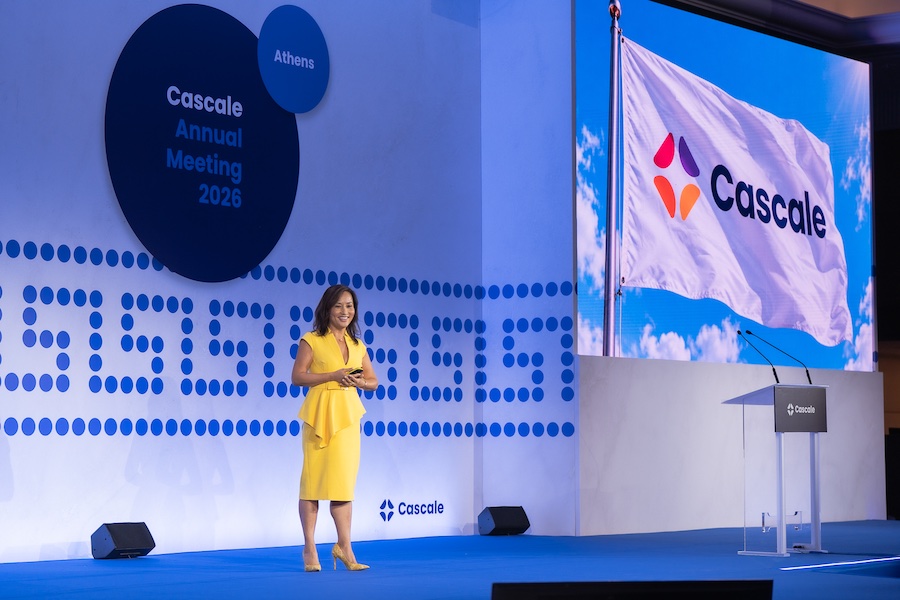
Cascale launches member-led process to shape 2030 strategy

Cascale has launched a member-led process to define the industry alliance’s strategic direction for the next decade. At the Cascale Annual Meeting 2026 in Athens, CEO Ying McGuire announced that members will contribute to an industry system map that will inform Cascale’s 10-year vision, its 2030 strategy and priorities for 2027. The new strategy is scheduled to be finalized in December.

Latest News

#Knitting & Hosiery

KARL MAYER invites the Global Textile Industry to celebrate its 90th anniversary at its German Headquarters in 2027

KARL MAYER is turning its anniversary year 2027 into a milestone for the textile sector. To mark its 90th anniversary, the industry leader is inviting customers, partners, and experts from around the world to a unique event series in September aimed at pushing boundaries, unlocking new opportunities, and jointly setting the course for a new era in textiles – just as KARL MAYER has done throughout its history. The company’s headquarters in Obertshausen, near Frankfurt, is the place to be.

#Recycling / Circular Economy

nova-Institute launches groundbreaking Advanced Recycling Database for strategic market insight

The new Advanced Recycling Database reduces complexity by providing industry stakeholders with up-to-date expert-reviewed intelligence on companies, technologies, plants, capacities, locations, products and partnerships across the global advanced recycling landscape.

#Yarns

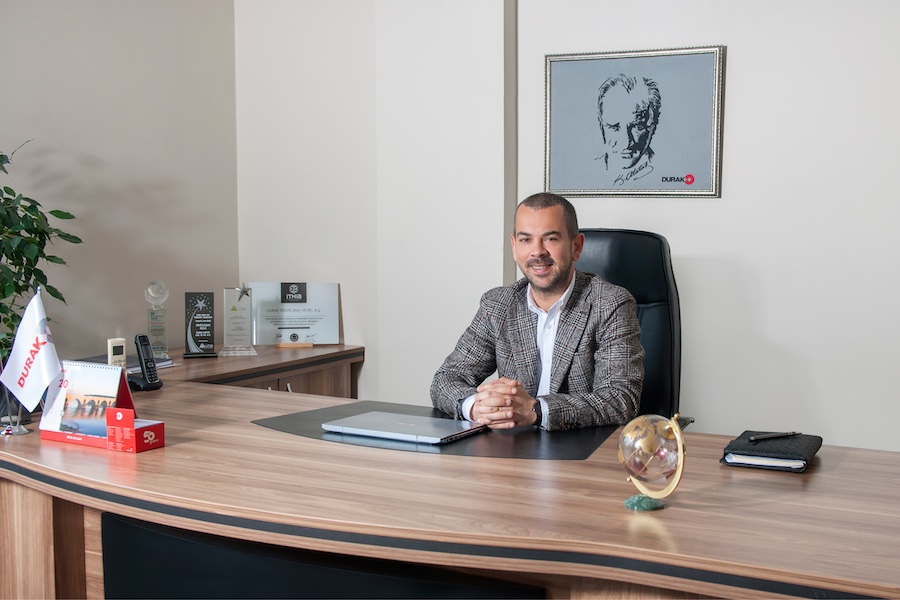
Durak Maxibalance thread supports users’ movement and balance comfort

Durak Tekstil, a leading brand in its industry, has developed Durak Maxibalance, a new product engineered with bio-ceramic and FAR IR technology. Ushering in a new era for sportswear, activewear, and medical textiles, this technology offers features designed to support balance and movement comfort by reflecting the energy absorbed from the body back into it.

#Yarns

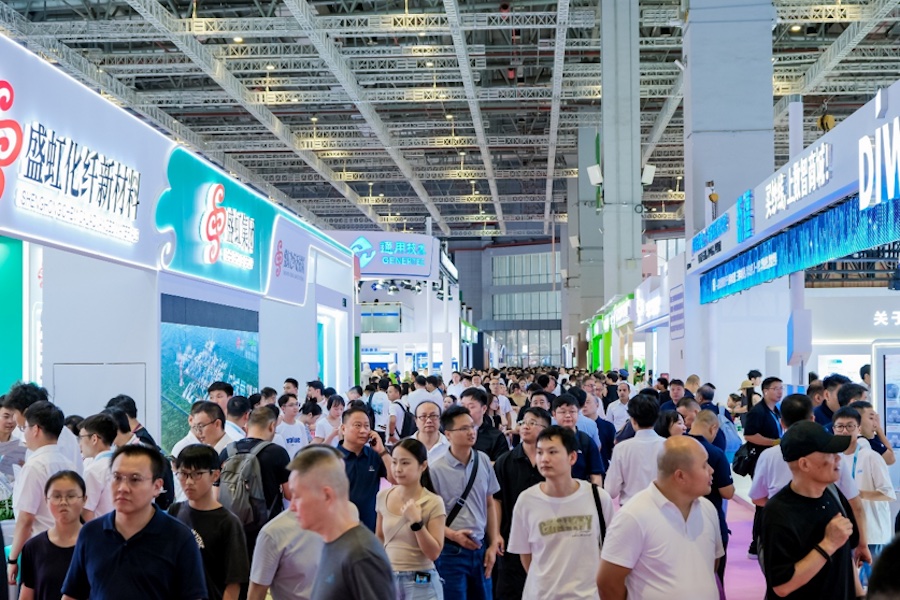
Yarn Expo Autumn 2026 draws to a close, weaving sustainable innovation into global sourcing

Yarn Expo Autumn 2026 concluded with approximately 600 exhibitors from 14 countries and regions, connecting with nearly 22,000 visitors from 110 represented markets, bringing the textile industry’s evolving material agenda into sharper focus. Held alongside Intertextile Shanghai Apparel Fabrics – Autumn Edition, CHIC and PH Value, the fair connected upstream fibre and yarn innovation with fabric development, garment production and fashion-market demand.

TOP