[pageLogInLogOut]

#Europe

The Digital Product Passport registry is now live

Marking an important milestone in making the DPP a practical reality for businesses
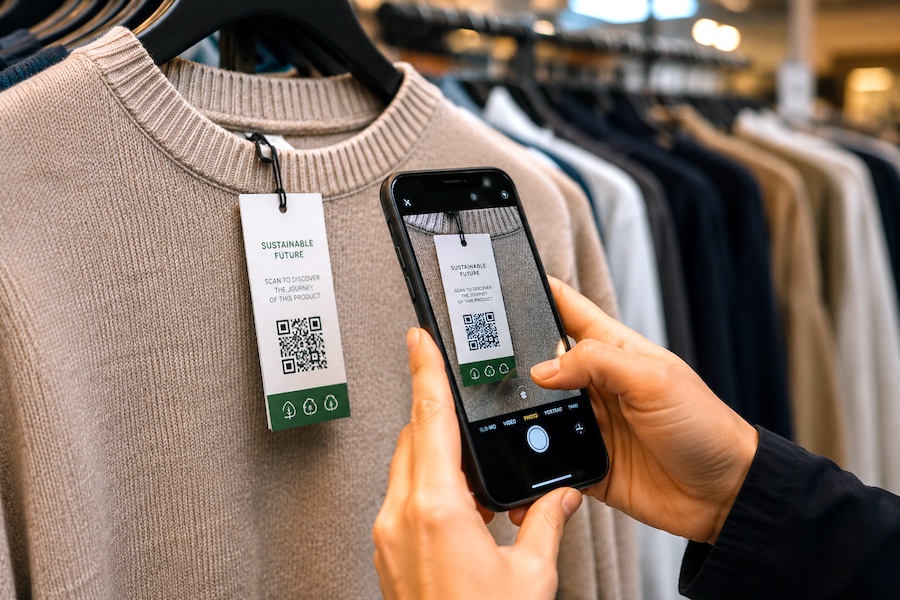
Regulation (EU) 2024/1781 of the European Parliament and of the Council of 13 June 2024 establishing a framework for the setting of ecodesign requirements for sustainable products, amending Directive (EU) 2020/1828 and Regulation (EU) 2023/1542 and repealing Directive 2009/125/EC (Text with EEA relevance), OJ L, 2024/1781, 28.6.2024 © 2026 TexData International / based on AI
On 20 July, the European Commission launched the Digital Product Passport Registry together with a testing environment, marking an important milestone in making the Digital Product Passport (DPP) a practical reality for businesses placing products on the EU market.


Established under the Ecodesign for Sustainable Products Regulation (EU) 2024/1781, the Digital Product Passport is a digital container of product information designed to strengthen supply chain transparency, support more informed consumer choices and facilitate compliance across the Single Market. While product data is stored in a decentralised manner, economic operators must register each Digital Product Passport in the Registry, which provides the secure infrastructure needed to register unique product identifiers and associated metadata.

This milestone follows the adoption of the Implementing Regulation establishing the practical arrangements for the Registry, bringing an essential component of the Digital Product Passport system into operation.

The Registry will support products covered by the Ecodesign for Sustainable Products Regulation, including textiles, steel and aluminium, tyres, furniture, ICT products and energy-related products. It will also support product groups covered by other Union legislation requiring Digital Product Passport registration, including certain large batteries, construction products, toys, detergents, and end-user surfactants.

Clear rules for implementation

The Implementing Regulation establishes

  • clear rules for access management and user verification;
  • requirements for the registration and storage of the necessary data;
  • the technical architecture of the Registry.

Registration is available through either a secure user interface or an application programming interface (API), enabling economic operators to integrate registration into their existing digital systems where appropriate.

Economic operators can also request proof of registration in the form of a secure electronic document. This can be used to demonstrate compliance with third parties, particularly in business-to-business (B2B) transactions.

The Implementing Regulation also clarifies the respective responsibilities of the European Commission and EU countries, helping to ensure legal certainty, predictability and trust.

Designed for usability, interoperability and trust

Responding to feedback from EU countries and stakeholders, the Registry has been designed with a strong focus on usability, interoperability, and trust. Businesses will have access to a free semantic repository providing machine-readable data models, definitions and vocabulary across product groups through documented APIs. This will support interoperability, facilitate data management, and help reduce administrative burden as the Digital Product Passport is rolled out across different sectors. The Registry also includes a verification framework and logging system that strengthens security, accountability and reliable access management.

The Digital Product Passport is a key enabler of the circular economy, a more transparent Single Market and more informed consumer choices. By putting the operational foundations of the Registry in place, the Commission is making it easier for economic operators to register product information, demonstrate compliance, and exchange reliable, interoperable data across the Single Market.

Publication of the six : standards

In parallel, and to facilitate the creation of Digital Product Passports and complement the Registry, eight harmonised standards underpinning the interoperability of the : system have been developed in close cooperation with the CEN-CENELEC. Six of these standards, covering unique identifiers, interoperability, data carriers, APIs, data exchange protocols and data storage, are already available and published by the national standardisation organisations. References to the harmonised parts of these standards are already published by the European Commission.

Resources now available to support implementation

The Commission will continue to support implementation and ensure that the Registry is accessible, secure and effective for all users. The current testing phase will help ensure a smooth rollout ahead of the first implementation deadline on 18 February 2027 for certain types of large batteries.

Economic operators can now access the testing environment, technical documentation, implementation guidelines, webinars, and the latest information through the new : website. A dedicated helpdesk is also available to support businesses throughout the registration process.

Learn more:

The Digital Product Passports Registry


More News from European Commission

#Nonwovens

EU imposes definitive anti-dumping duties on Chinese PET spunbond imports

The European Commission has introduced definitive anti-dumping duties ranging from 39.8% to 48.1% on imports of PET spunbond from China. The measures, which entered into force on 31 October 2026, will remain in place for five years and are intended to address unfairly priced imports that have caused injury to European manufacturers. The EU market for these nonwoven materials is valued at approximately €200 million.

#Europe

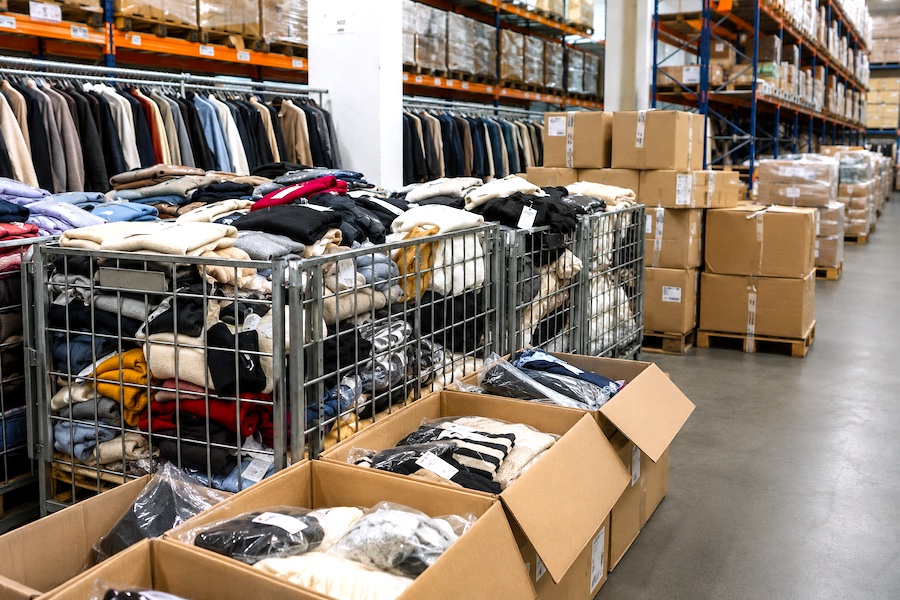
EU ban on destroying unsold clothing and footwear now in force

The European Union's ban on the destruction of unsold clothing, clothing accessories and footwear has entered into force. Since July 19, 2026, large companies across the EU have been prohibited from destroying unsold textile products, while medium-sized companies will be required to comply with the same rules from 2030.

#Recycling / Circular Economy

Commission clarifies rules on plastic bottles recycling

The European Commission today adopted new rules on recycling of single-use plastic beverage bottles made primarily of polyethylene terephthalate (PET bottles). These rules establish, for the first time, a methodology to calculate, verify and report chemically recycled content. This is part of the Commission’s December 2025 plastics package.

#Europe

EU and Australia strengthen relations with Security and Defence Partnership and Trade Agreement

The EU and Australia have today announced the adoption of a groundbreaking Security and Defence Partnership. They have also concluded negotiations for an ambitious and balanced free trade agreement (FTA) and agreed to launch formal negotiations for the association of Australia to Horizon Europe, the world's largest funding programme for research and innovation. With these steps, the EU and Australia are delivering mutually beneficial outcomes and further reinforcing their already close relations in a time of geopolitical uncertainty.

More News on Europe

#Associations

European and Canadian textile associations call for stronger transatlantic cooperation

Ahead of the EU–Canada Summit in Montréal on 29–30 October 2026, EURATEX, the Canadian Textile Industry Association (CTIA) and the Canadian Apparel Federation (CAF) have issued a joint statement calling for closer industrial cooperation, improved implementation of the CETA trade agreement and stronger partnerships in innovation, sustainability and advanced textile technologies.

#Europe

Strategic policy can drive a clean and competitive European industry

Europe can strengthen its industrial competitiveness while cutting climate and environmental pressures, but progress needs to accelerate. A new report from the European Environment Agency (EEA) finds that the transition of key industrial sectors offers opportunity and explores the policies, investments and enabling conditions needed to drive clean, circular and decarbonised production at scale, delivering prosperity.

#Europe

Textile ETP launches bioeconomy strategy for Europe’s textile industry

On 22 September 2026, Textile ETP's Circular & Biobased Textiles Innovation Hub published its strategy for the biobased and circular transformation of Europe's textile and apparel industry.

#Europe

European textile industry calls for €10 handling fee on ultra-fast-fashion imports

The introduction of the €3 customs duty on low-value imports marks an important milestone in Europe’s efforts to address the challenges created by the rapid growth of ultra-fast-fashion imports. Together with the abolition of the €150 customs duty exemption, it demonstrates that policymakers are willing to act when market distortions become impossible to ignore. However, the European textile and clothing industry considers this a first step rather than the final destination.

Latest News

#Textile processing

YKK Bangladesh celebrates 25 years of fastening production and business development

YKK Bangladesh Pte. Ltd., a subsidiary of Japanese fastening manufacturer YKK Corporation, has celebrated its 25th anniversary with a commemorative ceremony in Dhaka on November 8, 2026. Since its establishment in November 2000, the company has expanded its manufacturing capacity and business operations alongside the growth of Bangladesh's apparel industry.

#ITMA Asia + CITME 2026

Murata Machinery to showcase AIcone winding and high-speed VORTEX spinning at ITMA ASIA 2026

Japanese textile machinery manufacturer Murata Machinery will present its PROCESS CONER AIcone automatic winder and VORTEX 870 EX spinning machine at ITMA ASIA + CITME 2026. Under the theme “Right Choice, Bright Future”, the company will highlight technologies for efficient yarn manufacturing, combining energy-saving winding solutions with high-speed air-jet spinning. Visitors can meet Murata Machinery in Hall 5, Booths E01 and E02.

#ITMA Asia + CITME 2026

DORNIER highlights airbag, filtration and composite weaving technologies at ITMA ASIA 2026

Lindauer DORNIER will present its latest developments in air-jet and rapier weaving technology for technical textiles at ITMA ASIA + CITME 2026. The German machinery manufacturer will focus on the reliable and efficient production of airbag fabrics, high-density filters and reinforcement textiles for fibre-reinforced composites. Alongside its A2 air-jet and P2 rapier weaving machines, DORNIER will highlight its TRITOS FLEX technology for complex 3D composite preforms, retrofit solutions and expanded service capabilities in Asia. The company will exhibit in Hall 3, Stand E02.

#Retail & Brands

Marks & Spencer expands across Asia Pacific through partnership with Global Fashion Group

Marks & Spencer (M&S) and Global Fashion Group (GFG) have announced a strategic partnership to expand the British retailer's fashion business across Asia Pacific. M&S has launched on Southeast Asian fashion platform ZALORA and plans to enter THE ICONIC in Australia and New Zealand in early 2027. The agreement also introduces regional fulfilment for Australian M&S.com orders, enabling faster deliveries and returns while supporting a capital-light international growth strategy.

TOP