[pageLogInLogOut]

#Market Analysis & Forecasts

Economic and geopolitical headwinds influence industrial nonwovens growth to 2029

The global consumption of industrial nonwovens in 2024 is 5.3 million tonnes or 83.4 billion square metres (m2), valued at $21.2 billion, according to The Future of Industrial Nonwovens to 2029 from Smithers. Growth rates for 2019-24 were 6.9% (tonnes), 6.9% (m2) and 6.7% ($). This reflects a recovery in some markets from Covid-19 as well as an adjustment to the Russian invasion of Ukraine in 2022 and its repercussions (inflation, energy supply/price, global economic growth reductions).

Other external factors affecting industrial nonwovens include China’s slowing economic growth, overexpansion in many nonwoven products, and ongoing geopolitical issues in the Middle East (Hamas/Israel war and Red Sea shipping).

Growth rates for 2024-29 are projected at 7.3% (tonnes), 8.0% (m2), and 8.2% ($). This accounts for projections that there will be an economic recovery globally by 2029.

There are almost 20 independent end use markets defined as industrial nonwovens in this report. This diversification shields the overall market from some issues. When consumers are not buying automobiles, governments are supporting road and bridge building, when the residential housing market slows, the non-residential market may surge; this has kept industrial nonwovens growing even in slow global economic growth periods. Projections in 2024 are that this slow growth period will end by 2029 (perhaps as early as 2025) and the overall industrial nonwovens market will benefit; the last four to five years have caused some slowing in the industrial wipes market growth.


The largest end uses are building/construction, geotextiles/agriculture, filtration, automotive and coating substrates.

Some of the fastest-growing end uses for industrial nonwovens are filtration, geotextiles, shoes/footwear, conveyor belts/wires, composites and industrial wipes.

https://www.smithers.com/services/market-reports/nonwovens/the-future-of-industrial-nonwovens-to-2029

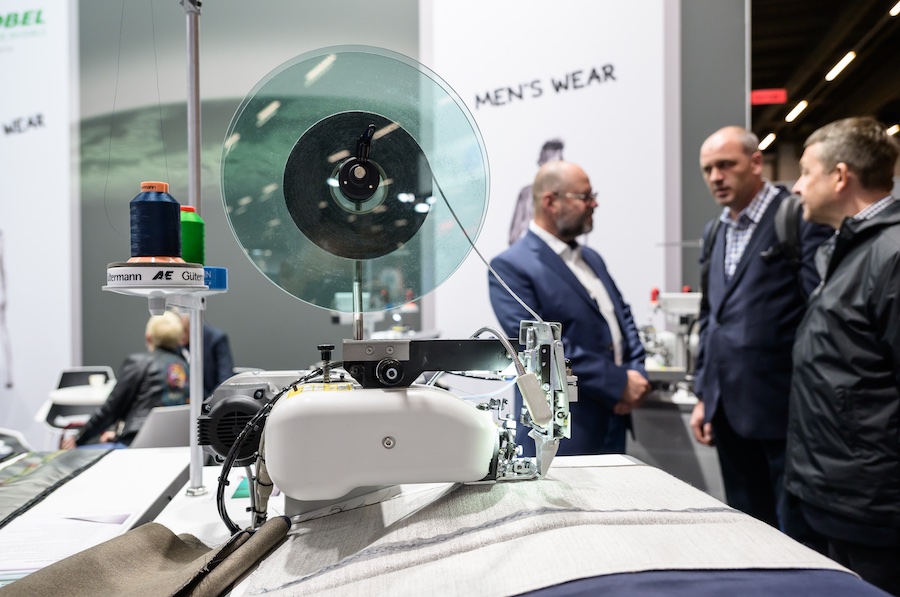
Carbon filter © 2024 Smithers


More News from TEXDATA International

#People

Happy Holidays!

Dear reader, the year 2025 is drawing to a close. We are entering what we hope will be a peaceful holiday season, spending time with our families and taking a moment to pause and reflect. We hope we have been able to support you once again this year with relevant news and articles, and we look forward to surprising you with many innovations in the coming year. Enjoy the festive season, stay healthy, and we wish you a happy and joyful holiday season.

#Recycling / Circular Economy

textile.4U publishes special edition “Top 100 Textile Recycling Companies 2025”

With a comprehensive 176-page special edition, textile.4U is dedicating its latest issue entirely to one of the most dynamic and influential topics in today’s textile industry: textile recycling. The new issue, published exclusively in high-quality print, presents the Top 100 textile recycling companies researched and selected by TexData – organizations that already play a key role in the transition to circular textiles or are expected to have a significant impact in the near future.

#Recycling / Circular Economy

Responsible Textile Recovery Act of 2024 signed by Governor

Senator Josh Newman (D-Fullerton) is proud to announce that Senate Bill 707 (SB 707), the Responsible Textile Recovery Act of 2024, has been signed into law by the Governor of California, Gavin Newsom. This groundbreaking legislation establishes the country’s first Extended Producer Responsibility (EPR) textile recycling program, marking a significant step forward in the state’s efforts to combat waste and promote sustainability.

#Textiles & Apparel / Garment

Modtissimo promotes sustainability with 28 coordinates in the Green Circle

Modtissimo is proving more and more to be a textile and clothing show that delivers the latest innovations in the area of sustainability, with the iTechStyle Green Circle being the main showcase for companies' creations. In this 60+4 edition, taking place on 12 and 13 September, 28 coordinates will be exhibited in a section organised by CITEVE and curated by Paulo Gomes.

More News on Market Analysis & Forecasts

Latest News

#Weaving

Lindauer Dornier announces leadership transition in weaving machine business

After more than ten successful years at Lindauer DORNIER GmbH, Mr Wolfgang Schöffl will leave the family-owned company at the end of the year to enter well-deserved retirement.

#Heimtextil 2026

Texpertise Focus AI: Messe Frankfurt puts Artificial Intelligence centre stage at its international textile and apparel trade fairs

Under the banner 'Texpertise Focus AI, Messe Frankfurt will place a strong emphasis on Artificial Intelligence (AI) across its international textile and apparel trade fairs from 2026 onwards, setting a future-shaping signal for the industry. The initiative highlights the responsible use of AI along the entire textile value chain, from fibre production to the point of sale. The programme will launch at Heimtextil in Frankfurt in January 2026.

#Technical Textiles

Autoneum and Polestar set new benchmarks for passenger experience and sustainability

As the global market leader in sustainable acoustic and thermal management, Autoneum is a key supplier of interior and exterior components for the highly anticipated Polestar 5 model. The successful collaboration between Autoneum and Polestar marks a significant milestone in sustainable automotive engineering: the electric grand tourer sports car features several innovations in lightweight, fully recyclable polyester-based components that ensure a superior driving experience. Polestar 5 was revealed at the IAA Mobility 2025 in Munich and is available in 24 markets.

#Natural Fibers

Cashmere producers stress the importance of The Good Cashmere Standard®

At the invitation of the Aid by Trade Foundation (AbTF), over 70 experts from the cashmere production and supply chain, as well as other specialists, met at the GCS Unit Meeting in Shanghai, China to discuss the progress and new objectives of The Good Cashmere Standard (GCS). The meeting focused on implementation and verification of the standard, important aspects of animal welfare and the importance of the standard in the global textile market.

TOP