[pageLogInLogOut]

#Natural Fibers

Aid by Trade Foundation publishes 2024 annual report: Growing impact for environment and people

The Aid by Trade Foundation (AbTF) is on a growth track. Despite a challenging global economy, AbTF increased its income by six percent from 2023 to 2024, reaching a total of EUR 8.6 million. This revenue has been invested in comprehensive measures for the sustainable production of cotton and cashmere as well as for expanded measures to ensure transparency in global value chains. In addition to gaining new partners in 2024—including big names like Mango, Nordstrom, and CWS Workwear—AbTF was able to expand its global stakeholder network active in the production of raw materials or textiles.


The fact that around 3,000 companies throughout the textile supply chain now work with raw materials verified under an AbTF standard illustrates the foundation’s global importance in international trade. “An outstanding example of what committed action in the private sector can achieve has been offered by the work of the Aid by Trade Foundation for the past 20 years,” says the entrepreneur Prof. Dr Michael Otto, who founded AbTF. He adds, “This annual report is therefore more than just a matter of taking inventory. Rather, it shows how much AbTF, its standards, its partner companies, and the raw material producers make possible, united in the conviction that they can give the world a better future.”

More Than 100 Fashion Brands and Textile Companies Use AbTF’s Standards

Including over 100 fashion brands and textile companies, a growing number of international trading partners are enriching their supply chains with raw materials produced in accordance with AbTF’s sustainability standards: Cotton made in Africa© (CmiA), CmiA Organic, and The Good Cashmere Standard© (GCS). This makes these standards market leaders. GCS, for instance, is the world’s only standard for sustainably produced cashmere wool from Inner Mongolia, and its importance for trade is growing continuously; due in part to these factors, the total quantity of textiles containing GCS-verified cashmere wool grew by 30 percent from 2023 to 2024. CmiA, for its part, continues to find success, with more than a third of all cotton produced in Africa being verified under CmiA and entering the global textile market as such.

Innovations Promote Cashmere Goats’ Welfare and Greatly Increase Cotton Yields

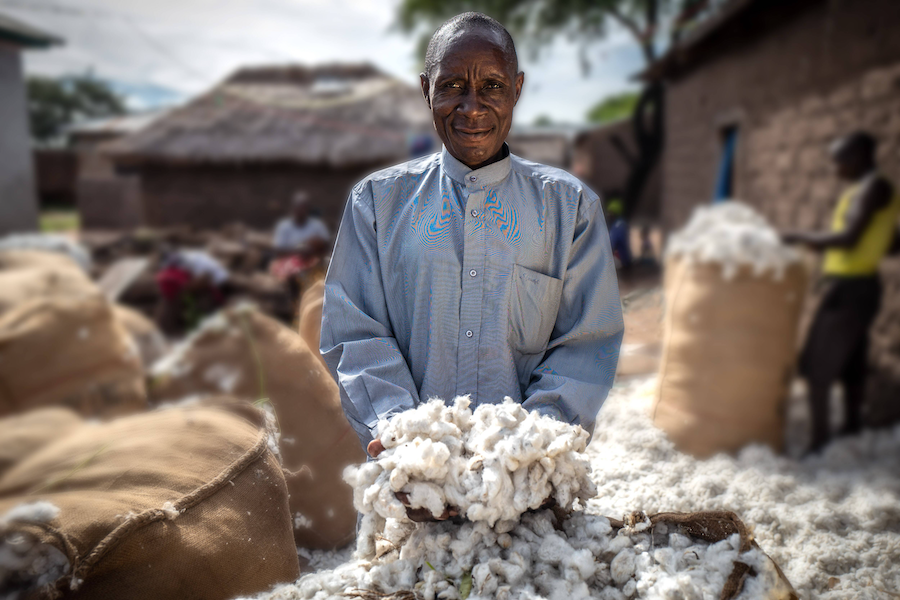
The attractiveness of the AbTF standards was boosted significantly by their field results in 2024. For one, over 800,000 cotton farmers and 5,500 goat herders worked in accordance with AbTF’s sustainability standards to supply the international textile market last year. For another, independent verifications confirmed that all AbTF standards are highly effective in terms of profitability, environmental protection, and dignified working conditions. AbTF also conducted pioneering projects to, for instance, expand cashmere model farms, introduce an animal welfare assessment for cashmere goats, and promote regenerative cultivation methods in the cotton sector.


The latter was a key point of focus and progress in the past year, as AbTF’s Regenerative Cotton Standard© (RCS) was successfully implemented in Tanzania and India. Through RCS, AbTF is pursuing a forward-looking approach that focusses on the regeneration of ecosystems. RCS is already finding success, with its use of biochar on demonstration fields increasing yields by 15 percent. AbTF has also achieved success in environmental protection, where the focus was on improving biodiversity while combatting soil degradation and the effects of climate change; better soil measures, for example, resulted in harvests up to 37 percent larger on demonstration fields.

Production of CmiA Organic cotton surpassed the previous year’s total by 50 percent. Thanks to its social component, the standard was able to complement its environmental benefits with achievements in both cultivation and trade.

Through the CmiA Community Cooperation Programme (CCCP), AbTF contributed to the improvement of the living conditions of cotton farmers and their families in Africa, for example, by financing educational and health projects that had promoted nearly 100 women’s clubs and built more than 100 classrooms by the end of 2024.

Seamless Traceability, From Field to Shelf, Through Blockchain Technology and Tracking System

As legal regulations continue to grow, it can only be a benefit that AbTF’s systems already enable textile companies and fashion brands to ensure the complete traceability of their raw materials from production to the finished product. In 2024, the foundation further expanded both its own tracking systems and the use of modern Fibercoins™ technology. To offer companies additional security in their supply chains, AbTF developed the Transparency Standard in 2024.

“The past year’s many successes are once again proof that environmental protection and support for smallholder communities can very well be achieved by mobilising the private sector,” says Tina Stridde, the managing director of the Aid by Trade Foundation, qualifying, “This does require both dedicated partners and an approach that is both practical and innovative.”


More News from Aid by Trade Foundation (AbTF)

#Natural Fibers

Cashmere producers stress the importance of The Good Cashmere Standard®

At the invitation of the Aid by Trade Foundation (AbTF), over 70 experts from the cashmere production and supply chain, as well as other specialists, met at the GCS Unit Meeting in Shanghai, China to discuss the progress and new objectives of The Good Cashmere Standard (GCS). The meeting focused on implementation and verification of the standard, important aspects of animal welfare and the importance of the standard in the global textile market.

#Raw Materials

Aid by Trade Foundation receives Honorary Award of the German Africa Foundation 2025

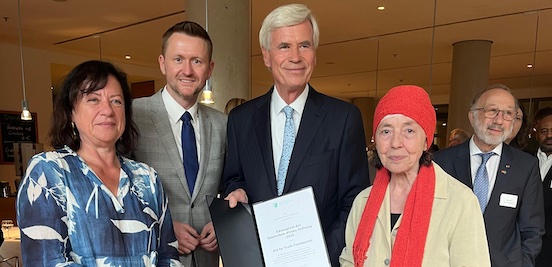
On the evening of 25 June, the Hamburg-based Aid by Trade Foundation (AbTF) received the Honorary Award of the German Africa Foundation 2025. Prof. Dr Michael Otto, the foundation’s founder and a prominent entrepreneur, accepted the award at a ceremony held at the German Bundestag. The Parliamentary State Secretary to the Federal Minister for Economic Cooperation and Development (BMZ), Dr Bärbel Kofler, presented the award in the presence of guests from politics, business and civil society as well as representatives of African embassies.

#Sustainability

Aid by Trade Foundation turns 20, invests half a million Euros in new biodiversity fund

To effectively promote nature conservation and biodiversity, the Aid by Trade Foundation (AbTF) announced at the second Hamburg Sustainability Conference (HSC) that it would be investing 500,000 euros in the ‘AbTF Biodiversity Fund’ to mark the foundation's 20th anniversary. Since it was established in 2005 by the entrepreneur Prof. Dr Michael Otto, AbTF has been committed to transforming the textile and fashion industries.

#Raw Materials

Laly Lichtenfeld joins AbTF Board of Trustees

The Aid by Trade Foundation is pleased to welcome Laly Lichtenfeld, an internationally renowned leader in community-driven nature conservation, to its board of trustees. After years of researching community-driven conservation, including as a Fulbright Scholar in 1996, she co-founded African People & Wildlife in 2005 with the aim of promoting peaceful coexistence between rural communities and wildlife such as lions and elephants.

More News on Natural Fibers

#Raw Materials

Modern testing methods for raw cotton

The 38th International Cotton Conference Bremen will take place from 25 to 27 March 2026 at the Bremen Parliament. This conference has traditionally stood for in-depth expertise and international exchange. The program will focus on technical innovations, market trends, and regulatory frameworks across the entire value chain – from agriculture to the circular economy. With high-profile speakers, the conference is regarded as the key meeting point for the global cotton industry. Today’s focus: Cotton quality and testing methods.

#Recycled_Fibers

Advancing the future of stretch: Fashion for Good launches new project to validate bio-based and recycled elastane

Launched today, Stretching Circularity is a collaborative project initiated by Fashion for Good dedicated to accelerating the adoption of lower-impact elastane alternatives that are compatible with circular textile systems. By validating bio-based and recycled elastane solutions through pilot-scale testing and demonstrator garments, the initiative aims to remove one of the most significant technical barriers to a circular textile economy.

#Spinning

Perfect quality through collaboration: Machinery from Trützschler, Toyota and Murata at Zirve Tekstil

In today’s textile industry, excellence is not achieved by chance – it’s the result of deliberate decisions, technical expertise, and the courage to go beyond conventional paths. The Turkish company Zirve Tekstil has done just that: by combining the best technologies from Trützschler, Toyota and Murata, they’ve created a production setup that delivers outstanding yarn quality – recognized worldwide.

#Man-Made Fibers

Lenzing AG to become majority owner of TreeToTextile AB and accelerates industrialization of new fibers

The Lenzing Group is taking another strategic milestone by acquiring a controlling majority in the Swedish innovation company TreeToTextile AB. This step strengthens Lenzing’s position as a leading provider of sustainable, wood‑based specialty fibers and expands its innovation pipeline with a highly scalable, patent‑protected technology platform. The transaction is executed through the issuance of new shares.

Latest News

#Recycling / Circular Economy

Circulose restarts commercial-scale production at Ortviken plant in Sundsvall

Circulose today announced the restart of its commercial-scale production plant at Ortviken in Sundsvall, Sweden, marking a significant step in scaling next-generation materials for the global fashion industry. The company plans to resume production of CIRCULOSE®, a recycled pulp made entirely from discarded cotton textiles, in the fourth quarter of 2026.

#Textiles & Apparel / Garment

VIATT 2026 to debut German Pavilion, strengthening European participation alongside key Asian textile hubs

Vietnam’s textile and garment sector continues to be a major contributor to the country’s economic growth, with export revenues expected to reach USD 46 billion in 2025, a 5.6% increase from 2024 . From 26 – 28 February, the Vietnam International Trade Fair for Apparel, Textiles and Textile Technologies (VIATT) is set to contribute to economic growth opportunities by accelerating digital transformation and green transition across the entire textile value chain. The upcoming edition will respond to the rising demand for advanced technologies and sustainable materials with the introduction of the German Pavilion, alongside strong exhibitor participation from key Asian sectors, as well as several high-profile fringe events.

#Sustainability

Ying McGuire becomes new CEO of Cascale

Cascale today announced the appointment of Ying McGuire as Chief Executive Officer, effective June 1, 2026.

#Technical Textiles

Sustainable, lightweight, and sound absorbing: Polyester-based front trunk solution for BEVs

As car manufacturers look to further reduce their carbon footprint, Autoneum has developed an innovative front trunk solution for battery electric vehicles (BEVs), made entirely from polyester-based textile. The Ultra-Silent Frunk offers significant weight reduction, improved acoustic and thermal insulation, and uses up to 70 percent recycled material, supporting sustainable and efficient vehicle design. Autoneum, global technology leader in acoustic and thermal management for vehicles, has already received orders for the new frunk from three major OEMs in Asia and Europe to be built in three BEV models. Series production for two BEVs has been underway in China and Germany since last year.

TOP