[pageLogInLogOut]

#Recycling / Circular Economy

loopamid now commercially available: BASF starts up its first plant for recycled polyamide 6

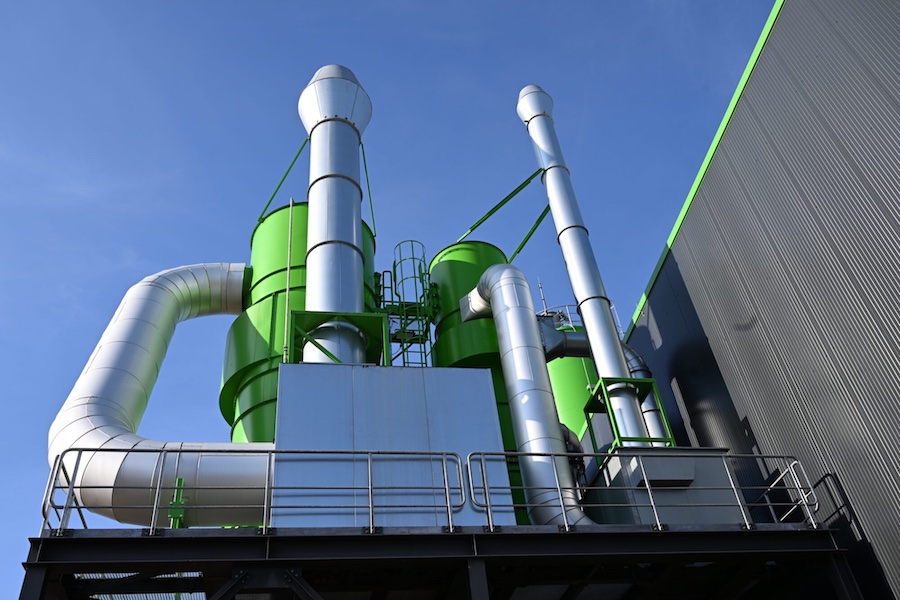
BASF announced the start-up of the world’s first commercial loopamid® plant. The production facility at the Caojing site in Shanghai, China, has an annual capacity of 500 metric tons and marks an important step in the supply of sustainable products for the textile industry. “The startup of this plant once again demonstrates BASF’s innovative strength,” said Stephan Kothrade, member of the Board of Executive Directors and Chief Technology Officer (CTO) of BASF SE.

Plant and products certified according to the Global Recycled Standard (GRS)

Production plant opens in Shanghai, China, with a capacity of 500 metric tons of loopamid per year

“As an integral part of our Winning Ways strategy, we utilize our chemistry to develop solutions for the biggest challenges of our time. loopamid transforms textile waste into a valuable resource, helps save raw materials and closes the textile loop.”

loopamid is a recycled polyamide 6 that is entirely based on textile waste. The new production facility supports the growing demand for sustainable polyamide 6 fibers in the textile industry. “I am proud of our team, which has worked with great passion and dedication to achieve the commercialization of loopamid,” said Ramkumar Dhruva, President of BASF’s Monomers division. “The technology behind loopamid allows textile-to-textile recycling for polyamide 6 in a wide variety of fabric blends, including those with elastane. I am convinced that loopamid not only makes a significant contribution to the textile circular economy, but also helps our customers achieve their sustainability goals.”

GRS certification for plant and loopamid products

The plant as well as the quantities of loopamid produced are certified according to the Global Recycled Standard (GRS). This certification guarantees to consumers and textile manufacturers that loopamid is made from recycled materials and that the production processes comply with specific environmental and social criteria. In addition, first yarn manufacturers are successfully using loopamid.

Post-industrial and post-consumer textile waste as basis for loopamid

To produce loopamid in its new plant, BASF currently utilizes industrial textile waste from textile manufacturing and will gradually increase the share of post-consumer waste. This feedstock includes cutting scraps, defective cuts, offcuts and other production textile waste from the textile industry. These materials are collected and provided to BASF by customers and partners. End-of-life garments made from polyamide 6 and other textile products can also be utilized for the production of loopamid. All these waste materials are challenging to recycle because they typically consist of a mixture of different fibers and materials as well as dyes and additives. Additionally, for post-consumer waste recycling, buttons, zippers and accessories must be removed in advance. BASF works closely with partners and customers to accelerate the development of collection and sorting systems.
More News from BASF Aktiengesellschaft
Performance Chemicals for Textiles Europe

#Research & Development

How innovations drive BASF’s success

“Innovation has always been part of BASF’s DNA. Especially in these volatile times, it is crucial to leverage our innovative strength to develop competitive solutions that differentiate us as a company in our markets and give us a competitive edge,” said Dr. Stephan Kothrade, Member of the Board of Executive Directors of BASF and Chief Technology Officer, at the company’s Research Press Briefing held today. To achieve this, BASF implemented its “Winning Ways” strategy about a year ago with the clear goal of becoming the preferred chemical company to enable its customers’ green transformation.

#Nonwovens

Turning diaper waste into new value: BASF, Essity and TU Wien pioneer circular solutions

BASF, one of the world’s leading chemical companies and manufacturer of superabsorbent polymers (SAP), and Essity, a global leading hygiene and health company, joined forces together with the Technical University of Wien to revolutionize recycling of absorbent hygiene products (AHP).

#Textiles & Apparel / Garment

BASF at SIMAC 2025: Recycling meets Performance – PU solutions for the future of footwear

BASF is presenting new materials, concepts and recycling methods for polyurethanes in footwear at SIMAC Tanning Tech. The leading international trade fair will take place from September 23-25 in Milan, Italy. We will showcase our unique and integrated toolbox of Elastopan® (PU) and thermoplastic polyurethanes Elastollan® and Infinergy®. Together with our partners and customers we bring innovative products to the market offering utmost lightness paired with mechanical performance and automated processing.

#Textile chemistry

BASF strengthens liquid enzyme portfolio for the laundry and cleaning industry

By expanding its product portfolio for liquid enzymes, BASF is further strengthening its position as an innovation leader and provider of essential ingredients for the home care and I&I industry.

More News on Recycling / Circular Economy

Latest News

#People

Happy Holidays!

Dear reader, the year 2025 is drawing to a close. We are entering what we hope will be a peaceful holiday season, spending time with our families and taking a moment to pause and reflect. We hope we have been able to support you once again this year with relevant news and articles, and we look forward to surprising you with many innovations in the coming year. Enjoy the festive season, stay healthy, and we wish you a happy and joyful holiday season.

#Weaving

Lindauer Dornier announces leadership transition in weaving machine business

After more than ten successful years at Lindauer DORNIER GmbH, Mr Wolfgang Schöffl will leave the family-owned company at the end of the year to enter well-deserved retirement.

#Heimtextil 2026

Texpertise Focus AI: Messe Frankfurt puts Artificial Intelligence centre stage at its international textile and apparel trade fairs

Under the banner 'Texpertise Focus AI, Messe Frankfurt will place a strong emphasis on Artificial Intelligence (AI) across its international textile and apparel trade fairs from 2026 onwards, setting a future-shaping signal for the industry. The initiative highlights the responsible use of AI along the entire textile value chain, from fibre production to the point of sale. The programme will launch at Heimtextil in Frankfurt in January 2026.

#Technical Textiles

Autoneum and Polestar set new benchmarks for passenger experience and sustainability

As the global market leader in sustainable acoustic and thermal management, Autoneum is a key supplier of interior and exterior components for the highly anticipated Polestar 5 model. The successful collaboration between Autoneum and Polestar marks a significant milestone in sustainable automotive engineering: the electric grand tourer sports car features several innovations in lightweight, fully recyclable polyester-based components that ensure a superior driving experience. Polestar 5 was revealed at the IAA Mobility 2025 in Munich and is available in 24 markets.

TOP