[pageLogInLogOut]

#Research & Development

ITA postdoc Dr Leonie Beek is revolutionising oil filtration with a bionic textile
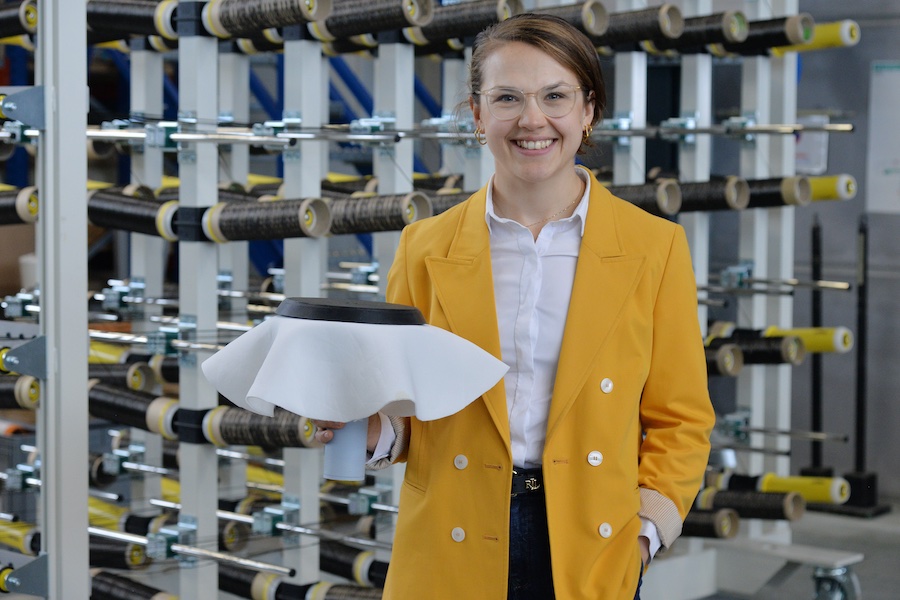
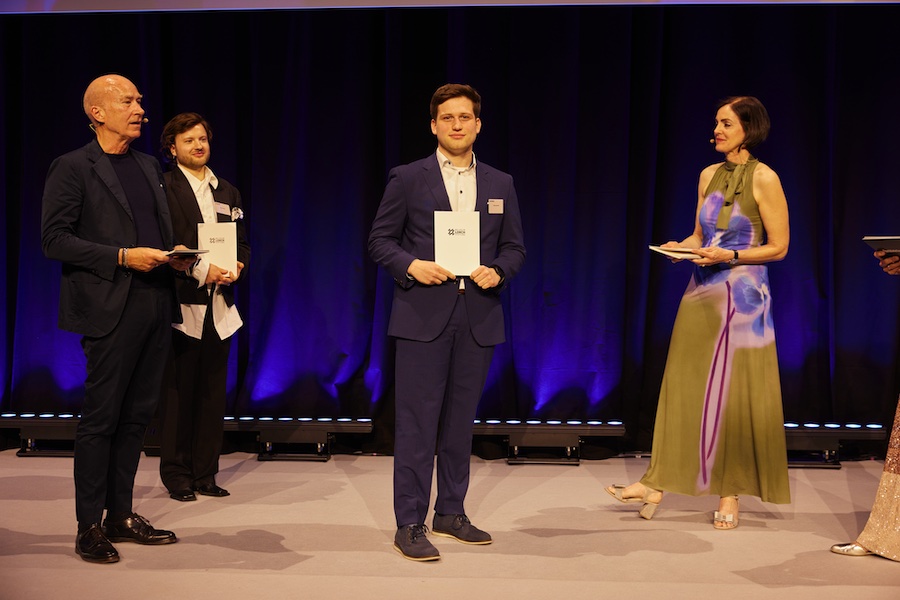
On various biological surfaces, oil is adsorbed from water surfaces and transported along the leaf. In her dissertation, ITA Postdoc Dr Leonie Beek transferred this effect to a technical textile using her Bionic Oil Absorber (BOA), which can remove up to 4 litres of diesel per hour from water at technological readiness level 4. For this development, Dr Beek was awarded the Paul Schlack Prize 2025 for her dissertation ‘Bionic textiles for oil-water separation modelled on superhydrophobic biological surfaces’ on 10 September 2025. The award ceremony took place during the opening event of the Dornbirn GFC Global Fiber Congress in Austria.
ITA postdoc Dr Leonie Beek is revolutionising oil filtration with a bionic textile © Andreas Schmitter


Paul Schlack Prize 2025 goes to Leonie Beek

Dr Leonie Beek's dissertation focused on the sustainable separation of oil and water. On various biological surfaces, oil is adsorbed from water surfaces and transported along the leaf. This effect differs from technical solutions in that oil-water separation is achieved without external energy and without toxic substances.

Possible use in harbour basins or in the event of flooding/pollution of inland waters

Dr Beek integrated the bionic textile into a floating device (Bionic Oil Adsorber – BOA). The BOA demonstrator, which has a technology readiness level of 4, can remove up to 4 litres of diesel per hour. It is intended for use in port areas. Another promising application is in the event of flooding and pollution of inland waters and urban sewage treatment plants.

Ecologically and economically sustainable technology

The technology is ecologically sustainable, as both the textile and the separated oil can be reused. It is also economically sustainable, as the textile is up to 13 times cheaper than sorption materials with a service life of 21 days.

Overall, Dr Leonie Beek succeeded in her dissertation in transferring the biological principle to a bionic textile and presenting a product for use in the completely new application of oil-water separation. This is the first time that superhydrophobic surfaces have been used outside of friction reduction.

With the Paul Schlack Prize, CIRFS promotes innovation in man-made fiber research at universities and research institutes. The award ceremony took place during the opening event of the Dornbirn GFC Global Fiber Congress in Austria.

Background

Since 1971, the Paul Schlack Prize has been awarded at the Dornbirn GFC Global Fiber Congress (formerly Dornbirn Man-made Fibers Congress) in Dornbirn (Austria) to promote chemical fibre research at universities and research institutes. Previous ITA winners of the Paul Schlack Prize include Dr Stefan Peterek, Dr Andreas De Palmenaer, Prof. Dr Gunnar Seide, Dr Wilhelm Steinmann, Dr Stephan Walter, Dr Gisa Wortberg, Dr Benjamin Weise, and Dr Markus Beckers.
More News from Institut für Textiltechnik of RWTH Aachen University (ITA)

#Research & Development

Small tolerances, big impact and a recyclable alternative to elastane

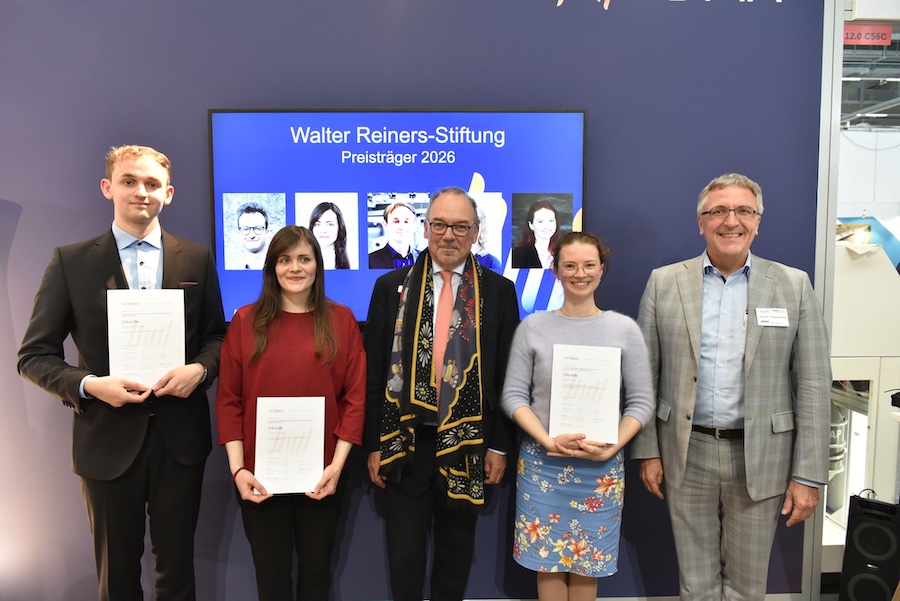
ITA Master's student Janne Warnecke investigated tension differences over the fabric width in the weaving process and thereby contributed to quality assurance; ITA Bachelor's student Jasmin Roos found a basis for the development of recyclable yarns and textiles. For these developments, they were awarded the Walter Reiners Foundation's Promotion and Sustainability Prizes on 27 November. Peter D. Dornier, Chairman of the Walter Reiners Foundation, presented the awards at the Aachen-Dresden-Denkendorf International Textile Conference (ADD-ITC) in Aachen, Germany.

#Research & Development

IRG Polymer Recycling wraps up productive 2025 project cycle

The Industry Research Group (IRG) Polymer Recycling has completed another successful project year. Last week, partners from across the textile value chain met at the Institute for Textile Technology (ITA) at RWTH Aachen University for the full-term project meeting.

#Research & Development

Aachen Summer School: Strengthening German-Korean cooperation in 4D and robotics

The Aachen Summer School has established itself as an important platform for promoting cooperation between RWTH Aachen University and Seoul National University. The focus is on practice-oriented research projects in the field of 4D and robotics technologies, which have been successfully implemented for years at the Institut für Textiltechnik of RWTH Aachen University.

#Research & Development

Cooperation between Germany and India (Tamil Nadu) in the field of AI-supported manufacturing, robotics and smart textiles

The Tamil Nadu Industrial Development Corporation (TIDCO) and the Institut für Textiltechnik (ITA) of RWTH Aachen University are planning to cooperate in the future in the field of AI-supported manufacturing, robotics and smart textiles. At the same time, the aim is to promote talent exchange and a sustainable Indian-German partnership.

More News on Research & Development

#Research & Development

More safety and comfort for protective clothing thanks to auxetic fabrics

When everyday materials are pulled, they stretch or elongate in the direction of the pull and become narrower in cross-section. We can also observe this property in two-dimensional textiles. Auxetic structures behave differently here. They have the striking property of not changing under tensile stress or even increasing their width or thickness. These properties are advantageous, for example, in protective textiles or textile filter media. The DITF are researching auxetic fabrics for various applications.

#Research & Development

Fraunhofer CCPE presents the “Monomaterial Design Set” – Innovative solutions for circular product design

Composite materials made from different types of plastic often extend the lifetime of products but make recycling more difficult in the circular economy. That is why Fraunhofer CCPE has developed the “Monomaterial Design Set”. This new approach helps to reduce the variety of plastics used in durable products and offers circular solutions for designers and product developers.

#Research & Development

How innovations drive BASF’s success

“Innovation has always been part of BASF’s DNA. Especially in these volatile times, it is crucial to leverage our innovative strength to develop competitive solutions that differentiate us as a company in our markets and give us a competitive edge,” said Dr. Stephan Kothrade, Member of the Board of Executive Directors of BASF and Chief Technology Officer, at the company’s Research Press Briefing held today. To achieve this, BASF implemented its “Winning Ways” strategy about a year ago with the clear goal of becoming the preferred chemical company to enable its customers’ green transformation.

#Associations

Young researchers recognised for cutting-edge work in recycling, fibre technology and textile mechanics

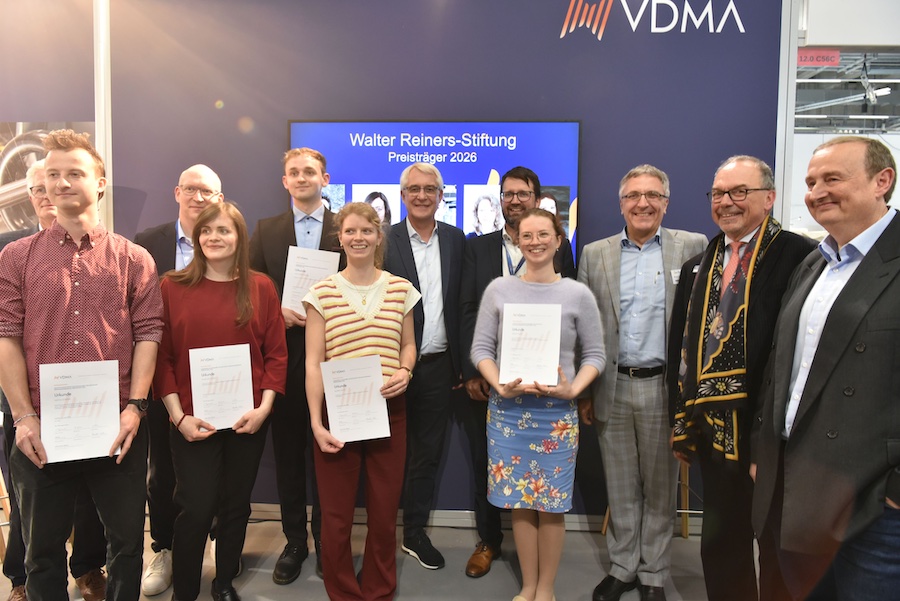
At the Aachen-Dresden-Denkendorf International Textile Conference held in Aachen at the end of November, Peter D. Dornier, Chairman of the Walter Reiners Foundation of the VDMA, honoured five successful young engineers. Promotion and sustainability prizes were awarded in the categories bachelor/project theses and diploma/master theses. Academic theses that develop solutions for resource-saving products and technologies, for example, are eligible for the sustainability awards.

Latest News

#People

Happy Holidays!

Dear reader, the year 2025 is drawing to a close. We are entering what we hope will be a peaceful holiday season, spending time with our families and taking a moment to pause and reflect. We hope we have been able to support you once again this year with relevant news and articles, and we look forward to surprising you with many innovations in the coming year. Enjoy the festive season, stay healthy, and we wish you a happy and joyful holiday season.

#Weaving

Lindauer Dornier announces leadership transition in weaving machine business

After more than ten successful years at Lindauer DORNIER GmbH, Mr Wolfgang Schöffl will leave the family-owned company at the end of the year to enter well-deserved retirement.

#Heimtextil 2026

Texpertise Focus AI: Messe Frankfurt puts Artificial Intelligence centre stage at its international textile and apparel trade fairs

Under the banner 'Texpertise Focus AI, Messe Frankfurt will place a strong emphasis on Artificial Intelligence (AI) across its international textile and apparel trade fairs from 2026 onwards, setting a future-shaping signal for the industry. The initiative highlights the responsible use of AI along the entire textile value chain, from fibre production to the point of sale. The programme will launch at Heimtextil in Frankfurt in January 2026.

#Technical Textiles

Autoneum and Polestar set new benchmarks for passenger experience and sustainability

As the global market leader in sustainable acoustic and thermal management, Autoneum is a key supplier of interior and exterior components for the highly anticipated Polestar 5 model. The successful collaboration between Autoneum and Polestar marks a significant milestone in sustainable automotive engineering: the electric grand tourer sports car features several innovations in lightweight, fully recyclable polyester-based components that ensure a superior driving experience. Polestar 5 was revealed at the IAA Mobility 2025 in Munich and is available in 24 markets.

TOP