#Research & Development
Circular economy for technical geotextiles
Geotextiles made from recycled materials: GREEN leads the way into the industry
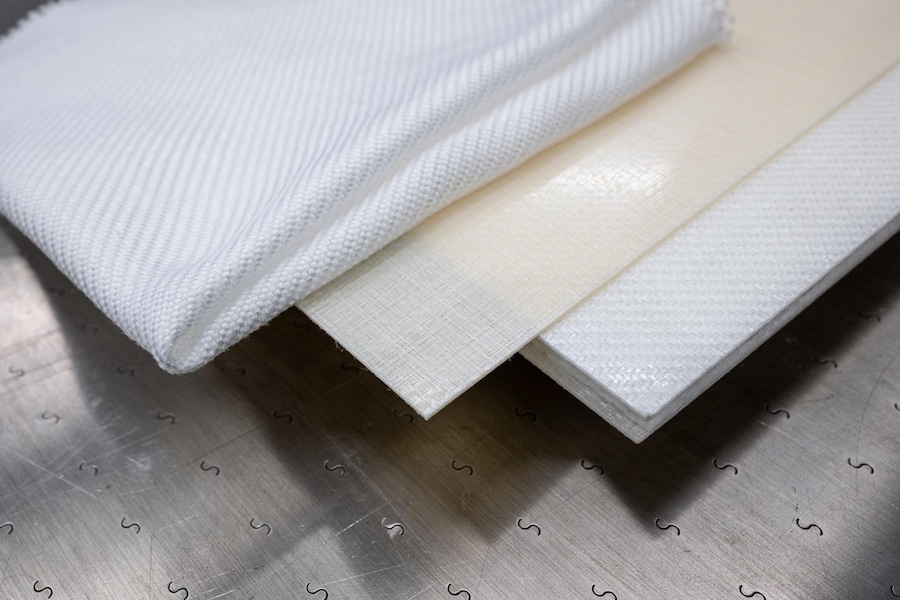
Geosynthetics are indispensable for applications in infrastructure, water management, mining, and many other fields. At the same time, pressure is increasing on manufacturers and processors to reduce the use of virgin plastics and to establish material concepts that incorporate recycled content. This is precisely where the GREEN project comes in: Its goal is to develop high-performance geotextiles based on recycled plastic streams that meet industrial requirements as well as environmental and regulatory standards.
Recycled materials serve as a durable raw material base for geotextiles
The Fraunhofer CCPE GREEN project has yielded reliable results regarding the use of recycled materials in geotextiles. The studies show that low-contamination material streams are suitable for high-quality geosynthetics and can already be utilized industrially today. In doing so, GREEN addresses key challenges facing the industry: the availability of suitable recycled materials, stable production processes, and the environmental sustainability of circular material flows.
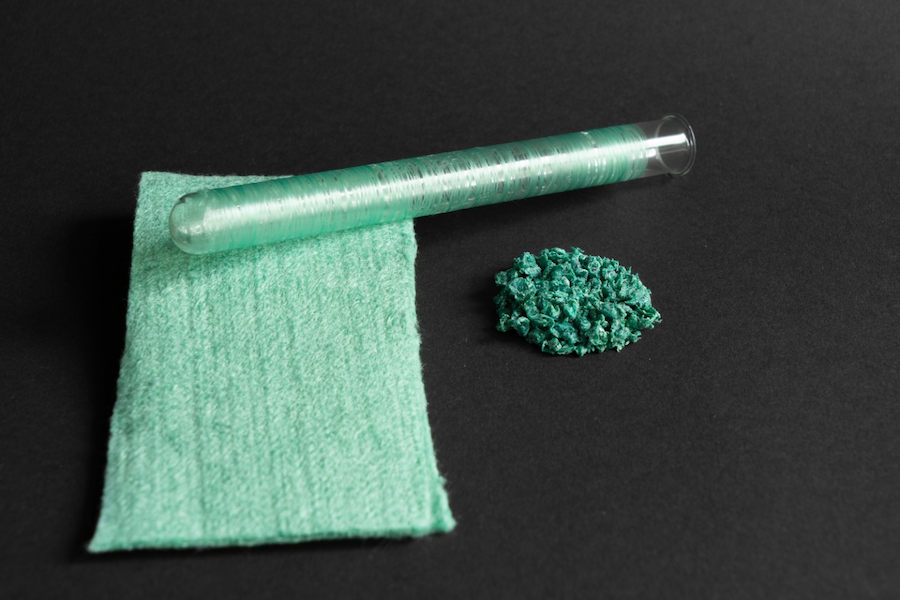
The recycled material study demonstrates that even post-consumer material streams can be utilized for durable geotextile applications. Through rheological modification, restabilization, and the targeted use of compatibilizers, PP and PET recyclates were successfully spun and mechanically stabilized. Aging tests also confirmed the high durability of the developed materials. HDPE membranes, in particular, showed no critical loss of strength even after extended testing periods.
Environmental sustainability confirmed by extensive testing
As part of the environmental assessment, nonwoven fabrics made from recycled PET (r-PET) and recycled PP (r-PP), as well as PE membranes, were tested in accordance with DIN EN 16637-2. The leaching and ecotoxicity tests confirmed low substance release and no relevant ecotoxicological effects in Daphnia and algae tests. Per- and polyfluorinated alkyl substances (PFAS) were below the limit of detection.
The results show that recycled materials can be safely used in geotextiles, provided that defined testing and processing standards are adhered to. GREEN thus provides important data for future regulatory requirements and industrial quality assurance.
Specific Benefits for Manufacturers and Recyclers
This offers concrete economic benefits for geotextile manufacturers, nonwoven fabric manufacturers, and recycling companies. Low-contamination recycled material streams reduce process disruptions and increase production reliability. At the same time, new recycling pathways are created for post-consumer plastics that generate higher added value.
Pilot trials conducted within the Fraunhofer network demonstrate the transferability of the developed approaches to industrial production lines. The results show that processability, material quality, and environmental requirements can be addressed simultaneously – a crucial step toward the broader use of recycled materials in technical geotextiles.
From more reliable processes to new recycling markets
The work carried out as part of the GREEN project brings together a range of expertise within Fraunhofer CCPE. Fraunhofer LBF coordinated the project and developed concepts for processing and adding additives to the material streams. It also conducted the aging tests. Fraunhofer IAP investigated the spinnability of the recycled materials and optimized the production of fibers and nonwovens. Processing into membranes, as well as elution studies and an ecological assessment, were carried out at Fraunhofer UMSICHT. The ecotoxicity tests were conducted by Fraunhofer IME.
Close collaboration along the entire value chain – from recycled material processing through the addition of additives and further processing to environmental assessment – resulted in a practical foundation for the transfer to industrial applications.
Outlook and collaboration Opportunities for Industry
The next step involves further optimizing additive concepts, scaling up spinning and membrane processes, and implementing demonstrators in larger-scale production environments. At the same time, Fraunhofer CCPE is working on further standardizing testing methods, as well as on white papers, patents, and transfer formats for industry.
Fraunhofer CCPE is seeking collaboration with companies in geotextile manufacturing, nonwoven production, plastics processing, recycling, additive technology, and related application areas. Companies can participate in pilot projects, material evaluations, technology transfer, and joint development projects. The goal is to jointly further develop reliable recycled material streams and industrial processing methods and to bring sustainable geotextiles to market more quickly.
Fact box
GREEN – Geosynthetics Made from Recycled Materials at a Glance
Project Objective:
Development of sustainable geotextiles made from recycled materials for nonwovens, fibers, and membranes with high processability, stability, and environmental compatibility.
Materials used:
Polypropylene (PP), polyethylene terephthalate (PET), high-density polyethylene (HDPE), post-consumer recycled materials.
Technological Focus Areas:
- Additive formulation and rheological modification of recycled materials
- Processing into fibers, nonwovens, and membranes
- Long-term and environmental testing for technical geotextiles
- Ecotoxicological assessment and substance release analyses
- Scalable approaches for industrial production processes
Added value for industrial companies:
- Reduction of virgin plastics in geotextiles
- More stable production processes through defined recycled material streams
- New value creation potential for recycling companies
- Support for regulatory and ESG-related requirements
- Pilot projects, technology transfer, and industrial scalability