[pageLogInLogOut]

#Research & Development

Tire wear, particle analysis, test bench development, material development

TERIS reaches milestone: Fraunhofer consortium develops new standards for tire analysis

In the “TERIS” project, the Fraunhofer institutes ICT, IGD, and IWM—led by the Fraunhofer Institute for Structural Durability and System Reliability LBF—have reached a decisive milestone. For the first time, the teams aim to generate, analyse, and predict tire wear in the laboratory in a standardized and practical manner. As part of this milestone, results are now available on reference abrasion, particle analysis, tribological models, AI-based surface analysis, a test bench concept, and methods for accelerated aging and VOC detection. The tire industry, testing services, and environmental agencies will in future benefit from reliable, rapid laboratory procedures for emissions assessment.

The project “Technology Platform for Tire Abrasion and the Identification of Its Emissions in Road Traffic (TERIS)” is making significant strides in tire and rubber-compound development. With the first milestone achieved and the project reviewed, the first important step has been successfully completed. This was also confirmed by the advisory board, composed of industry experts, which typically oversees such projects.

New standards for laboratory analysis and prediction of tire wear

The combination of different collection and measurement methods enables precise analysis of both suspended and settling particle fractions. In parallel, tribological models were developed that shed light—both experimentally and theoretically—on the relationship between load parameters, material properties, surface structure, and particle formation. This enables real-world abrasion processes to be specifically replicated in the laboratory.

A test chamber specialized in accelerated aging enables preconditioning of samples in a targeted and reproducible manner under environmental stress, thereby also investigating the influence on abrasion behaviour.

A major advancement is the development of an optical detection system that uses artificial intelligence to precisely identify and classify surface structures. The approach has already been validated using substitute materials and will be applied to real rubber samples in the next phase.

The consortium has also designed a test bench concept that combines the generation of rubber abrasion under multiaxial loading, targeted particle detection, and the integration of optical sensors in a laboratory setup.

A combination of weathering and chemical analysis of volatile organic compounds (VOCs) generated by tire abrasion enables assessment of the environmental impact of particles.

The results provide the basis for an accelerated, practical, and well-founded evaluation of new rubber compounds in the laboratory. Tire manufacturers, testing services, and environmental agencies are thus provided with tools that enable them to specifically reduce emissions, evaluate new products more quickly, and meet the requirements of the Euro 7 standard.

Detailed information on the interim results:

Researchers at Fraunhofer LBF have developed the basic concept for an abrasion machine that generates and collects realistic tire abrasion on rubber samples. Various test benches were analyzed, and requirements derived from real-world driving data were adapted to laboratory conditions. The machine design allows for the adjustment of a wide range of parameters to influence tire abrasion. Particle collection and detection are handled by other APs. To analyze the degradation behavior of tire abrasion under environmental stress, a methodology for weathering the abrasion is being developed. This will enable the collection and detection of volatile organic compounds (VOCs) under UV exposure. The measurement methodology is being further optimized to enable the identification and quantification of VOCs. Both work packages lay the groundwork for evaluation and standardization.

More News from Fraunhofer Institute for Structural Durability and System Reliability LBF

More News on Research & Development

#Research & Development

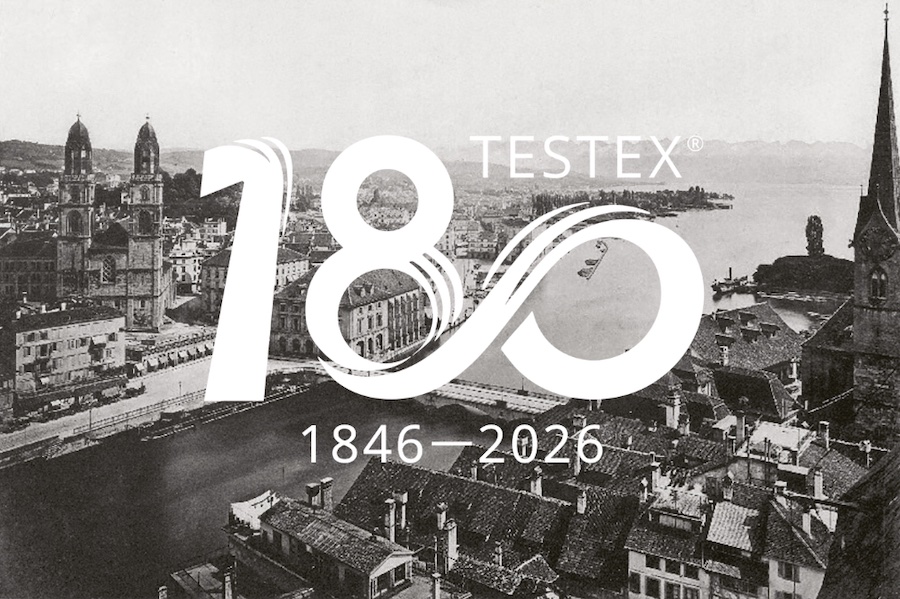
180 years of TESTEX: From Zurich silk testing to global certification

For 180 years, TESTEX has developed alongside the textile industry while maintaining the same underlying purpose: creating trust through independent and reliable measurement. Founded in Zurich in 1846 as the Zurich Silk Conditioning Institute, TESTEX has grown from a local institution serving the silk trade into an international Swiss testing and certification institute for textiles and leather.

#Recycling / Circular Economy

Moving Advanced Recycling from Innovation to Implementation

The Advanced Recycling Conference 2026 explores technologies, markets, financing and scale-up of innovative recycling solutions for waste streams including mixed plastic waste, textiles and PVC. Europe’s chemical and materials sector faces growing pressure to close carbon loops, strengthen raw-material safety and resilience and meet increasingly ambitious EU recycling targets. Against this backdrop, the Advanced Recycling Conference (ARC) will bring together industry leaders, technology providers, researchers, innovators and policy-makers on 17–18 November 2026 in Cologne, Germany.

#Research & Development

Reducing development times for technical textiles by accelerated thermo-oxidative aging in a high-pressure autoclave

Synthetic polymers used in technical textiles can be effectively protected against degradation caused by heat, oxygen, and water through the use of stabilizer systems. This enables service lives of several decades, extending to more than 50 years. As the use of durable technical textiles continues to grow, so does the demand for reliable methods to predict their service life within economically feasible testing periods. For the first time the German Institutes of Textile and Fiber Research Denkendorf (DITF) developed methods for robust service life prediction for textiles in an IGF research project.

#Research & Development

ITA has developed a washable digital smart jacket with real-time feedback and an AI-powered app for rehabilitation

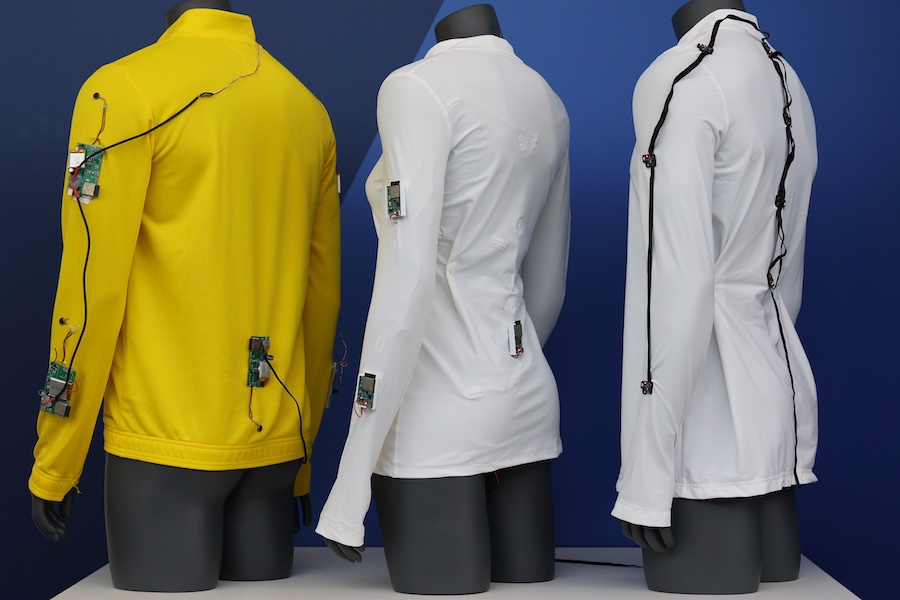
As part of the PhysioTaix research project, the Institut für Textiltechnik (ITA) of RWTH Aachen University is developing a digital smart jacket with integrated sensors. The jacket is washable and reusable; it tracks movements during rehabilitation exercises in real time and transmits the data to an app.

Latest News

#Knitting & Hosiery

KARL MAYER invites the Global Textile Industry to celebrate its 90th anniversary at its German Headquarters in 2027

KARL MAYER is turning its anniversary year 2027 into a milestone for the textile sector. To mark its 90th anniversary, the industry leader is inviting customers, partners, and experts from around the world to a unique event series in September aimed at pushing boundaries, unlocking new opportunities, and jointly setting the course for a new era in textiles – just as KARL MAYER has done throughout its history. The company’s headquarters in Obertshausen, near Frankfurt, is the place to be.

#Associations

ITMF names three winners of the Sustainability & Innovation Award 2026

Three projects from the UK, Korea and China have been selected as winners of the ITMF Sustainability & Innovation Award 2026. The projects address textile-to-textile recycling, chemical recycling for automotive textiles and a regenerative approach combining silk production with ecological restoration.

#Recycling / Circular Economy

nova-Institute launches groundbreaking Advanced Recycling Database for strategic market insight

The new Advanced Recycling Database reduces complexity by providing industry stakeholders with up-to-date expert-reviewed intelligence on companies, technologies, plants, capacities, locations, products and partnerships across the global advanced recycling landscape.

#Yarns

Durak Maxibalance thread supports users’ movement and balance comfort

Durak Tekstil, a leading brand in its industry, has developed Durak Maxibalance, a new product engineered with bio-ceramic and FAR IR technology. Ushering in a new era for sportswear, activewear, and medical textiles, this technology offers features designed to support balance and movement comfort by reflecting the energy absorbed from the body back into it.

TOP