[pageLogInLogOut]

#Spinning

FET’s game changer for the biomedical market

A much more sustainable, cost effective and very flexible process for manufacturing critical fibres based on ultra high molecular weight polyethylene (UHMWPE) is being launched by the UK’s Fibre Extrusion Technologies (FET).
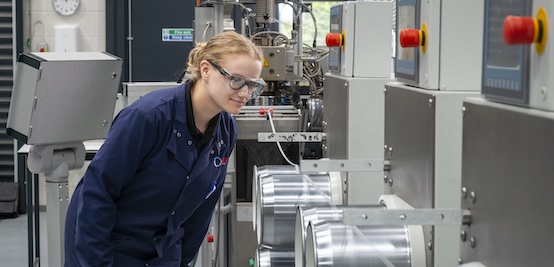
FET’s closed-loop supercritical CO2 system can achieve more than 95% solvent recovery without loss of performance. © 2025 FET


Unbeatable properties

UHMWPE is prized in many industries due to its extraordinary properties. The fibre is, for example, ten times stronger than steel by weight, while exhibiting outstanding abrasion resistance, low friction and high impact strength. UHMWPE fibres are also chemically inert, resistant to most chemicals and UV light and do not absorb water. They maintain performance in a wide range of temperatures and despite their toughness are extremely lightweight.

As a result, they are unbeatable in demanding applications such as high-performance ropes in maritime industrial and rescue applications. In addition, they are invaluable in ballistic protection, cut-resistant clothing and high-performance sports gear – and increasingly in medical implants.

Biomedical market

“FET has supplied many extrusion systems to the biomedical market, most notably for the production of both resorbable and non-absorbable sutures,” says FET Managing Director Richard Slack. “In exploring what else we could do in assisting these customers, it became clear that there was a need for smaller quantities of UHMWPE fibres in bespoke sizes.”

“The current systems for manufacturing UHMWPE filament yarns are on a huge scale, with very complex processing routes,” adds Research and Development Manager Jonny Hunter. “This means the supply chain is currently very inflexible with minimal opportunity for new product development. These disadvantages have been fully addressed in the development of our new FET-500 series lab and small scale gel spinning system.”
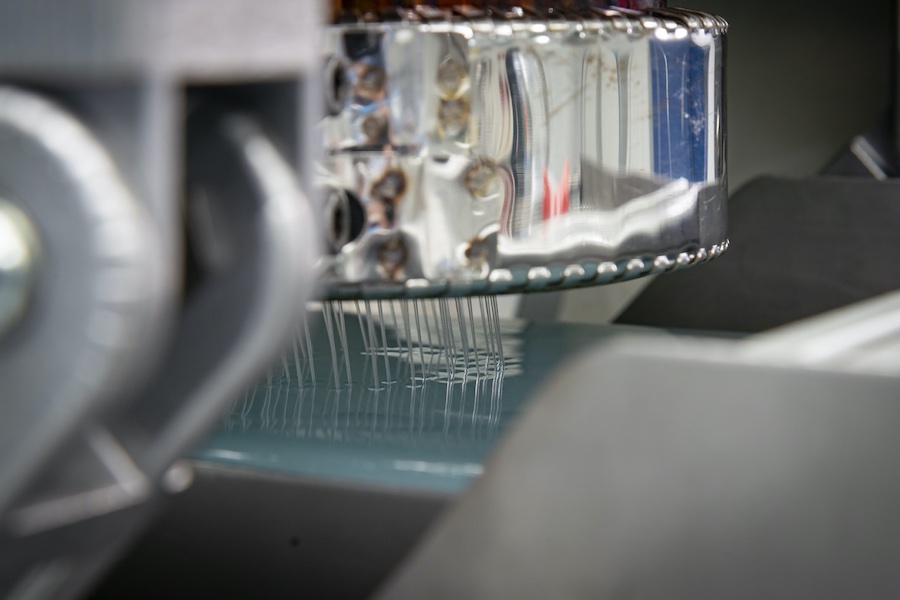
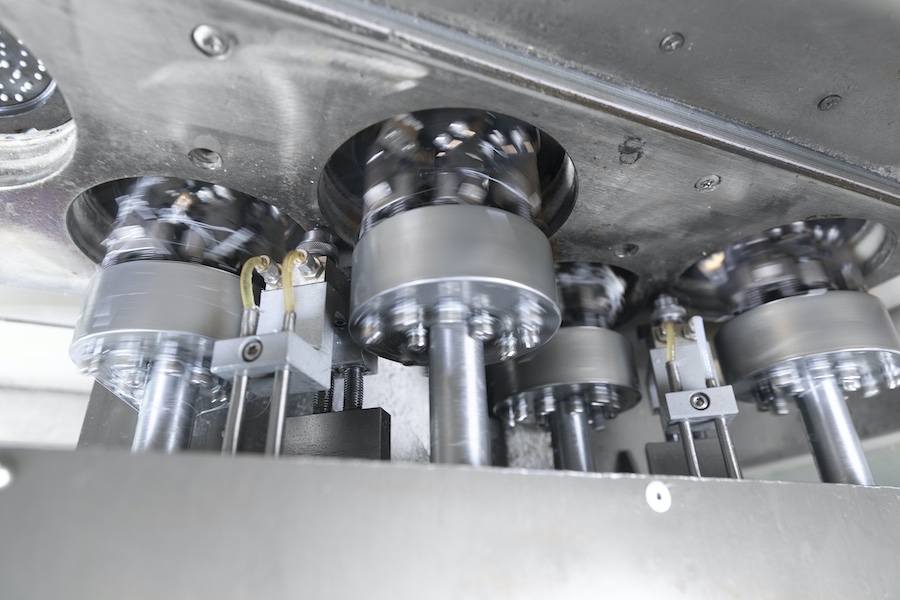
The FET-500 gel spinning system in action close up. © 2025 FET


Solvent extraction

A major FET innovation is the introduction of a patented batch system for solvent extraction exploiting supercritical carbon dioxide (CO2).

UHMWPE production, until now, has involved the use of large volumes of hazardous solvents such as dichloromethane (DCM) or hexane. The UHMWPE powder is mixed with mineral oil to form a gel which is subsequently extruded, cooled and solidified. The oil is then extracted from the fibres using DCM or hexane and the solid fibres are then drawn at high temperature to further align the polymer chains, resulting in final strong and tough fibres. Typically, it takes 10 kg of Hexane to extract 1 kg of oil. 

“Solvent reclamation using extraction baths and hot air drying chambers is not practical for the scale of our system,” explains FET’s Senior Material and Process Scientist Kris Kortsen. “The current baths employed can be up to 200 metres long and the waste volumes are considerable. Expertise is needed in dealing with such dangerous chemicals and overall the process has an immense environmental impact.

“CO2, by contrast, is a cheap and abundant sustainable solvent that is non-toxic, non-flammable and leaves no residue.” 

Closed loop

FET’s closed-loop system can achieve more than 95% solvent recovery without loss of performance, resulting in residue-free UHMWPE filament yarns via a vastly improved route in terms of both safety and logistics.

A further innovation is the highly modular drawing system based on heated godet rollers, enabling flexible temperature and drawing control for new product development and the ability to be expanded at any time to meet customer needs.

A comprehensive LCA study detailing the full savings potential is currently being prepared and will be published shortly.

“Having processed over 130 separate polymers in the development of our extrusion systems, we believe the FET-500 is a game changer,” concludes Richard Slack. “We believe there is a big gap in the market for smaller quantities of UHMWPE, and our first line is now fully operational at the FET Fibre Development Centre in Leeds. We look forward to demonstrating it and discussing its full potential with interested companies from around the world.”
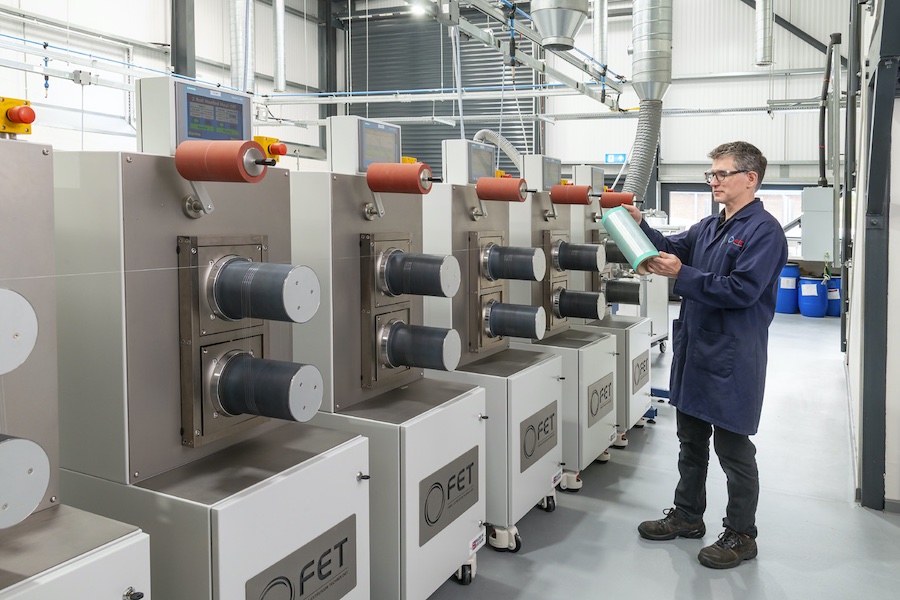
A highly modular drawing system based on heated godet rollers enables flexible temperature and drawing control for new product development. © 2025 FET


More News from Fibre Extrusion Technology Ltd.

More News on Spinning

#Spinning

Rieter responds to higher raw material prices

Global political and economic developments have been leading to rising raw material and energy costs for some time. The textile machinery industry is also affected by this trend. Rieter machines and components consist to a large extent of steel, copper, aluminum and electronics. These materials in particular have seen higher demand and higher prices in recent months.

#ITM 2026

The hub of smart and sustainable transformation in yarn technologies: ITM 2026

With global fiber production projected to reach 169 million tons by 2030, yarn manufacturing is becoming one of the most strategic fields within the textile machinery industry. Located in Halls 6, 7, and 10, the Yarn Hall at ITM 2026 is set to bring together industry professionals with innovative solutions developed around automation, energy efficiency, digitalization, and circular production.

#Spinning

Barmag: DTY efficiency for the future of fancy yarns

Fancy yarns continue to gain importance in the textile market: Whether in fashion, home textiles or the automotive industry - the trend towards individuality is fueling the demand for textured, haptically differentiated and at the same time comfortable yarns.”

#Spinning

Perfect quality through collaboration: Machinery from Trützschler, Toyota and Murata at Zirve Tekstil

In today’s textile industry, excellence is not achieved by chance – it’s the result of deliberate decisions, technical expertise, and the courage to go beyond conventional paths. The Turkish company Zirve Tekstil has done just that: by combining the best technologies from Trützschler, Toyota and Murata, they’ve created a production setup that delivers outstanding yarn quality – recognized worldwide.

Latest News

#Recycling / Circular Economy

Circulose restarts commercial-scale production at Ortviken plant in Sundsvall

Circulose today announced the restart of its commercial-scale production plant at Ortviken in Sundsvall, Sweden, marking a significant step in scaling next-generation materials for the global fashion industry. The company plans to resume production of CIRCULOSE®, a recycled pulp made entirely from discarded cotton textiles, in the fourth quarter of 2026.

#Textiles & Apparel / Garment

VIATT 2026 to debut German Pavilion, strengthening European participation alongside key Asian textile hubs

Vietnam’s textile and garment sector continues to be a major contributor to the country’s economic growth, with export revenues expected to reach USD 46 billion in 2025, a 5.6% increase from 2024 . From 26 – 28 February, the Vietnam International Trade Fair for Apparel, Textiles and Textile Technologies (VIATT) is set to contribute to economic growth opportunities by accelerating digital transformation and green transition across the entire textile value chain. The upcoming edition will respond to the rising demand for advanced technologies and sustainable materials with the introduction of the German Pavilion, alongside strong exhibitor participation from key Asian sectors, as well as several high-profile fringe events.

#Sustainability

Ying McGuire becomes new CEO of Cascale

Cascale today announced the appointment of Ying McGuire as Chief Executive Officer, effective June 1, 2026.

#Technical Textiles

Sustainable, lightweight, and sound absorbing: Polyester-based front trunk solution for BEVs

As car manufacturers look to further reduce their carbon footprint, Autoneum has developed an innovative front trunk solution for battery electric vehicles (BEVs), made entirely from polyester-based textile. The Ultra-Silent Frunk offers significant weight reduction, improved acoustic and thermal insulation, and uses up to 70 percent recycled material, supporting sustainable and efficient vehicle design. Autoneum, global technology leader in acoustic and thermal management for vehicles, has already received orders for the new frunk from three major OEMs in Asia and Europe to be built in three BEV models. Series production for two BEVs has been underway in China and Germany since last year.

TOP