[pageLogInLogOut]

#Sustainability

New guidance to help organizations deliver the Material Matter Standard’s human rights commitments

Textile Exchange has published new guidance and tools to help organizations better understand and implement the human rights and livelihoods requirements of the forthcoming Materials Matter Standard.


The standard, effective on December 31, 2026, aligns with the industry’s evolving expectations for people-centered sustainability across raw material production for the fashion, textile, and apparel industry, with criteria designed to protect human and labor rights on farms and in processing facilities.

The three new resources support organizations in translating the standard’s requirements into practical actions to identify human rights risks, strengthen health and safety, and support people in vulnerable positions. They also promote fair working conditions for all, including appropriate pay and benefits and measures to prevent excessive working hours and overtime.

The three new resources are:

  • Human Rights and Livelihoods Quick Guide: Provides an introduction to the human rights and livelihood requirements of the Materials Matter Standard, the themes covered, and the approach to implementation.
  • Human Rights Risk Assessment Tool: Helps organizations identify, prioritize, and address human rights risks in their operations.
  • Human Rights Commitment & Code of Conduct Template: Designed to help organizations formalize their commitment to respecting all human rights and establish and implement a code of conduct.

Together, these resources support organizations in taking the human rights steps needed to successfully transition to the Materials Matter Standard, which ultimately gives brands, retailers, and consumers greater confidence that certified materials are produced with respect for people.

Siobhan Cullen, Lead, Human Rights and Social Responsibility, said: “Stronger human rights and livelihoods practices are central to meaningful sustainability progress and resilient supply systems. The Materials Matter Standard sets a holistic set of requirements incorporating respect for human rights, with the new guidance and tools released today supporting organizations in putting those requirements into practice. By transitioning to the Materials Matter Standard, organizations can play a key role in embedding greater social responsibility across the textile supply system and support a fairer and safer industry for the people and communities that depend on it.”

Practical human rights due diligence

The Materials Matter Standard makes human rights due diligence practical and achievable for organizations of different sizes. Its proportionate approach reflects differences in resources, operating contexts, and levels of risk, while maintaining a clear responsibility to respect human rights. Informed by both the Organisation for Economic Co-operation and Development’s (OECD) Due Diligence Guidance for Responsible Business Conduct and the UN Guiding Principles on Business and Human Rights, the approach helps organizations focus their efforts on implementing meaningful due diligence.

Transition to Materials Matter Standard

The publication of these documents marks another milestone in the transition to the Materials Matter Standard, which brings together Textile Exchange’s suite of material standards into a single, unified framework. The standard provides a shared direction for the fashion, textile, and apparel industry, while establishing consistent requirements across all materials so their production respects climate, nature, people, and animals.

The Human Rights and Livelihoods Quick Guide, Human Rights Risk Assessment Tool, and Human Rights Commitment & Code of Conduct Template were published on September 1, 2026.

The Materials Matter Standard becomes effective on December 31, 2026, and mandatory from December 31, 2027, with all audits conducted to the Materials Matter Standard before that date.


More News from Textile Exchange

#Man-Made Fibers

Textile Exchange: reporting companies advance on preferred materials as global fiber production reaches new high

Companies participating in Textile Exchange’s Materials Benchmark increased their use of materials from preferred production systems in 2025, while global fiber production continued to grow and reached a record 139 million tonnes. The contrasting trends highlight both the potential for change at company level and the scale of the challenge facing the wider textile industry.

#Sustainability

Action Cohort: Textile Exchange’s new initiative designed to help scale preferred production systems

Textile Exchange has published new guidance to help brands and retailers participating in its Action Cohort prepare for upcoming reporting and target-setting requirements. Earlier this year, the organization evolved its membership to create more action-oriented pathways, designed to accelerate progress toward scaling preferred production systems that create beneficial impacts and resilient supply chains and livelihoods.

#Sustainability

Textile Exchange reports growth in certifications and industry engagement

Textile Exchange has published its 2025 Annual Report, highlighting continued growth in certified sites, industry participation and the development of its standards and membership structure. According to the report, more than 100,000 sites worldwide are now certified to Textile Exchange standards, more than three times the number recorded in 2020. Preliminary figures also indicate 12% year-on-year growth across the organization's current standards, including the Global Recycled Standard (GRS), Recycled Claim Standard (RCS) and the Responsible Animal Fiber standards.

#Sustainability

Updated supply chain taxonomy advances apparel alignment

The apparel alliance (Apparel Impact Institute, Cascale, Textile Exchange, and ZDHC Foundation) today announced the launch of Version 2 of the Supply Chain Taxonomy, an updated harmonized framework designed to improve consistency, transparency, and collaboration across the textile, clothing, leather, and footwear (TCLF) sectors of the broader apparel industry.

More News on Sustainability

#Associations

ITMF names three winners of the Sustainability & Innovation Award 2026

Three projects from the UK, Korea and China have been selected as winners of the ITMF Sustainability & Innovation Award 2026. The projects address textile-to-textile recycling, chemical recycling for automotive textiles and a regenerative approach combining silk production with ecological restoration.

#Europe

Textile ETP launches bioeconomy strategy for Europe’s textile industry

On 22 September 2026, Textile ETP's Circular & Biobased Textiles Innovation Hub published its strategy for the biobased and circular transformation of Europe's textile and apparel industry.

#Research & Development

180 years of TESTEX: From Zurich silk testing to global certification

For 180 years, TESTEX has developed alongside the textile industry while maintaining the same underlying purpose: creating trust through independent and reliable measurement. Founded in Zurich in 1846 as the Zurich Silk Conditioning Institute, TESTEX has grown from a local institution serving the silk trade into an international Swiss testing and certification institute for textiles and leather.

#Sustainability

Cascale launches member-led process to shape 2030 strategy

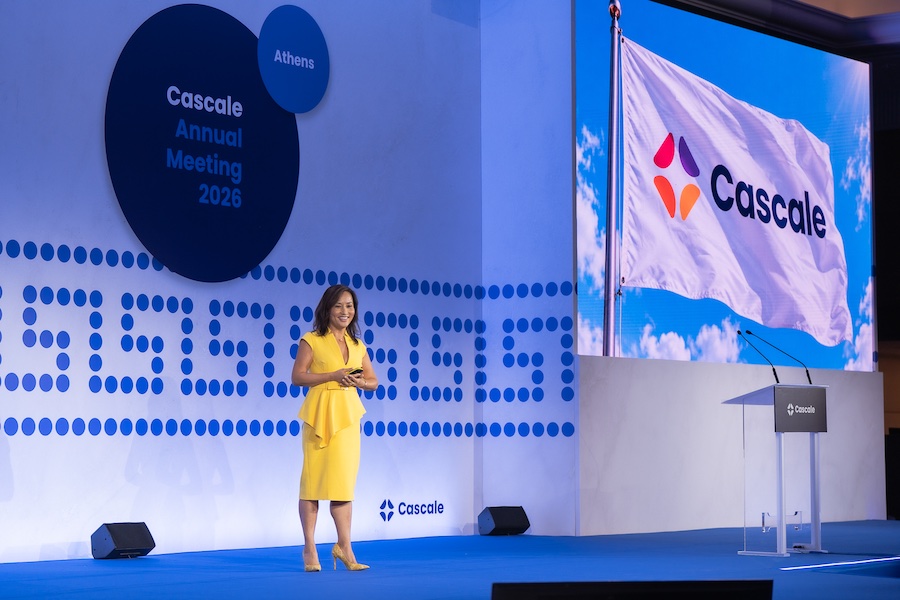
Cascale has launched a member-led process to define the industry alliance’s strategic direction for the next decade. At the Cascale Annual Meeting 2026 in Athens, CEO Ying McGuire announced that members will contribute to an industry system map that will inform Cascale’s 10-year vision, its 2030 strategy and priorities for 2027. The new strategy is scheduled to be finalized in December.

Latest News

#Knitting & Hosiery

KARL MAYER invites the Global Textile Industry to celebrate its 90th anniversary at its German Headquarters in 2027

KARL MAYER is turning its anniversary year 2027 into a milestone for the textile sector. To mark its 90th anniversary, the industry leader is inviting customers, partners, and experts from around the world to a unique event series in September aimed at pushing boundaries, unlocking new opportunities, and jointly setting the course for a new era in textiles – just as KARL MAYER has done throughout its history. The company’s headquarters in Obertshausen, near Frankfurt, is the place to be.

#Recycling / Circular Economy

nova-Institute launches groundbreaking Advanced Recycling Database for strategic market insight

The new Advanced Recycling Database reduces complexity by providing industry stakeholders with up-to-date expert-reviewed intelligence on companies, technologies, plants, capacities, locations, products and partnerships across the global advanced recycling landscape.

#Yarns

Durak Maxibalance thread supports users’ movement and balance comfort

Durak Tekstil, a leading brand in its industry, has developed Durak Maxibalance, a new product engineered with bio-ceramic and FAR IR technology. Ushering in a new era for sportswear, activewear, and medical textiles, this technology offers features designed to support balance and movement comfort by reflecting the energy absorbed from the body back into it.

#Yarns

Yarn Expo Autumn 2026 draws to a close, weaving sustainable innovation into global sourcing

Yarn Expo Autumn 2026 concluded with approximately 600 exhibitors from 14 countries and regions, connecting with nearly 22,000 visitors from 110 represented markets, bringing the textile industry’s evolving material agenda into sharper focus. Held alongside Intertextile Shanghai Apparel Fabrics – Autumn Edition, CHIC and PH Value, the fair connected upstream fibre and yarn innovation with fabric development, garment production and fashion-market demand.

TOP