[pageLogInLogOut]

#Sustainability

Jeanologia Sustainability Report highlights environmental impact of textile technologies

© 2026 Jeanologia
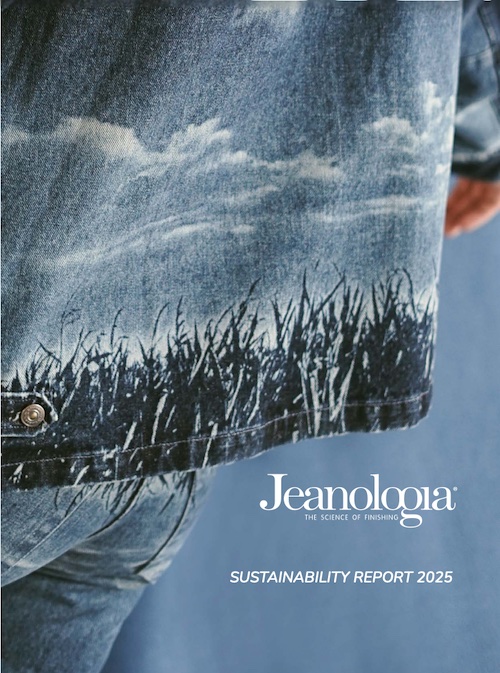
Jeanologia has published its Sustainability Report 2025, reporting a 13.64% reduction in its own carbon footprint and quantifying the environmental impact associated with the use of its technologies across the global textile industry. According to the company’s calculations, their use avoided the pollution of 21.52 million m³ of water and emissions of approximately 103,530 tonnes of CO₂ compared with conventional textile finishing processes.

For more than 30 years, Jeanologia has been developing technologies designed to reduce the environmental impact of textile production. Its Sustainability Report 2025 sets out the company’s latest environmental and social performance as well as priorities for further improving the measurement and reduction of its impact.

“Sustainability is not a destination or a department. It is a way of thinking, creating and acting. Real transformation only happens when sustainability and business progress together,” said Enrique Silla, founder and CEO of Jeanologia.

Reducing operational and industry impact

Jeanologia’s sustainability strategy addresses both the environmental footprint of its own operations and the impact associated with the use of its technologies by textile manufacturers.

In 2025, the company reduced its own carbon footprint by 13.64%, from 895.79 tonnes of CO₂ equivalent in the previous year to 773.57 tonnes.

The report also quantifies the estimated environmental impact of Jeanologia technologies used in factories around the world. Based on the company’s methodology and comparisons with conventional textile finishing processes, Jeanologia calculates that their use prevented 21.52 million m³ of water from being polluted and avoided approximately 103,530 tonnes of CO₂ emissions during 2025.

The relationship between sustainability and the company’s business activities is also addressed through Jeanologia’s first voluntary assessment against the EU Taxonomy. According to the company, 96.37% of its turnover, 84.43% of its capital expenditure (CapEx) and 34.96% of its operating expenditure (OpEx) are associated with activities aligned with the framework, primarily through contributions to climate change mitigation and adaptation and the transition towards a circular economy.

Jeanologia also addresses social responsibility through longer-term projects with organizations in the communities where it operates.

The company has been a participant in the United Nations Global Compact since 2019, committing to its principles covering human rights, labor, the environment and anti-corruption as well as contributing to the Sustainable Development Goals.

Measuring environmental performance

Measurement has become a central element of Jeanologia’s sustainability strategy. The company published its first Sustainability Report in 2017 and introduced an Environmental Profit and Loss Account to quantify the water savings and reductions in CO₂ emissions associated with the use of its technologies.

In 2019, Jeanologia established a cross-functional Sustainability Committee, followed in 2022 by the further development of its reporting process in line with United Nations principles and GRI Standards.

The Sustainability Report 2025 identifies several priorities for the next phase. These include improving the quality, consistency and traceability of emissions measurement, further reducing the environmental impact of the company’s own operations, increasing visibility across its value chain and strengthening resilience to climate change.
© 2026 Jeanologia
© 2026 Jeanologia


EIM draws on more than 100,000 textile processes

Jeanologia is also extending its measurement approach to textile manufacturing through EIM (Environmental Impact Measuring), its methodology for assessing and comparing the environmental impact of textile processes.

In 2025, the company published its second EIM report, drawing on data from more than 100,000 real-world processes carried out by 359 manufacturers in more than 40 countries. The dataset provides insight into the environmental performance of industrial processes within the global denim industry.

EIM is designed to provide brands and manufacturers with a common framework for measuring and comparing processes and identifying opportunities for environmental improvement. Jeanologia says it is continuing to develop EIM as an independent unit and is allocating additional resources to the methodology.

The Sustainability Report 2025 now sets out further steps for Jeanologia to improve the measurement of its own environmental performance as well as the impact associated with technologies deployed across the textile industry.

More News from JEANOLOGIA S.L.

#Recycling / Circular Economy

HKRITA signs MoU with Jeanologia and Looptworks to establish the Green Machine Circular Textile Ecosystem

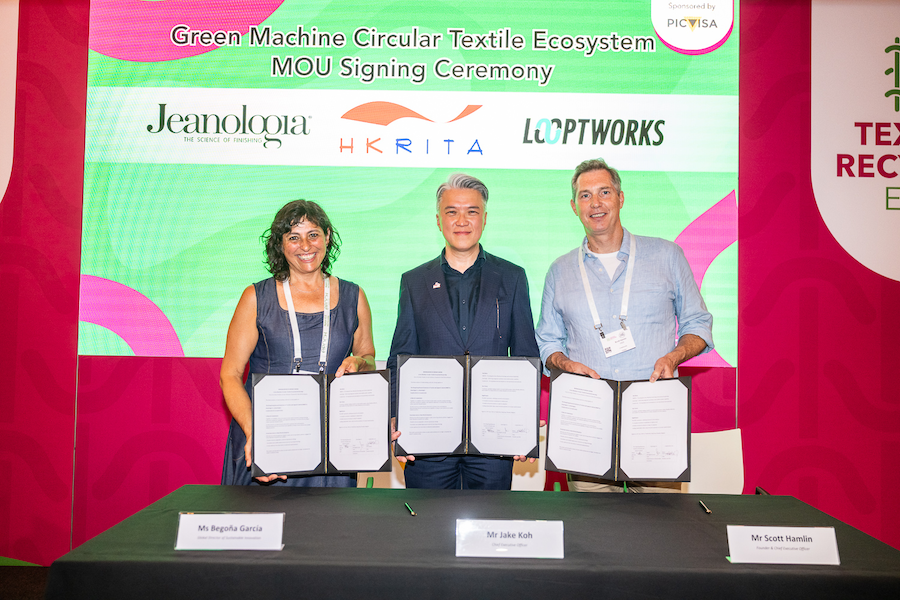
The Hong Kong Research Institute of Textiles and Apparel (HKRITA) yesterday officially signed a landmark Memorandum of Understanding (MoU) with two key global partners, Jeanologia and Looptworks, to establish the Green Machine Circular Textile Ecosystem – a first-of-its-kind collaboration to accelerate the large-scale recycling of blended textiles.

#Denim

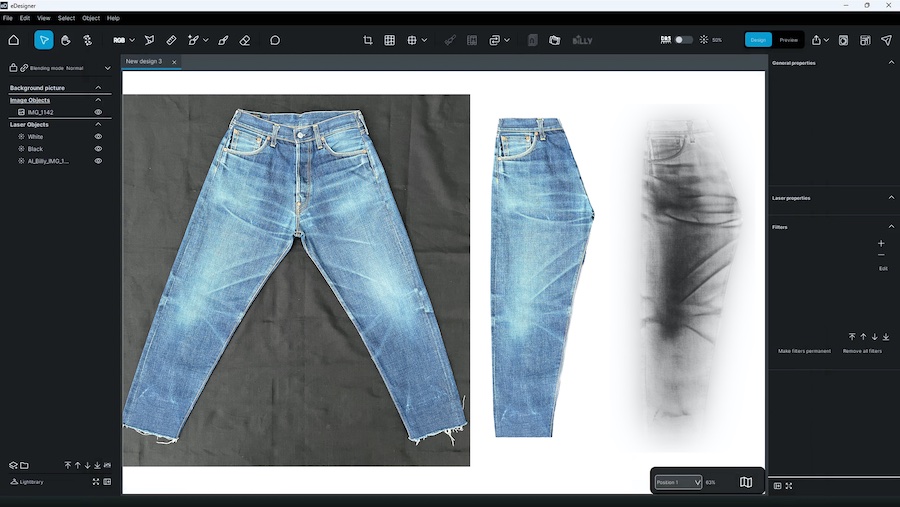
Jeanologia brings “Billy” to China, the AI transforming denim design

The denim industry is turning its attention to Hangzhou this week, where a new edition of Kingpins, the leading international trade show for the sector, takes place on May 21 and 22. There, the Spanish company Jeanologia, a global leader in sustainable technologies for the textile industry, is introducing its latest innovation to the Chinese market: “Billy”, the first artificial intelligence specifically developed for denim finishing design.

#Denim

Denim moves towards sustainability

EIM (Environmental Impact Measurement), the global reference platform for measuring the environmental impact of garment finishing, presents the second edition of its annual report Denim Industry Progress & Insights 2025. The study analyses over 100,000 real denim finishing processes, providing an accurate and up-to-date view of the industry’s evolution towards more sustainable models.

#Textile processing

Jeanologia showcases the future of product development

Jeanologia is showcasing how software is transforming product development in the fashion industry at PI Apparel Europe: The Fashion Technology Show, taking place on March 30–31 in London.

More News on Sustainability

#Associations

ITMF names three winners of the Sustainability & Innovation Award 2026

Three projects from the UK, Korea and China have been selected as winners of the ITMF Sustainability & Innovation Award 2026. The projects address textile-to-textile recycling, chemical recycling for automotive textiles and a regenerative approach combining silk production with ecological restoration.

#Europe

Textile ETP launches bioeconomy strategy for Europe’s textile industry

On 22 September 2026, Textile ETP's Circular & Biobased Textiles Innovation Hub published its strategy for the biobased and circular transformation of Europe's textile and apparel industry.

#Research & Development

180 years of TESTEX: From Zurich silk testing to global certification

For 180 years, TESTEX has developed alongside the textile industry while maintaining the same underlying purpose: creating trust through independent and reliable measurement. Founded in Zurich in 1846 as the Zurich Silk Conditioning Institute, TESTEX has grown from a local institution serving the silk trade into an international Swiss testing and certification institute for textiles and leather.

#Sustainability

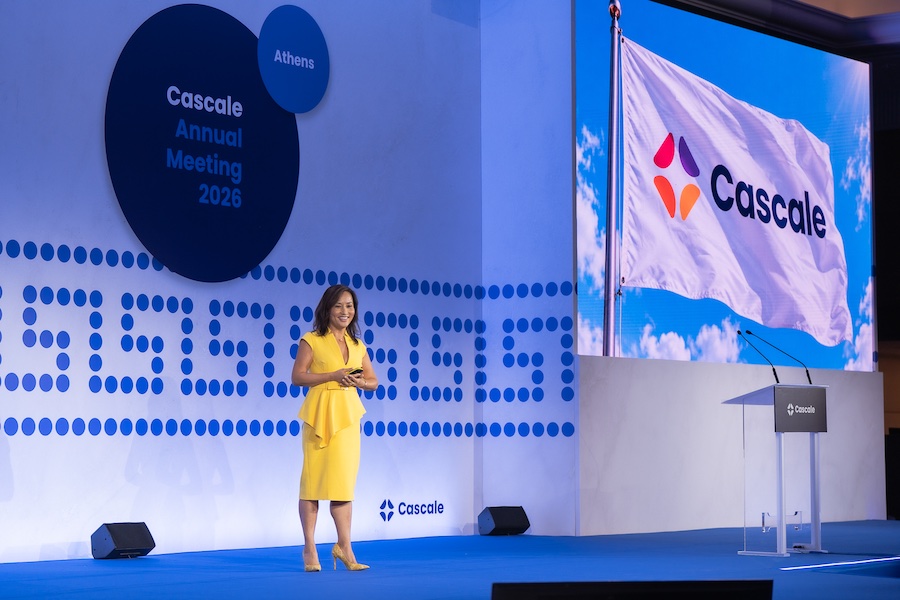
Cascale launches member-led process to shape 2030 strategy

Cascale has launched a member-led process to define the industry alliance’s strategic direction for the next decade. At the Cascale Annual Meeting 2026 in Athens, CEO Ying McGuire announced that members will contribute to an industry system map that will inform Cascale’s 10-year vision, its 2030 strategy and priorities for 2027. The new strategy is scheduled to be finalized in December.

Latest News

#Knitting & Hosiery

KARL MAYER invites the Global Textile Industry to celebrate its 90th anniversary at its German Headquarters in 2027

KARL MAYER is turning its anniversary year 2027 into a milestone for the textile sector. To mark its 90th anniversary, the industry leader is inviting customers, partners, and experts from around the world to a unique event series in September aimed at pushing boundaries, unlocking new opportunities, and jointly setting the course for a new era in textiles – just as KARL MAYER has done throughout its history. The company’s headquarters in Obertshausen, near Frankfurt, is the place to be.

#Recycling / Circular Economy

nova-Institute launches groundbreaking Advanced Recycling Database for strategic market insight

The new Advanced Recycling Database reduces complexity by providing industry stakeholders with up-to-date expert-reviewed intelligence on companies, technologies, plants, capacities, locations, products and partnerships across the global advanced recycling landscape.

#Yarns

Durak Maxibalance thread supports users’ movement and balance comfort

Durak Tekstil, a leading brand in its industry, has developed Durak Maxibalance, a new product engineered with bio-ceramic and FAR IR technology. Ushering in a new era for sportswear, activewear, and medical textiles, this technology offers features designed to support balance and movement comfort by reflecting the energy absorbed from the body back into it.

#Yarns

Yarn Expo Autumn 2026 draws to a close, weaving sustainable innovation into global sourcing

Yarn Expo Autumn 2026 concluded with approximately 600 exhibitors from 14 countries and regions, connecting with nearly 22,000 visitors from 110 represented markets, bringing the textile industry’s evolving material agenda into sharper focus. Held alongside Intertextile Shanghai Apparel Fabrics – Autumn Edition, CHIC and PH Value, the fair connected upstream fibre and yarn innovation with fabric development, garment production and fashion-market demand.

TOP