[pageLogInLogOut]
TRÜTZSCHLER SPINNING - THE NEW CARD

#Industry 4.0 / Digitalization

EIM evolves into a new Environmental Intelligence to measure the impact of textile production

The new EIM introduces dedicated modules for yarn, fabric and garment finishing, bringing the results together under a single methodology to provide an integrated view of each product’s impact. Based on real production data, the information generated is traceable and structured to support tools such as Digital Product Passports (DPP) and Life Cycle Assessments (LCA). © 2026 Jeanologia
¿Do we really know the environmental impact behind a garment? Answering this question remains one of the textile industry’s major challenges. Garment production involves multiple stages, from yarn and fabric to final finishing, carried out by different players across the supply chain. Accesing reliable data from each process, connecting it and establishing a common language are essential to understanding a product’s true impact.


EIM (Environmental Impact Measuring), the global standard developed by Jeanologia to measure the environmental impact of textile production processes, is now taking the biggest step in its evolution. After more than 15 years measuring the impact of garment finishing, it is expanding its scope to measure the different stages of production under a common methodology, connecting traceable and comparable information from yarn to finished garment.

This evolution marks the transition to a new Environmental Intelligence approach, providing a complete view of how a garment was made and the impact generated during its production, measuring water, energy and chemicals use.

From yarn to garment

To make this possible, the new EIM is structured around independent modules for each stage of production. The Yarn Module measures yarn production processes; the Fabric Module covers fabric production; and the Garment Finishing Module, the finishing of the garment.

Each module can measure an individual production stage independently, while EIM+ connects the results to provide a complete view of the product. This also expands the scope of EIM: from a methodology historically associated with denim and garment finishing to a system that can be applied to any type of textile product, from yarn to finished garment.

EIM evaluates impact across water, energy and chemicals, while also assesing worker impact at the garment-finishing stage. Using a common methodology, EIM classifies the product’s environmental performance as low, medium or high impact, making the results clear and easy to compare.

Information that travels with the product

EIM’s evolution also enables information generated at different stages of production to be connected while maintaining its traceability. EIM uses primary data directly from production processes, applying a common methodology to ensure consistency and comparability.

The resulting information is structured for use in Life Cycle Assessment (LCA) and the Digital Product Passport (:), allowing environmental data generated during manufacturing to stay connected to the product.

As requirements for traceability and environmental information continue to grow, EIM gives brands and manufacturers easier access to reliable, structured information, removing the need to reconstruct a product’s impact from fragmented data scattered across the supply chain.

Built by the industry, for the industry

“EIM was created more than 15 years ago to address a very specific industry need: measuring the environmental impact of garment finishing. Today, the challenge is much broader. We need to understand what lies behind the entire product, connect the different stages and enable the whole supply chain to speak the same language. This evolution towards Environmental Intelligence allows us to take that step, using measurement to understand, compare and keep improving,” says Begoña García, EIM Director.

EIM was created within Jeanologia in 2009 and opened to the wider industry in 2011. Since then, the methodology has evolved alongside brands and manufacturers to become a global standard, used by more than 100 brands and 400 production facilities in over 50 countries.

More than 15 years later, EIM is expanding beyond garment finishing to cover the different stages of production and any type of textile product. Developed by and for the industry, this evolution draws on the experience and real-world needs of the brands and manufacturers that use it.

More News from JEANOLOGIA S.L.

#Sustainability

Jeanologia Sustainability Report highlights environmental impact of textile technologies

Jeanologia has published its Sustainability Report 2025, reporting a 13.64% reduction in its own carbon footprint and quantifying the environmental impact associated with the use of its technologies across the global textile industry. According to the company’s calculations, their use avoided the pollution of 21.52 million m³ of water and emissions of approximately 103,530 tonnes of CO₂ compared with conventional textile finishing processes.

#Recycling / Circular Economy

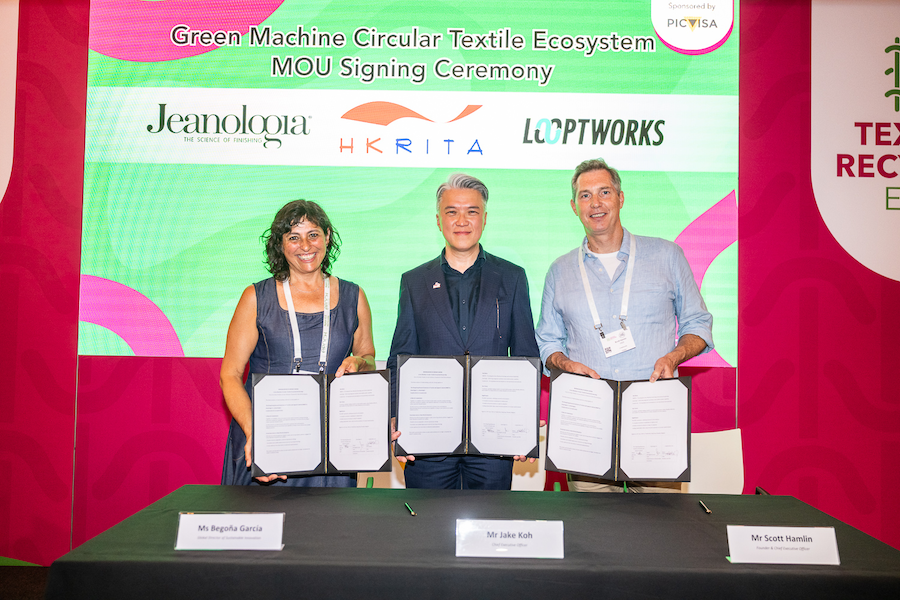
HKRITA signs MoU with Jeanologia and Looptworks to establish the Green Machine Circular Textile Ecosystem

The Hong Kong Research Institute of Textiles and Apparel (HKRITA) yesterday officially signed a landmark Memorandum of Understanding (MoU) with two key global partners, Jeanologia and Looptworks, to establish the Green Machine Circular Textile Ecosystem – a first-of-its-kind collaboration to accelerate the large-scale recycling of blended textiles.

#Denim

Jeanologia brings “Billy” to China, the AI transforming denim design

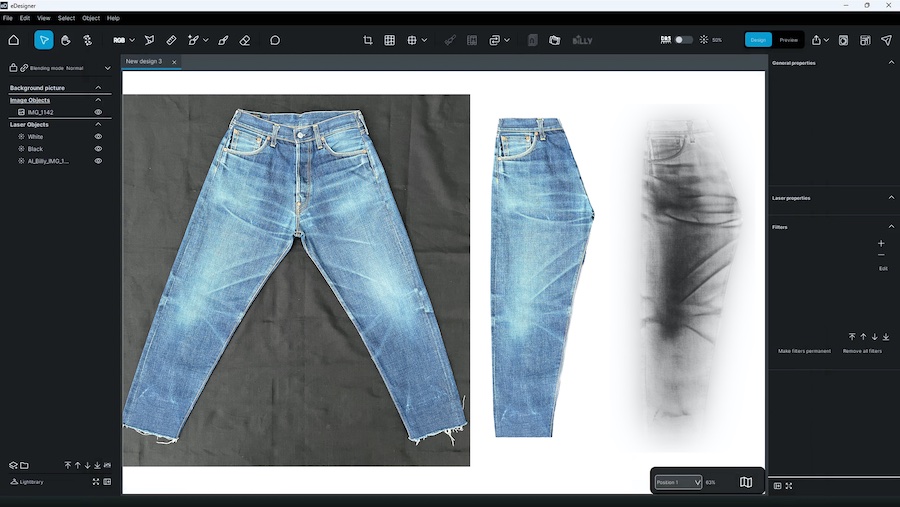
The denim industry is turning its attention to Hangzhou this week, where a new edition of Kingpins, the leading international trade show for the sector, takes place on May 21 and 22. There, the Spanish company Jeanologia, a global leader in sustainable technologies for the textile industry, is introducing its latest innovation to the Chinese market: “Billy”, the first artificial intelligence specifically developed for denim finishing design.

#Denim

Denim moves towards sustainability

EIM (Environmental Impact Measurement), the global reference platform for measuring the environmental impact of garment finishing, presents the second edition of its annual report Denim Industry Progress & Insights 2025. The study analyses over 100,000 real denim finishing processes, providing an accurate and up-to-date view of the industry’s evolution towards more sustainable models.

More News on Industry 4.0 / Digitalization

#Industry 4.0 / Digitalization

Orient Rongheng connects production planning across China and Bangladesh with FastReactPlan

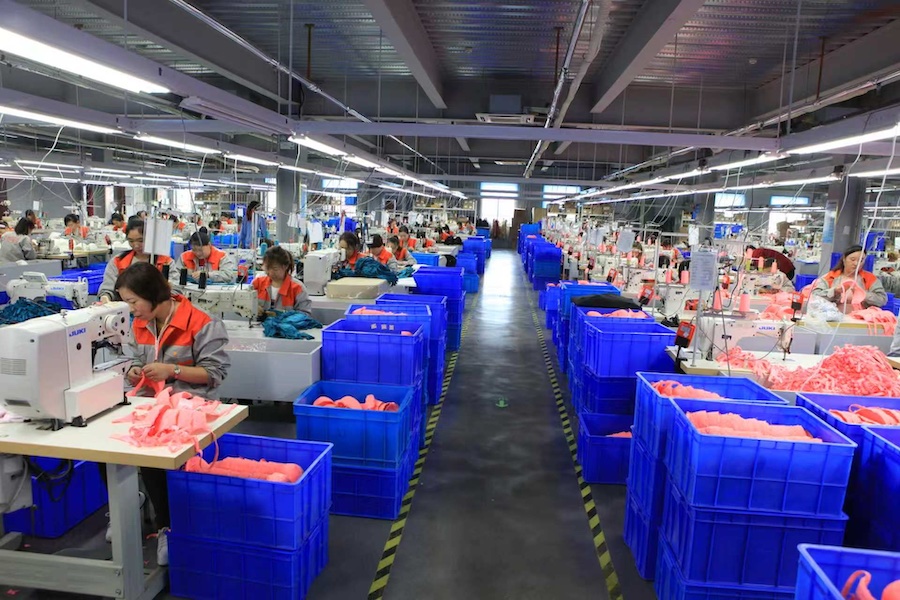
Chinese apparel manufacturer Orient Rongheng is implementing Coats Digital’s FastReactPlan to digitalize production planning across its manufacturing operations in China and Bangladesh. The project aims to connect capacity, materials and order planning across multiple factories while integrating these processes with the company’s existing ERP and Manufacturing Execution System (MES).

#Industry 4.0 / Digitalization

Lectra launches Apogy with agentic AI for fashion product development

Lectra has launched Apogy, a new cloud-based solution for fashion product development that combines product data, collaborative workflows and agentic artificial intelligence. The platform is designed to connect the different stakeholders and processes between initial design and production while using AI agents to automate tasks and support decision-making throughout the development cycle.

#Industry 4.0 / Digitalization

Coats Digital launches AI-powered GSD RealMotion for motion analysis

Coats Digital has launched GSD RealMotion, an AI-powered solution designed to provide apparel manufacturers with greater visibility into factory-floor operations. By analysing shop-floor video and applying Coats Digital’s GSD methodology, the solution turns video recordings into structured, motion-by-motion method studies.

#ITM 2026

Driving digitalization, efficiency, and Smart Manufacturing across textiles and carpets

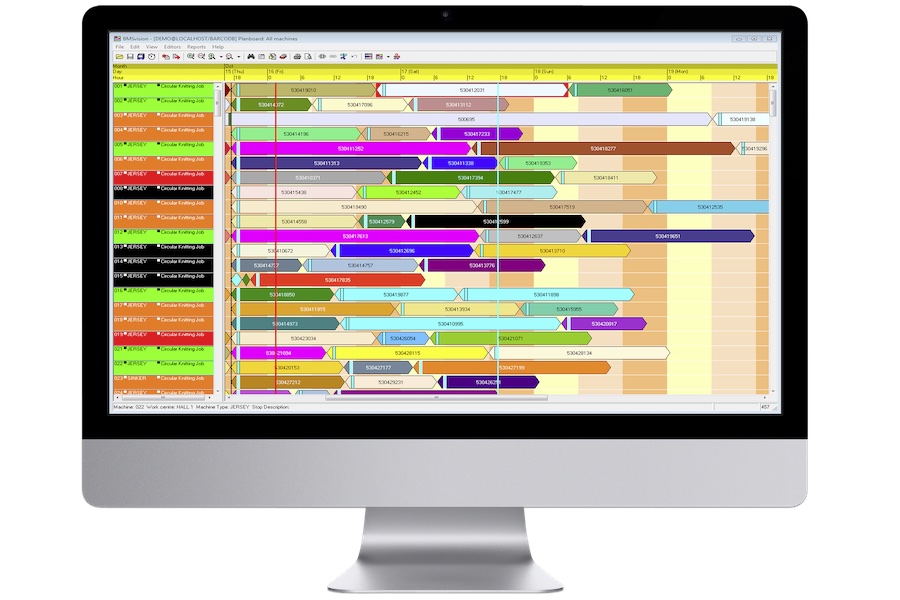
At this year’s ITM, BMSvision proudly showcases its next leap forward in digital manufacturing excellence. As a long-standing global pioneer in Manufacturing Execution Systems (MES) for the textile and plastics industries, BMSvision continues to accelerate digital transformation by delivering powerful, data-driven solutions that boost productivity, enhance quality and support sustainable growth. Visit BMSvision at the Vandewiele booth in Hall 7, Booth 710, to experience the future of textiles manufacturing.

Latest News

#Knitting & Hosiery

SHIMA SEIKI to showcase digital product creation at Apparel Sourcing Week

Leading digital textile solutions provider SHIMA SEIKI MFG., LTD. of Wakayama, Japan will exhibit at Apparel Sourcing Week 2026 in Bengaluru, India next month. The exhibition provides a platform for the entire apparel value chain, bringing together manufacturers, brands, suppliers and solution providers in one location.

#Digital Printing

SNA GZ accelerates its on-demand production strategy with Kornit Digital

SNA GZ is leveraging the Kornit Atlas MAX PLUS to expand its music merchandise production, streamline e-commerce order fulfillment, and grow its print-on-demand business across Europe. This investment increases SNA GZ's textile production capacity by 150% (2.5×), enabling the company to meet growing demand and support its continued expansion.

#Recycling / Circular Economy

NEUMÜHLE launches mono-material hoodie designed for textile recycling

With the Circular Mono Hoodie, Zurich-based label NEUMÜHLE introduces a new essential designed around a single-material principle. The textile construction is cotton throughout, right down to the sewing thread. Entirely free from elastane, the hoodie launches as a Limited Drop for CHF 139. Take-back, collection and existing recycling partnerships complement its circular design.

#Raw Materials

New Cotton Review examines competitiveness, market risk, and opportunities

From moving record volumes of Brazilian cotton to market, to managing price volatility, unlocking Ethiopia’s production potential, and strengthening African textile trade, the latest edition of Cotton: Review of the World Situation examines some of the most consequential opportunities and challenges facing the global cotton industry.

TOP