[pageLogInLogOut]

#Textile processing

Jeanologia calls for shared responsability on World Water Day

Coinciding with World Water Day celebrations and under the slogan "Water, a shared responsibility," the eco-efficient textile technology company, Jeanologia, calls on this productive sector, appealing for a real change, away from greenwashing and towards concrete and collective action.
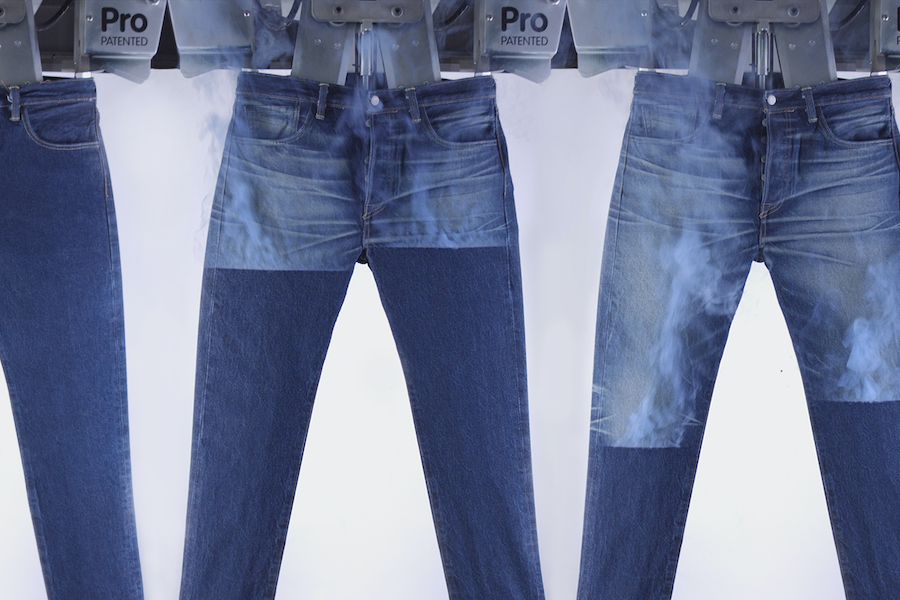
Three decades ago, Jeanologia began its journey swimming against the current in an ocean of skepticism within one of the world's most polluting productive sectors: the textile industry. It became a pioneer and revolutionized the industry by demonstrating that fashion could be produced by significantly reducing its environmental impact and without compromising quality or profitability, relying on technology to achieve this.

Since its foundation, Jeanologia has led sustainable change in the textile industry, thanks to its innovative technologies, which have drastically reduced water consumption and returned the minimal amount of water used to nature in perfect condition, as well as minimizing the use of chemicals and energy and eliminating harmful emissions and discharges.

New environmental record

In 2023, Jeanologia set a record in its environmental P&L statement, measuring in cubic meters the contaminated water that is no longer discharged into rivers and seas, as well as the reduction of toxic emissions, thanks to its technological advances and services.

The technologies developed by Jeanologia have saved the planet 20,265,581 cubic meters of contaminated water in 2003, equivalent to the consumption of a city the size of Brussels or more than 1,200,000 Olympic pools. Additionally, 97,895,304 kilograms of CO2 emissions were reduced, equivalent to the carbon absorbed by a forest of 9,800,000 trees.

The key to success lies in the integration of eco-efficient technologies in all stages of production, from fabric to garment finishing. In this way, water consumption in the garment finishing process has been drastically reduced, from 70 liters to just 1 liter per garment. These technologies have also significantly reduced the use of chemicals and energy, as well as emissions and harmful discharges derived from textile production. All this without compromising quality or design.

Furthermore, Jeanologia's eco-efficient technologies include the H2 ZERO effluent recycling plant, a key component of their Mission Zero initiative. This innovative system is able to recover 95% of water used in the production process. It plays a vital role in creating a closed-loop system, ensuring minimal water wastage and contributing to a sustainable ecosystem for brands and their suppliers. Thanks to H2 ZERO, water is treated without chemicals, maintaining optimal conditions for reuse, aligning with Jeanologia's commitment to environmental responsibility and resource conservation.

Additionally, Jeanologia’s Air Fiber Washer project focuses on removing microfibers from the garment finishing process, thereby contributing to the preservation of the seas and preventing these microfibers from contaminating marine ecosystems.

Jeanologia also recognizes the importance of measurement and transparency in environmental impact. For this reason, over 10 years ago, it made available to the industry the Environmental Impact Measurement (EIM) software, which today more than 100 brands and 400 laundries worldwide use to measure and improve their collections, avoiding greenwashing and being completely transparent.


  • The Spanish company leads sustainable change in the textile industry, demonstrating that it is possible to produce fashion responsibly and profitably.
  • Its technologies have saved the planet more than 20 million cubic meters of contaminated water in 2023.


An invitation towards a more sustainable water management

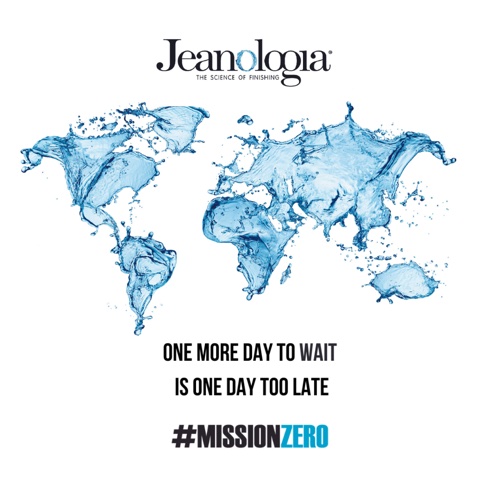
On World Water Day, Jeanologia reiterates its commitment to continue leading its Mission Zero: achieving total dehydration and detoxification of the textile industry. A challenge turned into an urgency following UNESCO's warning that we face an imminent global water crisis, with between 2,000 and 3,000 million people suffering from water scarcity worldwide, water demand far exceeding supply capacity in many parts of the world, and the environmental impacts of its overexploitation becoming increasingly evident.

In this context, the Spanish technology company urges adopting a collective commitment. As Jeanologia's CEO and founder Enrique Silla states, "we are an impact company focusing on water." Thus, its goal is to reduce the consumption of this resource throughout the textile process to the bare minimum, eliminate 100% of the waste generated in the manufacturing and finishing of garments, and preserve the seas, eliminating any possible microfiber from the production process to prevent it from ending up in the oceans.

Jeanologia has managed to transform the global textile industry, and today its involvement goes further. Although acknowledging that the world has awakened to the urgency of sustainability, Jeanologia claims that there is still a long way to go. Individual awareness and isolated actions are not enough. Water scarcity is a global challenge that requires comprehensive and collaborative solutions involving governments, institutions, companies, and individuals. "The global context urges us to unite and accelerate action, and on a date as significant as World Water Day, we want to offer our example as inspiration and invite other companies to join our Mission Zero," claims Enrique Silla.

Jeanologia: over 25 years transofming the textile industry

Since 1994, Jeanologia's mission has been to create an ethical, sustainable, and eco-efficient textile industry. The company collaborates closely with brands, retailers, and their suppliers on their transformative journey, offering disruptive technologies, innovative software, and a new operating model.

In 2024, Jeanologia celebrates the 25th anniversary of its pioneering laser technology, launched in 1999, which revolutionized denim finishing, replacing harmful practices and eliminating the use of hazardous substances. With the same purpose, Jeanologia now faces the challenge of reducing the environmental impact of the garment dyeing process—one of the most polluting in the industry—through its revolutionary ColorBox technology.
More News from JEANOLOGIA S.L.

#Denim

Jeanologia celebrates its 30th anniversary transforming how jeans are produced worldwide

Jeanologia celebrates its 30th anniversary reaffirming the mission it was born with in 1994, to transform the textile industry into a more sustainable, efficient, and human-centered sector. Three decades later, that vision has become a global reality. Today, more than 40 percent of all jeans produced worldwide are made using technologies developed by the Valencia-based company.

#Denim

Jeanologia shapes the denim of the future at Kingpins with ‘Mediterranean Soul’

Jeanologia, the global leader in sustainable technologies for the textile industry, returns to Kingpins Amsterdam with its new collection “Mediterranean Soul”, blending nature, creativity, and technology to prove that authentic denim can be designed and produced with efficiency and minimal environmental impact.

#Denim

Guess Jeans and Jeanologia bring the future of denim to Tokyo

From July 4 to 12, Harajuku, Tokyo’s iconic fashion district, will host “The Next 40 Years of Denim”, an immersive exhibition presented by GUESS to celebrate the past and future of denim. This unique experience blends heritage, innovation, and sustainability to mark the beginning of a new chapter, the era of air.

#Textile processing

Jeanologia brings the creative revolution of denim to Kingpins China

The city of Hangzhou hosts a new edition of Kingpins, Asia’s leading denim trade show, on May 22 and 23. Jeanologia, a global leader in sustainable textile finishing technologies, is taking part in this major industry event with a disruptive proposal that leads the way into a new era of denim, driven by creativity, sustainability, and digitalization.

More News on Textile processing

#Textile processing

Pfaff Industrial announces new managing director

Since February 2, 2026, Michael Kilian has been the new managing director (speaker for the management board) of PFAFF Industriesysteme und Maschinen GmbH. He succeeds Dr. Frank Meyer, who will remain Managing Director at KSL Joining Technology GmbH in Bensheim. Together with Ms. Jing Fan (Managing Director for finance & controlling, human resources, IT, and quality), Michael Kilian will take over responsibility for the long-established Kaiserslautern-based company.

#Textiles & Apparel / Garment

YKK collaborates with Coloro to deliver data-driven color ffeasibility for zippers

YKK Corporation announces its collaboration with Coloro, a leading innovator in color solutions and data for the global fashion industry, to introduce joint matching and feasibility results of Coloro colors in YKK’s zippers.

#Exhibitions & Events

Groz-Beckert showcases textile innovation at ShanghaiTex 2025

From December 16 to 19, 2025, the global textile industry will gather at ShanghaiTex at the Shanghai New International Expo Center (SNIEC), where Groz-Beckert will present its latest highlights and innovations across its five product areas – Knitting, Weaving, Nonwovens, Sewing, and Spinning – at Hall N3, Booth A05.

#Textile processing

YKK receives ISPO Textrends Awards for circular innovations

YKK Corporation (Headquarters: Chiyoda-ku, Tokyo; President: Koichi Matsushima; hereafter, YKK) is pleased to announce that the ISPO Textrends judges have selected YKK's 3D Composite Puller as the Best Product in the Accessories category. They also selected YKK’s NATULON Plus® Fiber Sourced™ zipper with Recycled PET Open Parts as a Top 5 item in the same category. The competition, held twice a year in conjunction with the ISPO trade show, recognizes the most innovative performance textiles, components, and apparel.

Latest News

#Recycling / Circular Economy

Circulose restarts commercial-scale production at Ortviken plant in Sundsvall

Circulose today announced the restart of its commercial-scale production plant at Ortviken in Sundsvall, Sweden, marking a significant step in scaling next-generation materials for the global fashion industry. The company plans to resume production of CIRCULOSE®, a recycled pulp made entirely from discarded cotton textiles, in the fourth quarter of 2026.

#Textiles & Apparel / Garment

VIATT 2026 to debut German Pavilion, strengthening European participation alongside key Asian textile hubs

Vietnam’s textile and garment sector continues to be a major contributor to the country’s economic growth, with export revenues expected to reach USD 46 billion in 2025, a 5.6% increase from 2024 . From 26 – 28 February, the Vietnam International Trade Fair for Apparel, Textiles and Textile Technologies (VIATT) is set to contribute to economic growth opportunities by accelerating digital transformation and green transition across the entire textile value chain. The upcoming edition will respond to the rising demand for advanced technologies and sustainable materials with the introduction of the German Pavilion, alongside strong exhibitor participation from key Asian sectors, as well as several high-profile fringe events.

#Sustainability

Ying McGuire becomes new CEO of Cascale

Cascale today announced the appointment of Ying McGuire as Chief Executive Officer, effective June 1, 2026.

#Technical Textiles

Sustainable, lightweight, and sound absorbing: Polyester-based front trunk solution for BEVs

As car manufacturers look to further reduce their carbon footprint, Autoneum has developed an innovative front trunk solution for battery electric vehicles (BEVs), made entirely from polyester-based textile. The Ultra-Silent Frunk offers significant weight reduction, improved acoustic and thermal insulation, and uses up to 70 percent recycled material, supporting sustainable and efficient vehicle design. Autoneum, global technology leader in acoustic and thermal management for vehicles, has already received orders for the new frunk from three major OEMs in Asia and Europe to be built in three BEV models. Series production for two BEVs has been underway in China and Germany since last year.

TOP