[pageLogInLogOut]

#Recycled Fibers

Advancing the future of stretch: Fashion for Good launches new project to validate bio-based and recycled elastane

Source: Canva © 2026
Launched today, Stretching Circularity is a collaborative project initiated by Fashion for Good dedicated to accelerating the adoption of lower-impact elastane alternatives that are compatible with circular textile systems. By validating bio-based and recycled elastane solutions through pilot-scale testing and demonstrator garments, the initiative aims to remove one of the most significant technical barriers to a circular textile economy.


Present in approximately 80% of all clothing1, elastane is a material added in varying concentrations (typically from 1–5% by weight in cotton or wool garments to up to 20% in tackles this challenge through two key workstreams. One workstream focuses on testing next-generation elastane materials made from alternative inputs, including bio-based materials and other feedstocks. This phase includes the creation of "demonstrator" garments, specifically a technical t-shirt (with 10% elastane) and a non-technical t-shirt (with 2% elastane). The other focuses on testing regenerated elastane made through emerging recycling innovations. Both workstreams follow a pilot-scale validation approach to generate comparable data on performance, impact, economical feasibility and scalability.

Driving this work is a powerful coalition of industry stakeholders representing the entire value chain. The consortium includes Fashion for Good partners Levi Strauss & Co (Beyond Yoga), On, Paradise Textiles, Positive Materials, and Reformation, with Ralph Lauren Corporation as an Advisor. Supported by ecosystem experts like Materiom and the Ellen MacArthur Foundation, the group will support knowledge sharing across the consortium to identify gaps and generate comparative data to de-risk the adoption of these circular solutions for the wider industry. Stretching Circularity operates under a structured due diligence and validation framework to assess if alternative materials are not just conceptually sound but also meet the performance standards of conventional elastane.

“Lower-impact elastane solutions exist, but they lack the pilot-scale validation brands need to scale them confidently,” Katrin Ley, Fashion for Good Managing Director. “This initiative seeks to provide that missing data, turning a well-known recycling "contaminant" into a functional component of a circular supply chain.”

“Elastane is one of the most overlooked blockers to true circularity in fashion: it’s everywhere and yet there is a significant challenge to recovering it at scale. Stretching Circularity is about tackling that problem at the root and proving that lower-impact stretch materials and new recycling pathways can meet real performance and design standards." - Carrie Freiman Parry, Senior Director of Sustainability at Reformation

More about the project, please click on this link:

https://www.fashionforgood.com/case-study/stretching-circularity-project/


1 Stadler, A. (2025). Elastane in textile sorting: One challenge of recycling stretch fibers.

2 Boschmeier, E., Archodoulaki, V.-M., Schwaighofer, A., Lendl, B., & Bartl, A. (2023). A novel quantification tool for elastane in textiles using thermal treatment. Polymer Testing, 118, 107920.


More News from Fashion for Good

#Recycling / Circular Economy

Project REWEAR investigates diverse economies of rewear as a global practice of circularity

Every year, European households discard millions of tonnes of clothing. Around a quarter of what gets separately collected is exported, much of it classified as rewearable. A significant share ends up in markets like Kantamanto in Accra, Ghana, where an estimated 15 million garments arrive every week. New research published today reveals what happens when that clothing arrives.

#Recycling / Circular Economy

Solving the Feedstock Gap: Unlocking Post-consumer Feedstocks for Textile-to-Textile Recycling in Europe

Fashion for Good launches Project FAE (Feedstock Activation Europe) to develop the sorting and pre-processing infrastructure needed to channel non-rewearable post-consumer textiles into textile-to-textile (T2T) recycling at scale. The project is a practical response to one of the most pressing problems in textile circularity: making post-consumer waste a viable, commercially competitive raw material for recyclers.

#Raw Materials

Fashion for Good mobilises industry to adopt mass balance attribution and accelerate decarbonisation

Fashion for Good launches today the Mass Balance Demonstrator project, a collaborative industry initiative to implement and scale the mass balance attribution (MBA) chain-of-custody model for biomass-attributed PET in textile applications. The project represents a concrete step toward accelerating brand-driven decarbonisation across the apparel value chain.

#Recycling / Circular Economy

Fashion for Good releases open-source blueprint for near-net-zero textile manufacturing

Fashion for Good launches the first open-source blueprint for near-net-zero textile manufacturing, tackling one of fashion’s biggest emissions hotspots. Developed under the Future Forward Factory project, the blueprint offers Tier 2 manufacturers in India five practical, financially viable pathways to reduce carbon emissions by up to 93%.

More News on Recycled Fibers

#Recycled Fibers

Lindex and BASF partner to bring textile-­to­-textile recycled polyamide to lingerie sector

Lindex has partnered with BASF’s loopamid® to accelerate textile-­to-­textile recycling and advance the shift towards more circular material solutions in the fashion industry. Together they introduce loopamid to the lingerie sector.

#ITM 2026

Uster FiberQ excels for recycled raw materials too

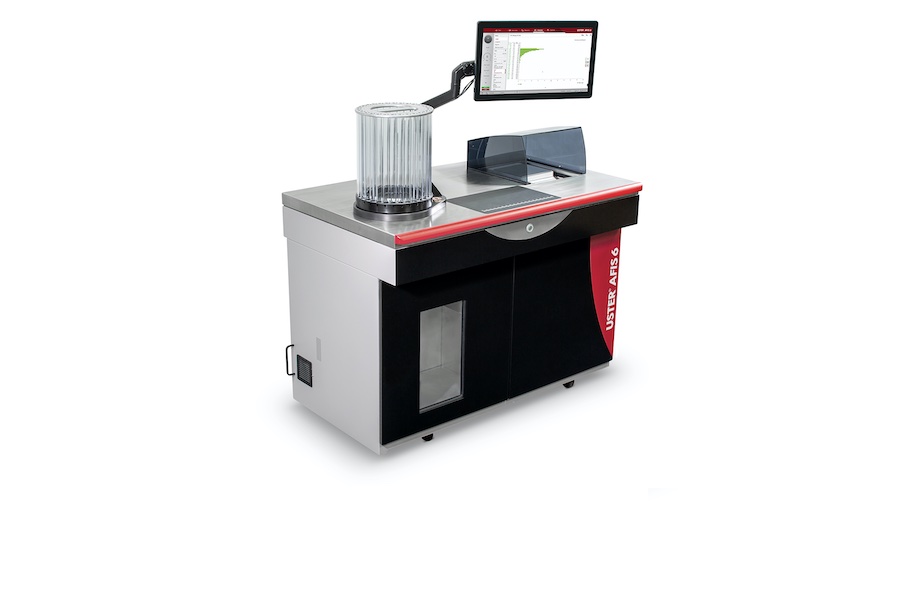
Uster FiberQ is a complete solution for raw material utilization, supporting spinners to achieve consistent quality and profitability every day, building further growth for the future. The Turkish company ORTA relies on FiberQ with recycled yarn for its denim production. Data-driven knowledge puts the producer in control of raw material utilization – ready to make the correct decisions for process efficiency, quality and productivity.

#Yarns

From advanced fibres to eco‑focused yarns: Yarn Expo Autumn 2026 set to welcome global industry to Shanghai

From 25 – 27 August, Yarn Expo Autumn 2026 will return to the National Exhibition and Convention Center (Shanghai) to reinforce its role as a key meeting point for the global yarn and fibre industry. With over 22,000 visitors, the previous edition gathered nearly 580 leading exhibitors from 16 countries and regions, showcasing advanced developments and creative applications that support innovative, sustainable textile design. The upcoming edition will not only present an extensive range of fibre and yarn products, but will also feature a comprehensive fringe programme, including industry forums and trend display areas, providing innovative upstream enterprises with a stage to introduce next‑generation materials and sustainable concepts.

#Research & Development

Elastic yarns to become more recyclable and environmentally friendly in future

On 29 April 2026, ITA student Tobias Dickmeiß was awarded a sponsorship prize by the Wilhelm Lorch-Stiftung for his innovative approach, to replacing conventional elastane with elastic yarns made from thermoplastic copolyester elastomers (TPC). Thanks to their thermoplastic nature and compatibility with typical polyesters used in the textile industry, elastic TPC yarns offer improved recyclability. Furthermore, the use of the melt-spinning process in yarn production eliminates the need for solvents that are harmful to the environment and human health.

Latest News

#INDEX 2026

INDEX 2026: Reicofil introduces RF 5.10 upgrade boosting output by 10 percent

At INDEX 2026, Reifenhäuser Reicofil will present its latest developments for the nonwovens industry under the guiding themes “Grow Together”, “Expand Together” and “Transform Together”. On this occasion, the leading manufacturer of nonwoven machinery will be unveiling two brand-new technology advancements – RF 5.10 upgrade and RF Core – at the show.

#Dyeing, Drying, Finishing

Tradition and Innovation – Phoenox Textiles Ltd. relies on state-of-the-art carpet back-coating line from Brückner

For more than 70 years, Phoenox Textiles Ltd. has been synonymous with quality, reliability, and inno-vation in the textile industry. Founded in 1954 in Huddersfield (Yorkshire, UK), a region with a long tradition in textiles, this family-owned business has continued to evolve without losing sight of its roots. Today, in its fourth generation under the leadership of the Mosley family, Phoenox successfully combines decades of experience with a clear, forward-looking corporate strategy.

#Digital Printing

EFI brings high-performance display graphics, packaging, and textile printing innovations to FESPA 2026

Electronics For Imaging, Inc. (EFI™) is bringing a broad range of new hybrid, roll-to-roll, and textile inkjet innovations to FESPA Global Print Expo 2026, taking place 19-22 May at Fira Barcelona Gran Via. Visitors to the EFI stand (Hall 3, #C85) will see the new EFI VUTEk M3h X hybrid LED printer, new EFI VUTEk® FabriVU® 340 i8 eight-colour dye sublimation printer, the EFI VUTEk X5r roll-to-roll LED printer, and the EFI VUTEk Q3h XP seven-colour hybrid printer in action, each designed to help sign and display producers scale output, diversify applications, and drive more profitable growth.

#Digital Printing

Mimaki ‘Powers Possibilities’ with a market-diverse application and printer line-up at FESPA 2026

Mimaki Europe, a leading manufacturer of industrial inkjet printers and cutting plotters, is bringing its “Print Different - Powering Possibilities” theme to life at FESPA Global Print Expo 2026 (Fira de Barcelona, 19-22 May 2026), demonstrating how digital printing technology can turn ideas into high-value applications and new business opportunities.

TOP