[pageLogInLogOut]

#Research & Development

Next-generation sustainable carbon fibers: versatile, high-performance and economical
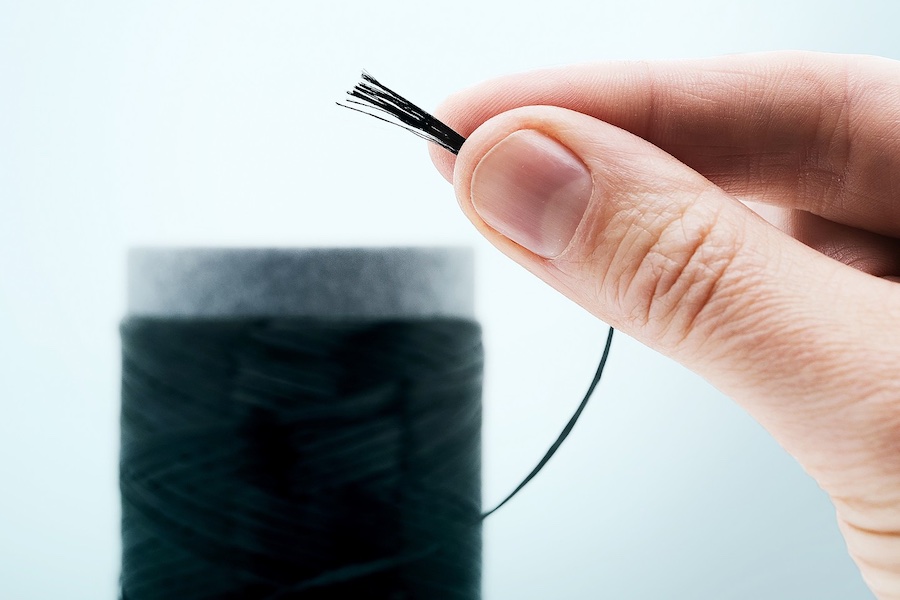
Whether in hydrogen tanks, batteries, fuel cells or for shielding sensitive electronics – carbon fibers are used in a wide range of advanced applications. At the Potsdam Science Park, the Fraunhofer Institute for Applied Polymer Research IAP, in collaboration with Brandenburg University of Technology Cottbus-Senftenberg, is developing novel carbon fibers based on cellulose.
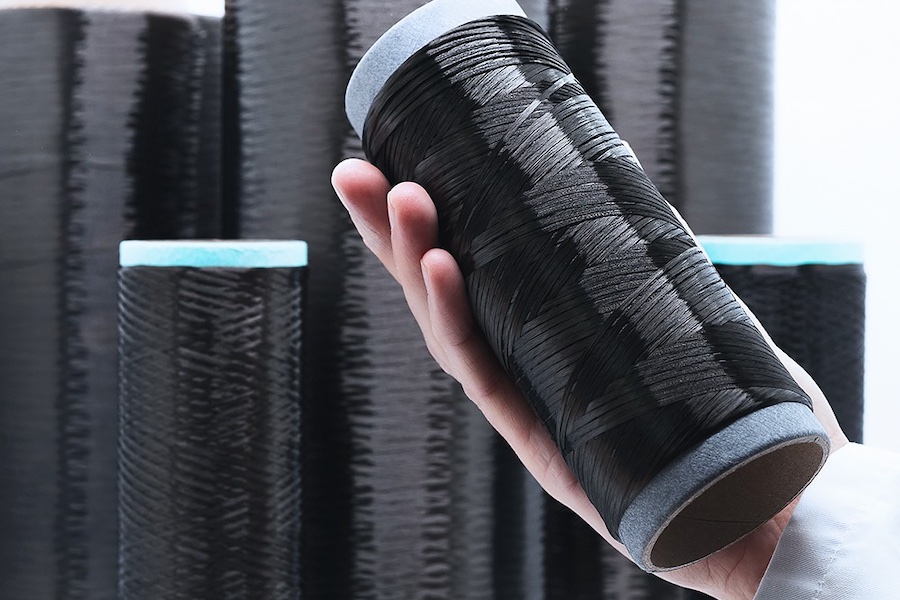
Ultra-thin and high-performance: The bio-based carbon fibers developed at the Fraunhofer IAP can reach diameters well below four micrometers. Their mechanical, electrical and thermal performance matches that of conventional petroleum-based carbon fibers. © 2025 Fraunhofer IAP / Kristin Stein

These fibers combine structural diversity, high electrical, thermal and mechanical performance with sustainability. The project is part of the Carbon Lab Factory Lausitz and is funded by the German Federal Ministry for Economic Affairs and Energy. It is intensively supported by the Wirtschaftsregion Lausitz GmbH.

More than lightweight construction: carbon fibers for alternative high-tech applications

Traditional carbon fibers, such as those used in lightweight construction, are usually made from the petroleum-based polymer polyacrylonitrile (PAN). Their production is complex, energy- and resource-intensive, and generates large quantities of toxic by-products. Pitch-based carbon fibers, another petroleum-derived type with excellent electrical and thermal properties, are highly technically demanding and costly to produce.

The Fraunhofer IAP is addressing these challenges with a new generation of high-performance carbon fibers – bio-based and sustainable. They combine structural variability with customizable properties and an attractive environmental and economic profile. Their applications go far beyond lightweight construction for aerospace, defense, wind energy or medicine: as a component in batteries and fuel cells, they can serve as electrical and thermal conductive, chemically stable fabrics. They are also ideally suited for shielding sensitive electronics.

High variability through spinning processes and additives

The innovative approach of the Fraunhofer IAP uses cellulose as a renewable raw material for precursors – the starting material for carbon fibers. Precursor fibers can be spun into continuous filaments using established industrial spinning technologies such as the viscose or Lyocell processes, as well as alternative shaping methods. Additives such as lignin, which like cellulose is derived from wood, can be incorporated directly into the spinning solution, significantly boosting the carbon yield during subsequent conversion to carbon fibers.

A key advantage of cellulose is that the structure of the precursor fibers – and thus the resulting carbon fibers – can be precisely controlled through the selected spinning process and parameters. This results in various degrees of orientation and crystallinity, as well as fiber cross-sections – for example, round, oval or lobulated. The latter one offers a particularly high specific surface area and is therefore suitable for use in conductive, porous structures for permeable electrodes in redox flow batteries or gas diffusion layers in fuel cells.
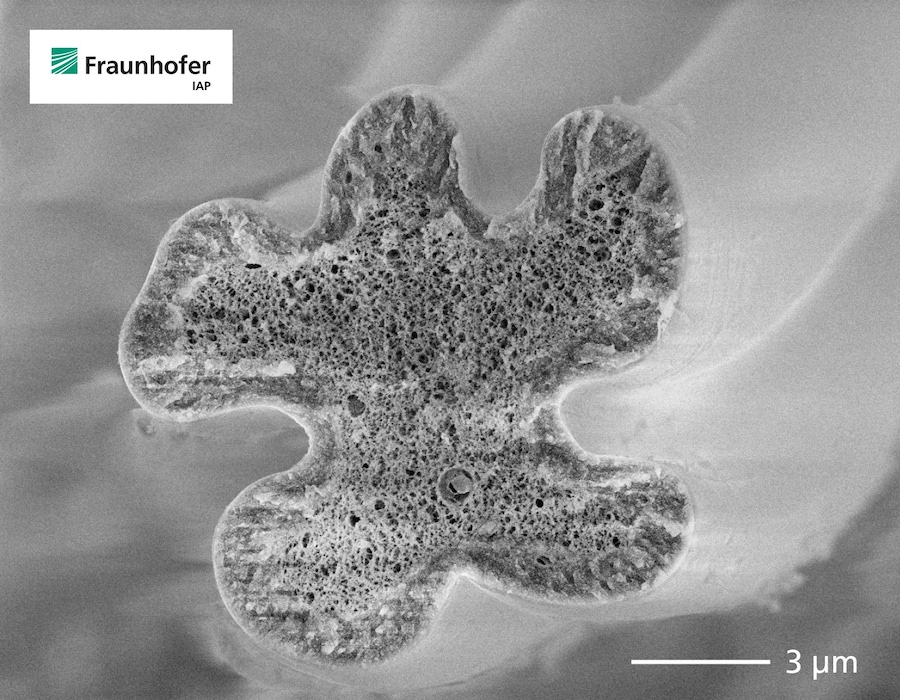
Freshly spun cellulose fiber with a lobulated cross-section under the scanning electron microscope (cryo-transfer SEM). The porous structure becomes denser during drying, the shape is retained during carbonization. © 2025 Fraunhofer IAP


Catalysis makes bio-based carbon fibers competitive

The endless spun cellulose fibers then pass through an aqueous bath containing functional additives or catalysts. This step activates the material for the subsequent thermal conversion into carbon fibers. Here, the cellulose fiber has a special advantage: it behaves like a sponge, efficiently absorbing the additives from the bath. The system of catalysts and additives developed by Fraunhofer IAP lowers the carbonization temperature by more than 1,000 °C, accelerates the process, and increases the yield from 15 to 45 percent by weight.

By specifically optimizing process parameters – such as temperature, residence time or mechanical stretching – during carbonization, fiber diameters well below four micrometers can be achieved. This is particularly relevant for fuel cells. By comparison: commercial fibers typically measure around seven micrometers in diameter.

Customized high performance – mechanical, electrical, thermal

The combination of spinning, activation and carbonization technologies allows the development of customized fiber types for a wide range of applications. Dr. Jens Erdmann, expert for bio-based carbon fibers at the Fraunhofer IAP, emphasizes: "Our carbon fibers combine high technical performance with sustainability: their mechanical properties are comparable to those of petroleum-based high-modulus PAN carbon fibers – in other words, to those of high-performance carbon fibers. They also show electrical and thermal properties similar to pitch-based fibers."

Carbon Lab Factory Lausitz: a bridge to industrial scaling

Pilot-scale trials at the Fraunhofer IAP demonstrate the great potential of this technology – which is now to be scaled up as part of the "Carbon Lab Factory Lausitz" initiative. The new infrastructure will cover the entire value chain – from raw material via carbon fiber to technical components – in Germany. The initiative was launched jointly with TU Chemnitz and Institute of Lightweight Design and Value-added Management of the BTU Cottbus-Senftenberg and is a cross-federal state project between Saxony and Brandenburg. It supports the development of a globally unique research infrastructure for carbon fibers and thus the structural transformation of the Lausitz region.

Sustainability meets high performance – a growing demand

"We clearly see that interest in sustainable materials is steadily increasing," says Erdmann. "But ecological advantages alone are not enough to succeed on the market – economic performance is also crucial. That’s exactly where we come in: we’ve succeeded in combining ecological responsibility with technical performance and cost-efficiency. The ability to tailor and flexibly adapt the properties of our fibers opens up new fields of application and clear competitive advantages – a decisive step toward economic viability."
More News from Fraunhofer Institute for Applied Polymer Research (IAP)

#Research & Development

Feasibility study shows potential to convert textile waste into PHB bioplastic

Textile waste could serve as a valuable source of raw materials for sustainable plastics in the future, according to the joint TexPHB feasibility study conducted by the Fraunhofer Institute for Applied Polymer Research IAP, Beneficial Design Institute GmbH and matterr GmbH. The study will be presented to the public for the first time at a network meeting on 25 November 2025 at the State Chancellery in Potsdam.

#Recycling / Circular Economy

Closing the Loop in the Textile Industry: Value Creation in the State of Brandenburg

How can the state of Brandenburg benefit from a circular textile industry? This question is addressed in the new policy paper "Closing the loop in the textile industry: Value creation in the state of Brandenburg." Based on the „TexPHB“ feasibility study funded by the Brandenburg Ministry of Climate Protection, it shows how textile waste can be integrated into new value chains.

#Research & Development

Better, faster, bio-based: Functional new Plastic alternatives

How can new bio-based and biohybrid materials with improved features be developed faster? Six Fraunhofer institutes are jointly exploring this question in the SUBI²MA flagship project, using an innovative bio-based polyamide developed by Fraunhofer researchers as a model. Its specific properties make it a promising alternative to fossil-based plastics.

#Research & Development

Fungal mycelium as the basis for sustainable products

Fungi have more to offer than meets the eye. Their thread-like cells, which grow extensively and out of sight underground like a network of roots, offer huge potential for producing sustainable, biodegradable materials. Researchers at the Fraunhofer Institute for Applied Polymer Research IAP in Potsdam Science Park are using this mycelium to develop a wide range of recyclable products, from wallets and insulation to packaging.

More News on Research & Development

#Research & Development

More safety and comfort for protective clothing thanks to auxetic fabrics

When everyday materials are pulled, they stretch or elongate in the direction of the pull and become narrower in cross-section. We can also observe this property in two-dimensional textiles. Auxetic structures behave differently here. They have the striking property of not changing under tensile stress or even increasing their width or thickness. These properties are advantageous, for example, in protective textiles or textile filter media. The DITF are researching auxetic fabrics for various applications.

#Research & Development

Fraunhofer CCPE presents the “Monomaterial Design Set” – Innovative solutions for circular product design

Composite materials made from different types of plastic often extend the lifetime of products but make recycling more difficult in the circular economy. That is why Fraunhofer CCPE has developed the “Monomaterial Design Set”. This new approach helps to reduce the variety of plastics used in durable products and offers circular solutions for designers and product developers.

#Research & Development

How innovations drive BASF’s success

“Innovation has always been part of BASF’s DNA. Especially in these volatile times, it is crucial to leverage our innovative strength to develop competitive solutions that differentiate us as a company in our markets and give us a competitive edge,” said Dr. Stephan Kothrade, Member of the Board of Executive Directors of BASF and Chief Technology Officer, at the company’s Research Press Briefing held today. To achieve this, BASF implemented its “Winning Ways” strategy about a year ago with the clear goal of becoming the preferred chemical company to enable its customers’ green transformation.

#Research & Development

Small tolerances, big impact and a recyclable alternative to elastane

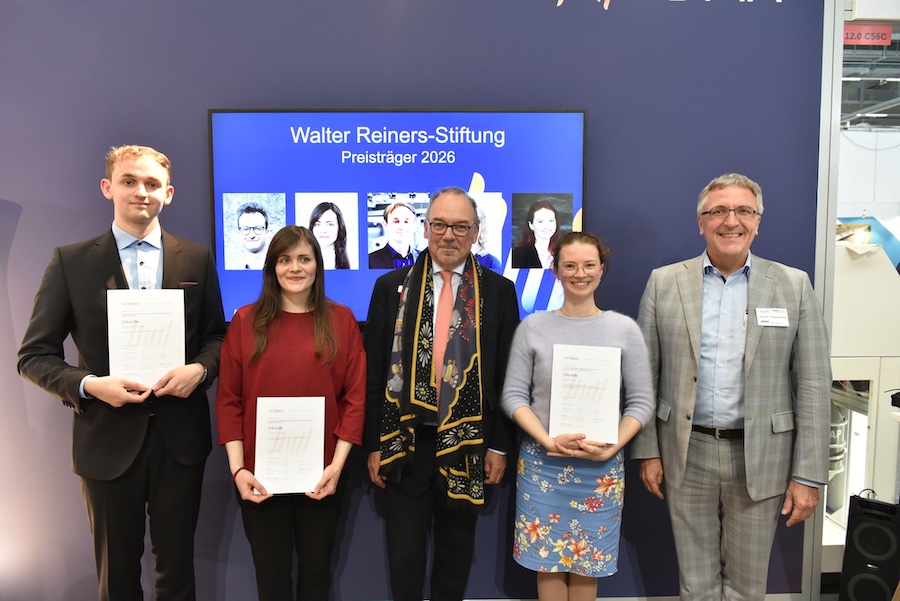
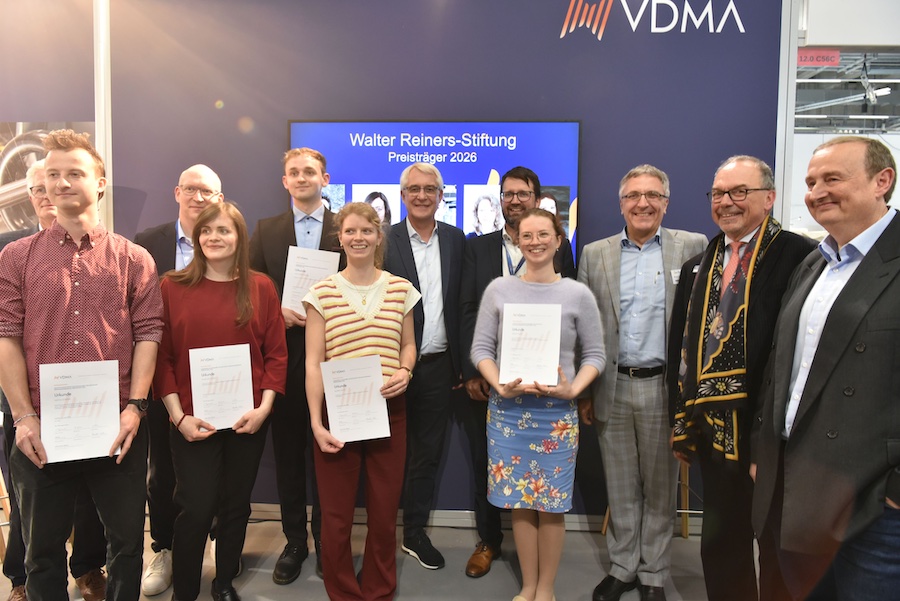
ITA Master's student Janne Warnecke investigated tension differences over the fabric width in the weaving process and thereby contributed to quality assurance; ITA Bachelor's student Jasmin Roos found a basis for the development of recyclable yarns and textiles. For these developments, they were awarded the Walter Reiners Foundation's Promotion and Sustainability Prizes on 27 November. Peter D. Dornier, Chairman of the Walter Reiners Foundation, presented the awards at the Aachen-Dresden-Denkendorf International Textile Conference (ADD-ITC) in Aachen, Germany.

Latest News

#People

Happy Holidays!

Dear reader, the year 2025 is drawing to a close. We are entering what we hope will be a peaceful holiday season, spending time with our families and taking a moment to pause and reflect. We hope we have been able to support you once again this year with relevant news and articles, and we look forward to surprising you with many innovations in the coming year. Enjoy the festive season, stay healthy, and we wish you a happy and joyful holiday season.

#Weaving

Lindauer Dornier announces leadership transition in weaving machine business

After more than ten successful years at Lindauer DORNIER GmbH, Mr Wolfgang Schöffl will leave the family-owned company at the end of the year to enter well-deserved retirement.

#Heimtextil 2026

Texpertise Focus AI: Messe Frankfurt puts Artificial Intelligence centre stage at its international textile and apparel trade fairs

Under the banner 'Texpertise Focus AI, Messe Frankfurt will place a strong emphasis on Artificial Intelligence (AI) across its international textile and apparel trade fairs from 2026 onwards, setting a future-shaping signal for the industry. The initiative highlights the responsible use of AI along the entire textile value chain, from fibre production to the point of sale. The programme will launch at Heimtextil in Frankfurt in January 2026.

#Technical Textiles

Autoneum and Polestar set new benchmarks for passenger experience and sustainability

As the global market leader in sustainable acoustic and thermal management, Autoneum is a key supplier of interior and exterior components for the highly anticipated Polestar 5 model. The successful collaboration between Autoneum and Polestar marks a significant milestone in sustainable automotive engineering: the electric grand tourer sports car features several innovations in lightweight, fully recyclable polyester-based components that ensure a superior driving experience. Polestar 5 was revealed at the IAA Mobility 2025 in Munich and is available in 24 markets.

TOP