[pageLogInLogOut]

#Smart Textiles

Covestro, FILK Freiberg, and OUT e.V. develop flexible, conductive polymer smart textile system
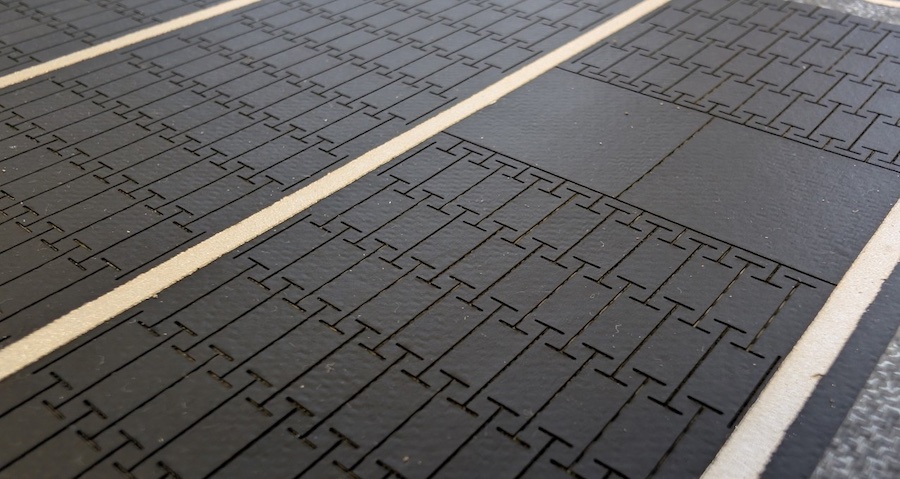
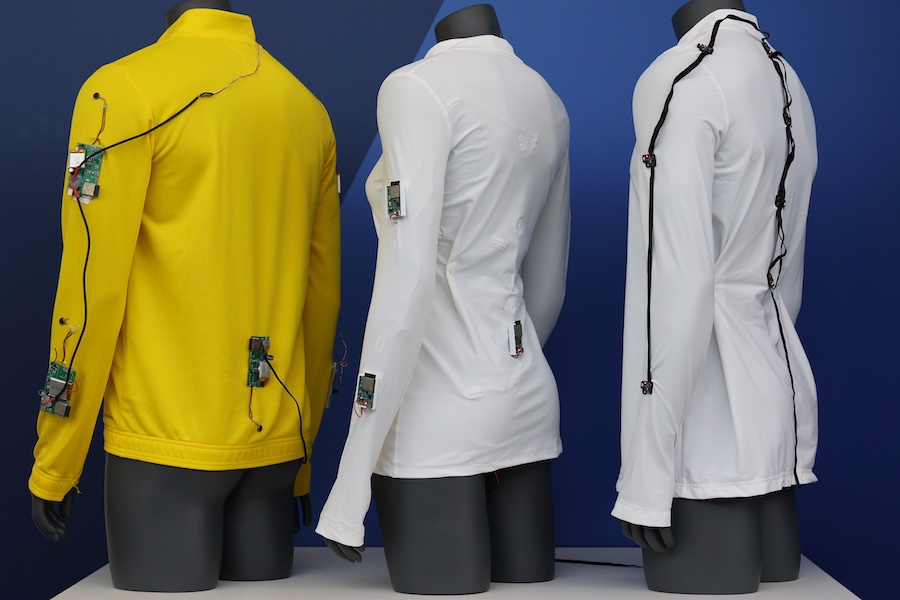
Conductive textile compounds with high elongation and flexibility, enabling sensor-integrated smart textiles ©FILK Freiberg Institute
As the smart textiles market continues to grow across healthcare, personal protection, sportswear, and automotive applications, developers are seeking new ways to integrate electronic functionality directly into textiles, without the rigidity and complexity of conventional wiring. To address this challenge, FILK Freiberg Institute, an independent research institution with expertise in polymer coatings for textile applications, collaborated with Optotransmitter-Umweltschutz-Technologie (OUT) e.V. The joint project, funded under the German Industrielle Gemeinschaftsforschung (IGF) program of the Bundesministerium für Wirtschaft und Energie (BMWE), focused on developing flexible, conductive polymer surfaces for next-generation smart textiles.


The goal was to enable the free distribution of multiple LEDs and sensors across a textile surface by creating a uniform conductive “potential field” within the material. This technology enables greater flexibility compared to conventional conductor tracks.

Creating a flexible conductive PU film using Impranil®

To achieve the required combination of conductivity, elongation, and flexibility, FILK and OUT e.V. used water-based Impranil® polyurethane dispersions from Covestro, creating a flexible conductive PU film into which carbon nanotubes were incorporated as electrically conductive additives.

Laser structuring of the conductive polymer surface allowed precise tuning of the electrical properties of the potential field, enabling LEDs and sensors to be distributed freely across the textile surface without traditional wiring. The active control of embedded LEDs through the integrated sensors supports real-time monitoring and bidirectional communication via modulated voltage or Bluetooth, depending on the application.

Dr. Martin Heise, Deputy Head of Department Functional Layer Systems at FILK Freiberg Institute, said: “Our goal was to rethink how electronics are integrated into textiles. By creating a conductive surface instead of fixed wiring using Impranil® polyurethane dispersions from Covestro, we can distribute sensors and light sources far more freely, enabling new smart textile designs and applications.”

Dr. Iris Vela-Wallenschus, Project Manager at OUT e.V. noted: “Distributed electronics, real-time sensing, and bidirectional communication within a flexible textile substrate represent a meaningful step forward for wearable technology. Working with FILK and Covestro, we've shown that this kind of adaptive functionality is achievable at a level of sophistication that is difficult to achieve with conventional wiring approaches.”
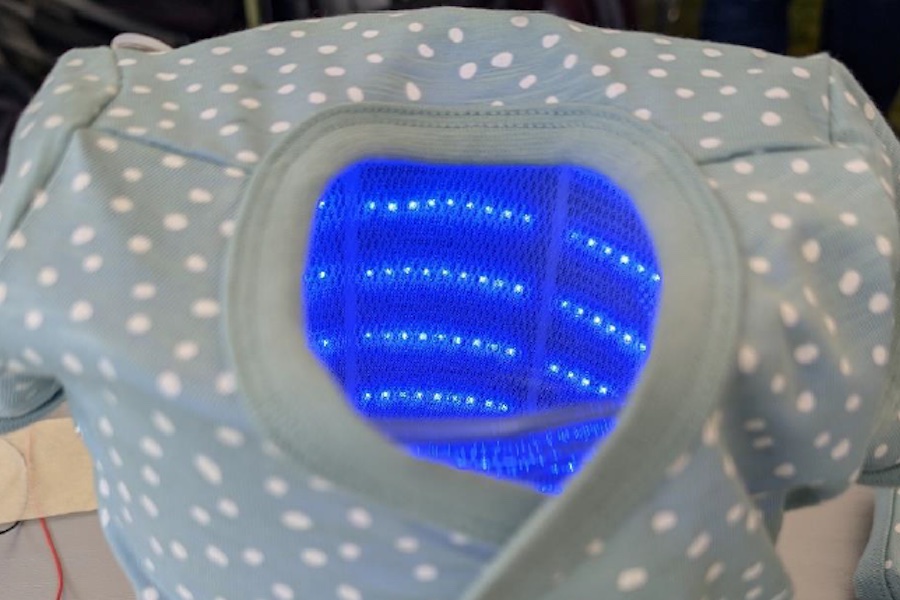
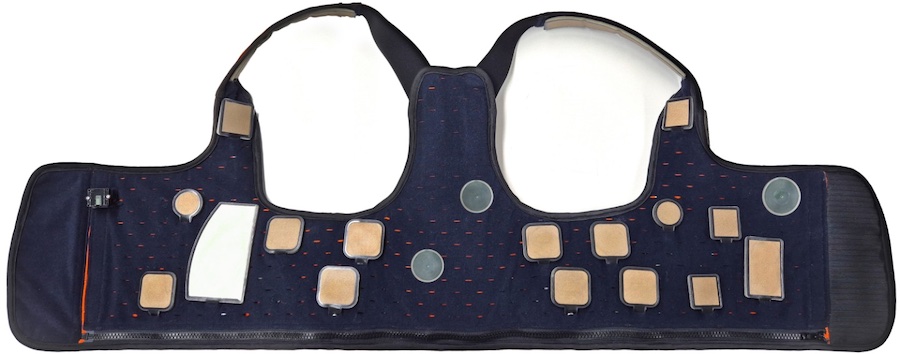
Sensor-controlled neonatal jaundice bodysuit for phototherapy ©FILK Freiberg Institute


Enabling a new generation of smart textiles

The result is a technology platform that combines conductive polymer materials, sensor integration, and intelligent control. This platform unlocks possibilities for new applications such as sensor-controlled newborn bodysuits for jaundice phototherapy. Current standard treatments for neonatal jaundice rely on blue light at approximately 455 nm in hospital incubators. A flexible bodysuit integrating blue LEDs and sensors directly into the garment could continuously monitor therapy progress and adjust light intensity and distribution in real time. This approach may contribute to the development of more flexible treatment options with the support of midwives.

Beyond this application, Impranil® PUD-based formulations can be used in applications including heated textiles, pressure sensors, and flexible conductor tracks for wearable electronics. This system can also be adapted for scalable manufacturing processes such as digital printing, supporting broader adoption in industries including sportswear, automotive interiors, protective equipment, and connected IoT devices.

Dr. Torsten Pohl, Global Head of Textile Coatings at Covestro added: “This project highlights how material innovation can unlock new functionality in textiles. Our Impranil® water-based polyurethane dispersions provided the flexibility, durability, and processability needed to turn a complex concept into a scalable smart textile platform. We're proud to have supported FILK and OUT e.V. in developing a system with real-world impact, from neonatal care through to the broader wearables market.”

To see what this flexible, conductive smart textile system looks like, visit Techtextil 2026 in Frankfurt between April 21 and 24. A demonstrator of the sensor-controlled newborn bodysuit for jaundice phototherapy will be on display at the Covestro booth (C79) in hall 11.0.

More News from Covestro AG

#Techtextil 2026

Covestro to exhibit solutions for a more sustainable and productive textile industry at Techtextil 2026

Covestro will present a broad portfolio of material innovations for textile coatings, adhesive films and thermoplastic polyurethanes (TPUs) at Techtextil 2026 (Hall 11.0, Booth C79). The exhibits will demonstrate how advanced solutions can enhance durability, recyclability and manufacturing efficiency across applications such as automotive, infrastructure, protective apparel and sportswear. A particular focus will be on more sustainable coating technologies, including antimicrobial systems based on INSQIN® in combination with AGXX from Heraeus Precious Metals, as well as the integration of Pontacol® thermoplastic adhesive films into Covestro’s offering.

#Technical Textiles

Covestro showcases monomaterial concept in autonomous SUE People Mover

UE | STUDIOS has unveiled the fully autonomous electric minibus “Self-driving Urban E-Shuttle” (SUE), placing strong emphasis on sustainable material design. Developed within a project funded by the Federal Ministry for Economic Affairs and Energy (BMWE) and the European Union, the vehicle will begin public road testing this year. At the core of the concept is the consistent use of recyclable monomaterials to improve circularity at end of life.

#Textile chemistry

Covestro and Heraeus Precious Metals collaborate to enable safer, more sustainable antimicrobial textile coatings

Laboratory tests reveal that AGXX antimicrobial surface technology from Heraeus Precious Metals is fully compatible with Impranil® PU dispersions which are part of the waterborne INSQIN® textile coating technology from Covestro, paving the way for more sustainable antimicrobial textile coatings. This discovery comes at a key moment for the textile coatings industry. As the sharing economy continues to grow, more people are coming into regular contact with high-use surfaces, creating ideal conditions for bacteria, viruses, and other microorganisms to thrive.

#Textile chemistry

Covestro celebrates decade of innovation and sustainable growth

Covestro celebrates its 10-year anniversary today. Since its carve-out from Bayer in 2015, the company has developed into a global leader in high-performance polymer materials and a pioneer in circular economy solutions. With a strong focus on innovation and sustainability, Covestro’s materials are now embedded in countless applications worldwide – from mobility and construction to electronics, healthcare, and consumer goods.

More News on Smart Textiles

#Research & Development

Catching heart disease early with AI-based sensor system

It slips on like a normal vest: Fraunhofer IZM has created a smart sensor system in cooperation with the Charité and the Technical University of Berlin. The vest records a vast array of cardiovascular parameters, which an AI-based system uses to support medical diagnostics and spot potentially dangerous developments.

#Research & Development

Soft interfaces: Textile-integrated light switches, made possible by printable Liquid Metal Ink

A gentle tap on the knitted lampshade is enough to switch on the light. The lamp developed by Fraunhofer IZM in cooperation with WINT Design Lab works with a revolutionary conductive ink. Visitors can find out more and try the lamp themselves at the Berlin Science Week on November 1st and 2nd.

#Smart Textiles

Intelligent textiles for construction, architecture and mobility: Smart Textiles User Forum in Stuttgart

When textiles are equipped with electronic components, conductive yarns and textile sensors, the application possibilities are almost unlimited. These high-tech textiles are a global growth market. In Stuttgart, manufacturers, users and researchers presented amazing examples of applications in construction, architecture and mobility. The appropriate standards ensure quality and safety.

#Smart Textiles

Innovations with smart textiles

The second free online masterclass of the AddTex project will take place on March 5 from 15:30 to approx. 17:00. Industry partners and textile researchers will present the latest innovations in the field of functional and smart textiles.

Latest News

#Textile processing

NATULON® zipper series surpasses 50% of YKK’s global zipper sales

YKK Corporation (Headquarters: Chiyoda-ku, Tokyo; President: Koichi Matsushima; hereafter, YKK) announces that the global sales share of its NATULON® zipper series—zippers that incorporate recycled materials—has exceeded 50%.

#HIGHTEX 2026

Global growth in the technical textile sector drives interest in HIGHTEX 2026 to its peak

The continued steady growth of the technical textiles and nonwoven sector worldwide is increasing interest every year in the HIGHTEX Exhibition, one of the sector’s most important meeting points. In this strong growth climate, HIGHTEX 2026 International Technical Textiles and Nonwoven Exhibition, which will bring together the sector’s leading manufacturers, technology providers, and international buyers, is preparing to open its doors at Tüyap Fair and Congress Center on June 9–13, 2026.

#Techtextil 2026

RUDOLF is pioneering the future of technical textiles by developing innovative, functional solutions

At Techtextil 2026, RUDOLF presents its latest innovations for textile auxiliaries, textile care and construction chemicals. Based in Geretsried, Bavaria, the company draws on more than 100 years of experience and continues to position itself as a global technology partner focused on quality, innovation and sustainability.

#Denim

Eastman Naia™ debuts at Kingpins Amsterdam, transforming Denim from the inside out

At Kingpins Amsterdam (April 15–16, 2026), Naia™ by Eastman Chemical Company makes its debut, presenting its approach to circularity and comfort in denim at Stand 1, Ground Level (Blue Area). The brand also highlights its growing global ecosystem, connecting mill partners, designers and brands working to expand denim possibilities through fiber innovation.

TOP