[pageLogInLogOut]

#Sustainability

What are the impacts of PFAS polymers on our health and the environment?

The widespread use of PFAS polymers in everything from consumer products to green technologies can lead to contamination of water, air, soil, food and people. A European Environment Agency (EEA) assessment, published today, says that these chemicals can also contribute to global warming and ozone depletion.

Per- and polyfluoroalkyl substances (PFAS) have been in the spotlight for more than a decade due to their potential impacts on human health and the environment. This is especially true for certain compounds such as PFOS and PFOA, while the impacts associated with the chemical form of PFAS known as ‘PFAS polymers’, which in simple terms consist of larger molecules, have been considered to be lower.

However, evidence now also suggests that PFAS polymers can lead to various types of impacts during their lifecycles according to the EEA briefing ‘PFAS polymers in focus: supporting Europe’s zero pollution, low-carbon and circular economy ambitions’. The analysis provides the latest knowledge about the potential impacts on health, the environment and climate and provides background context to EU proposals to clarify the use of PFAS in Europe. 

PFAS polymers currently make up a significant part, 24-40%, of the total volume of PFAS placed on the EU market, and they are widely used in a broad range of products and technologies. The EEA briefing stresses that it is essential to adopt a full life-cycle perspective on PFAS polymers when evaluating their impacts and deciding on their future use. 

Identified concerns 

It is generally understood that PFAS polymers are less toxic than non-polymeric PFAS. This is due to polymers having a larger molecular size, which limits their uptake into living cells (and therefore limits their potential toxicity). However, concerns have been raised in relation to a number of potential impacts during the lifecycle of PFAS polymers, the EEA briefing says. These concerns include: 

Toxic effects to workers, the environment and communities surrounding factories can occur from chemicals used in the production of PFAS polymers and the different by-products generated during their production. Furthermore, there are environmental and human health concerns prompted by the degradation over time of certain PFAS polymers into smaller, persistent compounds, that may have a higher toxicity than their parent compounds.

Release of potent greenhouse gasses (e.g. trifluoromethane – HFC-23) and substances that can degrade the ozone layer (e.g. dichlorofluoromethane – HCFC-22) can occur during the production of PFAS polymers.

The widespread presence of PFAS polymers in products and materials can potentially act as a future barrier for recycling, since it is difficult to trace and separate these materials at the waste stage.

EU action 

A recently proposed universal PFAS restriction under the EU’s REACH regulation, brought forward by Denmark, Germany, the Netherlands, Norway and Sweden, aims to ban all PFAS (including PFAS polymers) except for certain uses which have time-limited derogations. In a recent communication from the European Chemicals Agency (ECHA) and the dossier submitters, it was stated that restriction options, other than a ban, were also being considered for some uses.

More info: 

PFAS polymers in focus: supporting Europe’s zero pollution, low-carbon and circular economy ambitions

Briefing - Published 29 Apr 2025

https://www.eea.europa.eu/en/analysis/publications/pfas-polymers-in-focus

PFAS in textiles in Europe’s circular economy

BriefingPublished 17 Sep 2024

https://www.eea.europa.eu/en/analysis/publications/pfas-in-textiles-in-europes-circular-economy

More News from European Environment Agency

#Europe

State of Europe’s environment not good: threats to nature and impacts of climate change top challenges

State of Europe’s environment not good: threats to nature and impacts of climate change top challenges Significant progress has been made in reducing greenhouse gas emissions and air pollution, but the overall state of Europe’s environment is not good, especially its nature which continues to face degradation, overexploitation and biodiversity loss. The impacts of accelerating climate change are also an urgent challenge, according to the European Environment Agency’s (EEA) most comprehensive, ‘state of environment’ report, published today. The outlook for most environmental trends is concerning and poses major risks to Europe’s economic prosperity, security and quality of life.

#Europe

EEA Scientific Committee elects new chair and vice-chairs

The European Environment Agency’s (EEA) Scientific Committee has elected a new chair and two vice-chairs at its spring meeting held over two days at the EEA headquarters in Copenhagen.

#Europe

Consumption of clothing, footwear, other textiles in the EU reaches new record high

Europeans are buying and discarding more clothing, footwear and other textiles than ever before, which as a result, is putting more pressure on our climate and environment, according to a European Environment Agency (EEA) briefing released today. The updated consumption data highlights the need for policymakers, industry and consumers to play their role in helping Europe shift away from the fast-fashion trend, to produce better, longer lasting quality textiles which are designed to last long, and can be reused, repaired and recycled.

More News on Sustainability

#Sustainability

Ying McGuire becomes new CEO of Cascale

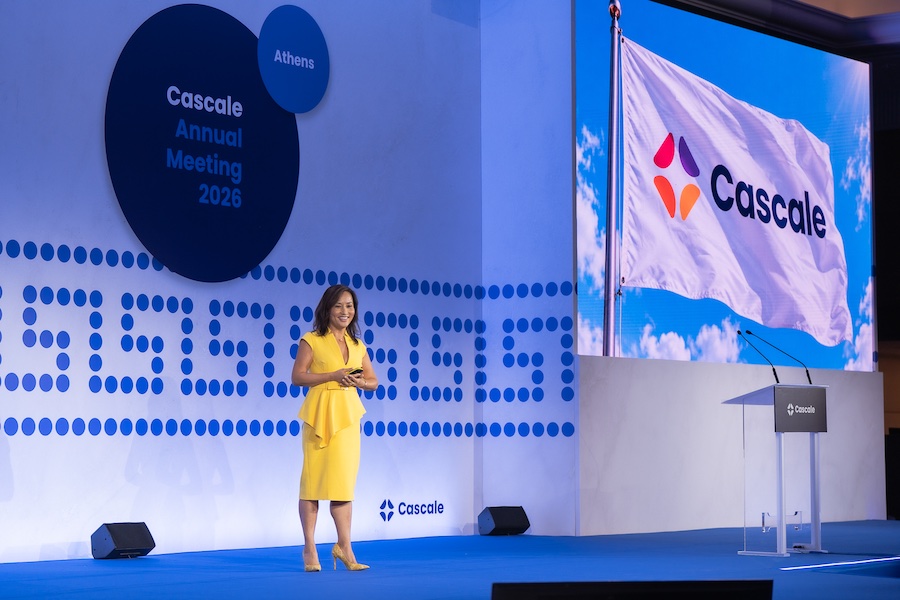
Cascale today announced the appointment of Ying McGuire as Chief Executive Officer, effective June 1, 2026.

#Sustainability

VAUDE eliminates PFAS from all products

PFAS (per- and polyfluoroalkyl substances) are now detectable worldwide – in drinking water, soil and the human body. These so-called “forever chemicals” are considered hazardous to health and potentially carcinogenic, as they do not break down and remain in the environment permanently. Despite these risks, PFAS are still used in a wide range of products. More than 15 years ago, VAUDE made a strategic decision to gradually eliminate PFAS from all product categories.

#Sustainability

OEKO-TEX® chooses TextileGenesis to advance digital traceability for organic cotton

OEKO-TEX® today announced a full collaboration with TextileGenesis, a Lectra company, to digitally trace and authenticate organic cotton, strengthening fraud prevention across the supply chain. This announcement follows a successful pilot and brings together OEKO-TEX®’s certification expertise and closed testing system with TextileGenesis’ digital traceability platform to deliver a secure, end-to-end solution for managing certified organic cotton flows.

#Europe

ICAC to support European Commission on pending PEF legislation

The International Cotton Advisory Committee (ICAC) is proud to announce that it has been included as a member of the European Commission’s Technical Advisory Board (TAB) on the Product Environmental Footprint methodology. The Commission developed the Product Environmental Footprint (PEF) to assess and communicate the life cycle environmental performance of products and organizations.

Latest News

#Recycling / Circular Economy

Circulose restarts commercial-scale production at Ortviken plant in Sundsvall

Circulose today announced the restart of its commercial-scale production plant at Ortviken in Sundsvall, Sweden, marking a significant step in scaling next-generation materials for the global fashion industry. The company plans to resume production of CIRCULOSE®, a recycled pulp made entirely from discarded cotton textiles, in the fourth quarter of 2026.

#Textiles & Apparel / Garment

VIATT 2026 to debut German Pavilion, strengthening European participation alongside key Asian textile hubs

Vietnam’s textile and garment sector continues to be a major contributor to the country’s economic growth, with export revenues expected to reach USD 46 billion in 2025, a 5.6% increase from 2024 . From 26 – 28 February, the Vietnam International Trade Fair for Apparel, Textiles and Textile Technologies (VIATT) is set to contribute to economic growth opportunities by accelerating digital transformation and green transition across the entire textile value chain. The upcoming edition will respond to the rising demand for advanced technologies and sustainable materials with the introduction of the German Pavilion, alongside strong exhibitor participation from key Asian sectors, as well as several high-profile fringe events.

#Technical Textiles

Sustainable, lightweight, and sound absorbing: Polyester-based front trunk solution for BEVs

As car manufacturers look to further reduce their carbon footprint, Autoneum has developed an innovative front trunk solution for battery electric vehicles (BEVs), made entirely from polyester-based textile. The Ultra-Silent Frunk offers significant weight reduction, improved acoustic and thermal insulation, and uses up to 70 percent recycled material, supporting sustainable and efficient vehicle design. Autoneum, global technology leader in acoustic and thermal management for vehicles, has already received orders for the new frunk from three major OEMs in Asia and Europe to be built in three BEV models. Series production for two BEVs has been underway in China and Germany since last year.

#Raw Materials

Modern testing methods for raw cotton

The 38th International Cotton Conference Bremen will take place from 25 to 27 March 2026 at the Bremen Parliament. This conference has traditionally stood for in-depth expertise and international exchange. The program will focus on technical innovations, market trends, and regulatory frameworks across the entire value chain – from agriculture to the circular economy. With high-profile speakers, the conference is regarded as the key meeting point for the global cotton industry. Today’s focus: Cotton quality and testing methods.

TOP