[pageLogInLogOut]

#Sustainability

VAUDE eliminates PFAS from all products

High-performance weather protection without harmful forever chemicals
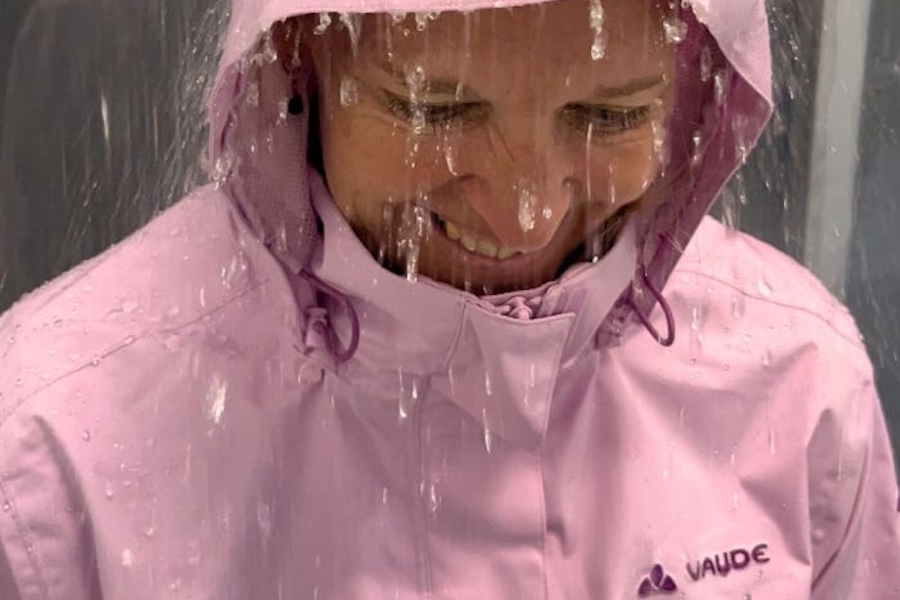
Vaude's Antje von Dewitz takes a shower to demonstrate a PFAS free rain jacket © 2026 Laude
PFAS (per- and polyfluoroalkyl substances) are now detectable worldwide – in drinking water, soil and the human body. These so-called “forever chemicals” are considered hazardous to health and potentially carcinogenic, as they do not break down and remain in the environment permanently. Despite these risks, PFAS are still used in a wide range of products. More than 15 years ago, VAUDE made a strategic decision to gradually eliminate PFAS from all product categories.

With the Spring/Summer 2025 collection, this transformation is complete: VAUDE now fully avoids PFAS – from weather protection apparel to backpacks, sleeping bags, footwear and waterproof tents.

This complete phase-out required many years of intensive development. For a long time, PFAS were considered the technical standard for waterproof performance in the outdoor industry. High-performing alternatives were initially very limited. VAUDE therefore invested specifically in materials research, collaborated with innovative partners and conducted extensive lab and field testing to ensure that the high functional requirements could also be met without PFAS. 

Strategic PFAS phase-out – consistently implemented 

“Phasing out PFAS was a strategic business decision, not a communications move,” says Dr. Antje von Dewitz, CEO of VAUDE. “It shows that high-performance weather protection is possible without relying on harmful forever chemicals. Reaching this milestone is a major achievement for VAUDE – and the result of close collaboration and strong commitment from many colleagues and partners.” 

A key role was played by VAUDE’s chemicals management system, which has been working systematically for years to identify and implement alternatives to fluorinated chemistry. All product categories were converted step by step – including technically demanding components such as waterproof zips and tent fabrics. 

How can PFAS-free solutions become the industry standard?

VAUDE’s successful transition shows: high-performing PFAS-free solutions are technically available today. A clear EU-wide regulatory framework would significantly accelerate the widespread adoption of these alternatives across the industry. Binding requirements would create a level playing field and provide planning security for companies that choose to invest early and take responsibility. 



More News from VAUDE Sport GmbH & Co. KG

More News on Sustainability

#Sustainability

Ying McGuire becomes new CEO of Cascale

Cascale today announced the appointment of Ying McGuire as Chief Executive Officer, effective June 1, 2026.

#Sustainability

OEKO-TEX® chooses TextileGenesis to advance digital traceability for organic cotton

OEKO-TEX® today announced a full collaboration with TextileGenesis, a Lectra company, to digitally trace and authenticate organic cotton, strengthening fraud prevention across the supply chain. This announcement follows a successful pilot and brings together OEKO-TEX®’s certification expertise and closed testing system with TextileGenesis’ digital traceability platform to deliver a secure, end-to-end solution for managing certified organic cotton flows.

#Europe

ICAC to support European Commission on pending PEF legislation

The International Cotton Advisory Committee (ICAC) is proud to announce that it has been included as a member of the European Commission’s Technical Advisory Board (TAB) on the Product Environmental Footprint methodology. The Commission developed the Product Environmental Footprint (PEF) to assess and communicate the life cycle environmental performance of products and organizations.

#Nonwovens

ENDURANCE Program: Driving operational sustainability at Magnera

As Magnera enters a new year, the company is reflecting on a key sustainability milestone from 2025: the launch of ENDURANCE, its global, employee-led initiative focused on waste reduction and sustainable innovation. Launched on Earth Day 2025, this initiative has generated more than 250 improvement submissions from team members across Magnera’s global operations, demonstrating strong engagement and shared accountability for sustainability across the organization.

Latest News

#Recycling / Circular Economy

Circulose restarts commercial-scale production at Ortviken plant in Sundsvall

Circulose today announced the restart of its commercial-scale production plant at Ortviken in Sundsvall, Sweden, marking a significant step in scaling next-generation materials for the global fashion industry. The company plans to resume production of CIRCULOSE®, a recycled pulp made entirely from discarded cotton textiles, in the fourth quarter of 2026.

#Textiles & Apparel / Garment

VIATT 2026 to debut German Pavilion, strengthening European participation alongside key Asian textile hubs

Vietnam’s textile and garment sector continues to be a major contributor to the country’s economic growth, with export revenues expected to reach USD 46 billion in 2025, a 5.6% increase from 2024 . From 26 – 28 February, the Vietnam International Trade Fair for Apparel, Textiles and Textile Technologies (VIATT) is set to contribute to economic growth opportunities by accelerating digital transformation and green transition across the entire textile value chain. The upcoming edition will respond to the rising demand for advanced technologies and sustainable materials with the introduction of the German Pavilion, alongside strong exhibitor participation from key Asian sectors, as well as several high-profile fringe events.

#Technical Textiles

Sustainable, lightweight, and sound absorbing: Polyester-based front trunk solution for BEVs

As car manufacturers look to further reduce their carbon footprint, Autoneum has developed an innovative front trunk solution for battery electric vehicles (BEVs), made entirely from polyester-based textile. The Ultra-Silent Frunk offers significant weight reduction, improved acoustic and thermal insulation, and uses up to 70 percent recycled material, supporting sustainable and efficient vehicle design. Autoneum, global technology leader in acoustic and thermal management for vehicles, has already received orders for the new frunk from three major OEMs in Asia and Europe to be built in three BEV models. Series production for two BEVs has been underway in China and Germany since last year.

#Raw Materials

Modern testing methods for raw cotton

The 38th International Cotton Conference Bremen will take place from 25 to 27 March 2026 at the Bremen Parliament. This conference has traditionally stood for in-depth expertise and international exchange. The program will focus on technical innovations, market trends, and regulatory frameworks across the entire value chain – from agriculture to the circular economy. With high-profile speakers, the conference is regarded as the key meeting point for the global cotton industry. Today’s focus: Cotton quality and testing methods.

TOP