[pageLogInLogOut]

#Sustainability

Number of GOTS-certified facilities grow 15% globally as demand for credible sustainability standards continues to strengthen

Global Organic Textile Standard (GOTS) certification continued to grow in 2025, with nearly 18,000 certified facilities worldwide, despite ongoing geopolitical uncertainty and rapidly evolving regulatory requirements across global textile supply chains.


New figures released today in the 2025 Annual Report for Global Standard, the nonprofit that owns and operates GOTS, show that uptake of robust, independently governed sustainability standards remains a priority for companies seeking to manage risk, substantiate claims and meet rising expectations on transparency and due diligence.

As regulatory frameworks accelerated throughout 2025, scrutiny of supply chains increased and expectations around credible sustainability systems sharpened. Against this backdrop, Global Standard reported steady growth in GOTS certification alongside progress in integrity, digital traceability and alignment with international due diligence frameworks. As the leading system-level Standard, GOTS ensures the credibility of its certified organic textiles across the entire value chain through ever-evolving criteria that extend beyond a single technical, product or facility-level aspect.

“Voluntary sustainability standards are increasingly being used not just to demonstrate intent, but to operationalise complex regulatory and ethical requirements,” said Claudia Kersten, Managing Director of Global Standard. “In a year of significant regulatory change, our focus has been on strengthening systems that are practical, transparent and credible for global textile supply chains.”

Rahul Bhajekar, Managing Director of Global Standard, added: “Building on this systems-led approach, the development of GRTS marks an important next step for Global Standard. Together with GOTS, it offers companies a clearer, more coherent way to manage responsibility across different fibres, align with due diligence expectations and strengthen governance and deliver impact across increasingly complex global textile supply chains.”

Advancing due diligence and system integrity

A major milestone during the year was the OECD Due Diligence Alignment Assessment of GOTS, which found 98% of assessed criteria either fully or partially aligned with OECD guidance. The findings positioned GOTS among the most advanced standards evaluated, reflecting its role as a system addressing environmental, human and labour rights risks across the textile value chain.

Investment in digital infrastructure continued to strengthen system integrity and oversight. Tools including Global Trace Base, first mile fibre registries and impact monitoring mechanisms enhanced traceability, data quality and transparency across certified supply chains, while ongoing quality assurance processes supported consistent implementation.

Standard development and regulatory alignment

The revision process for GOTS Version 8.0 progressed throughout 2025, with two public consultations and decisions guided by a multi stakeholder Standard Revision Committee operating in line with ISEAL guidelines. GOTS 8.0 reflects the latest developments in environmental and social responsibility, circular economy principles and regulatory frameworks. The updated Standard was released in March 2026, with mandatory adherence beginning 1 March 2027.

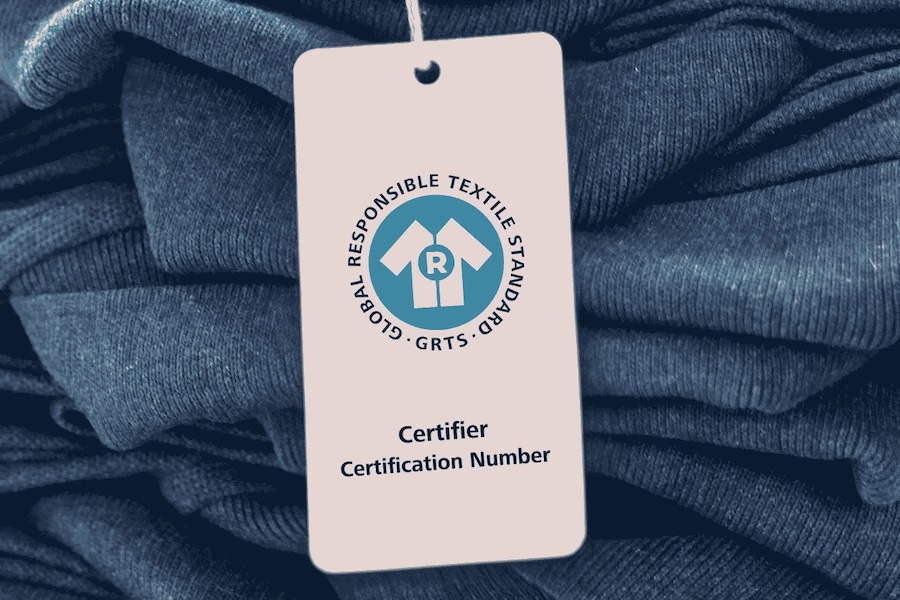
Beyond organic textiles, Global Standard also completed the first public consultation of the Global Responsible Textile Standard (GRTS) in 2025. GRTS applies the same holistic system-based logic that has made GOTS successful to responsible, non-organic fibres. It establishes a credible baseline for responsible textile processing where organic definitions do not apply, translating scientific and social expectations into direct and verifiable requirements. GRTS is expected to be released in autumn 2026, following a second consultation.

Education, technology and capacity building

Education and capacity building were central to Global Standard’s work in 2025. In response to increasing regulatory and implementation complexity, the organisation expanded training, guidance and knowledge sharing activities for auditors, Certification Bodies and Certified Entities. Key initiatives included the launch of the Global Standard Academy, new due diligence handbooks and targeted auditor training programmes supported by funding from the ISEAL Innovations Fund.

Global Standard also continued to advance its “Space Cotton” pilot, a collaboration with AI firm Marple and the European Space Agency, which uses satellite imagery to map cotton cultivation. Following successful implementation in India, the project expanded to Turkey in 2025, supporting efforts to facilitate certification and increase the availability of certified organic cotton globally.

Looking ahead

Together, GOTS and GRTS will form a unified, systems-level framework to make responsible textile production credible, scalable and workable in practice. Global Standard remains focused on ensuring voluntary sustainability standards deliver measurable impact, operational value and lasting credibility across global textile value chains.

Read the full 2025 Annual Report here:

https://global-standard.org/images/260423_GOTS_Annual_Report_2025.pdf


More News from Global Standard (GOTS)

#Natural Fibers

Global Standard gGmbH launches second public consultation for GRTS Draft 2 for the textile industry (1–30 April 2026)

Global Standard gGmbH is pleased to announce the release of Draft 2 of the Global Responsible Textile Standard (GRTS) for its second public consultation. The consultation will be open from 1 April 2026 to 30 April 2026, inviting stakeholders across the textile and apparel value chain to provide input and contribute to the further development of this new Standard.

#Sustainability

GOTS version 8.0 released: advanced supply chain accountability, from fibre to finished product

Global Standard is pleased to announce the release of GOTS Version 8.0, the latest update to the world's leading processing standard for organic textiles. The updated Standard strengthens requirements for air emissions and waste management, as well as criteria for product safety. It introduces new provisions on circularity, microfibre management and updates in residue testing. Version 8.0 also elevates due diligence obligations and formalises governance requirements, including ESG disclosure, anti-corruption policies and conflict-of-interest safeguards, to support credible, responsible business conduct.

#Textiles & Apparel / Garment

Global Standard strengthens presence in Southeast Asia at VIATT 2026

Global Standard will participate in the Vietnam International Trade Fair for Apparel, Textiles and Textile Technologies (VIATT) 2026, organized by Messe Frankfurt, the first textile trade show in the APAC region this year. Global Standard will host a booth and Felica Shi will lead a seminar on Global Organic Textile Standard (GOTS). The trade fair will take place from February 26 to 28, 2026, in Ho Chi Minh City, Vietnam.

#Sustainability

GOTS publishes update: Approval procedure & requirements for certification bodies – Version 4.0

The updated Version 4.0 has been aligned with the requirements of ISO 17065 and incorporates revised conformity assessment procedures and methodologies for Certification Bodies. These updates reflect best practices in evaluating management systems, thereby strengthening quality assurance, and safeguarding the integrity of certified products.

More News on Sustainability

#Sustainability

bluesign technologies introduces bluepass

bluesign technologies ag (www.bluesign.com) today announces the launch of bluepass, a new certification mark and product labeling system created to deliver clear, substantiated, and verifiable sustainability claims at scale.

#Research & Development

Hohenstein publishes 2025 Sustainability Report

The testing and research service provider Hohenstein has published its latest sustainability report, outlining key progress and strategic initiatives. The report focuses on ambitious CO₂ reduction targets, the company’s new mission statement and the systematic expansion of sustainable services for customers worldwide.

#Sustainability

Practical toolkit to drive coordinated climate action launched

An open-access workshop toolkit enables brands, suppliers, policymakers and investors across the textile industry to apply the System Map in their own work, identifying leverage points to halve emissions and enable a just transition.

#Raw Materials

Textile Exchange publishes cotton Life Cycle Assessment study to strengthen impact data

Textile Exchange has published the first in a series of seven Life Cycle Assessment (LCA) studies designed to improve the quality and robustness of environmental impact data for raw material production across the fashion, textile, and apparel industry. The first LCA study focuses on cotton and addresses critical data gaps and methodology variability through new high-quality data across key producing countries. The study includes organic, regenerative, recycled, and country averages for conventional cotton production systems, providing a clearer picture of the associated environmental impact.

Latest News

#Raw Materials

ECCO introduces first shoe featuring innovative protein-based fibre

ECCO, in partnership with Spinnova, announces the launch of the limited edition ECCO BIOM® 720, a first-of-its-kind shoe utilising an often overlooked leather by-product, transformed into a protein-based fibre. The fibres are produced using patented technology that advances material innovation while reducing waste and supporting full resource use across the leather and textile industry.

#Man-Made Fibers

The LYCRA Company strengthens sustainability leadership, appoints Alistair Williamson as VP of Product Sustainability

The LYCRA Company has appointed longtime executive Alistair Williamson as vice president of product sustainability, reaffirming its commitment to developing sustainable solutions for apparel and personal care products. In this role, he will guide the company’s next chapter of sustainability strategy and oversee all initiatives aimed at reducing environmental impact across products, operations, and innovation platforms.

#Raw Materials

Kraig Biocraft Laboratories reports major progress converting record-setting spider silk cocoon production into reeled silk

Kraig Biocraft Laboratories, Inc. (OTCQB: KBLB) (“the Company”, “Kraig Labs”, or “Kraig’s”), a world leader in spider silk technology*, today announced significant progress in the processing of its recently produced recombinant spider silk cocoons into reeled silk.

#Textile processing

trinamiX mobile NIR spectroscopy: New applications for the footwear and textile industry

trinamiX GmbH expands its solution portfolio for the circular economy, now enabling the identification of materials used in the footwear and textile industries. With its mobile near-infrared (NIR) spectroscopy solutions, trinamiX supports manufacturers, sorters, recyclers, and brand owners in reliably identifying materials and improving transparency across increasingly complex value chains.

TOP