#Sustainability
bluesign technologies introduces bluepass
A new certification mark designed to meet global standards for verified sustainability claims
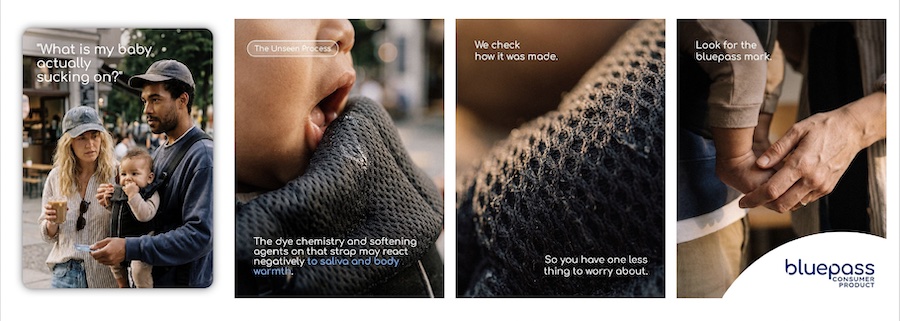
Developed in close collaboration with bluesign System Partner companies and informed by emerging EU regulatory requirements, bluepass replaces the existing bluesign® PRODUCT and bluesign® APPROVED designations with a unified certification framework designed for both consumer-facing transparency and regulatory compliance.
“At a time when sustainability claims are under increasing scrutiny, the industry needs clarity, consistency, and proof,” said Barbara Oswald, Chief Commercial Officer at bluesign. “bluepass now provides our over 900 global System Partner companies a standardized way to communicate verified performance, grounded in real production processes and supported by accessible data.”
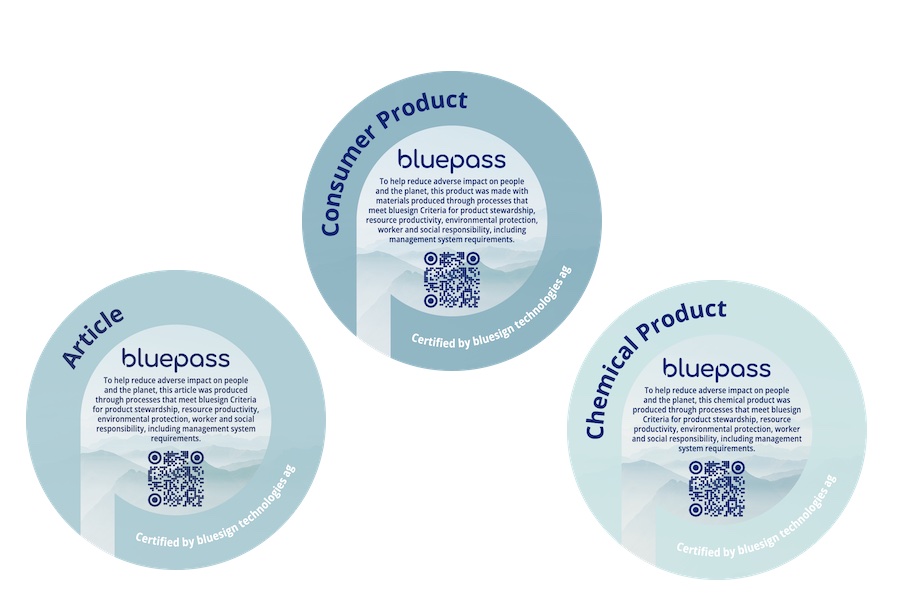
(bluesign's bluepass marks for articles, chemcial products and consumer products)
The launch comes as brands prepare for the Empowering Consumers for the Green Transition Directive (ECGT) , which introduces new requirements for environmental claims. Beginning September 27, 2026, all consumer-facing sustainability claims in the EU must be substantiated with accessible, verifiable evidence.
bluepass (www.bluesign.com/what-is-bluesign-approved) has been designed to meet these requirements through a standardized label structure that combines a certification mark, fixed claim language, and a QR code linking to a bluesign-controlled verification platform.
The directive places stricter requirements on environmental claims, including labels that are not based on independently verified certification.
bluepass responds directly to this shift, providing a globally consistent certification mark that separates verified performance from unsubstantiated or self-defined claims.
The bluepass system identifies products, materials, and chemical inputs produced through processes that meet the bluesign Criteria across six areas of responsibility, including environmental protection, resource productivity, and worker and social responsibility.
bluepass introduces three certification marks aligned to different stages of the value chain:
- bluepass consumer product for finished goods
- bluepass article for intermediate materials and components
- bluepass chemical product for chemical inputs
Each label follows a standardized structure that may include the certification mark, a defined text claim, a QR code linking to verified data, and a unique certification ID, ensuring consistency and traceability across all applications.
“When a consumer recognizes and scans a bluepass label, they are not just seeing a claim, they are accessing the verified information behind it,” added Oswald. “That level of transparency is becoming the expectation, not the exception.”
When scanned, the QR code directs users to a bluesign-managed verification page that provides detailed certification information, including how the product meets bluesign Criteria and how the underlying processes have been assessed.
This approach connects on-product communication with deeper supply chain data, creating a direct link between what is claimed and what is verified.
bluepass will be implemented across bluesign’s global network of more than 900 System Partners, including brands, manufacturers, and chemical suppliers, enabling consistent use of verified claims across the textile value chain.
As adoption expands, bluepass is positioned to serve as a global standard for how sustainability is communicated, one that aligns with current regulatory requirements while preparing the industry for future frameworks, including digital product passports and enhanced claim verification.
For brands and manufacturers, bluepass provides a structured framework for substantiating environmental claims that aligns with both current and anticipated EU regulatory requirements. By using bluepass marks on products, materials, and chemical inputs, partners can demonstrate verified performance to consumers, supply chain partners, and regulators through a single, standardized system.
“The industry is moving toward evidence-based communication,” said Oswald. “bluepass gives brands the structure to meet that expectation with confidence, while maintaining the integrity of the data behind every claim.”
The introduction of bluepass reflects a broader transition across the sector, as sustainability moves from marketing-led narratives to systems grounded in verified, primary data.
bluepass is now available to bluesign System Partner companies. Brands and manufacturers can find more information about implementation timelines and certification requirements at bluesign.com/verify.