[pageLogInLogOut]

#Sustainability

bluesign® celebrates 25 years as a global leader in sustainable textile innovation
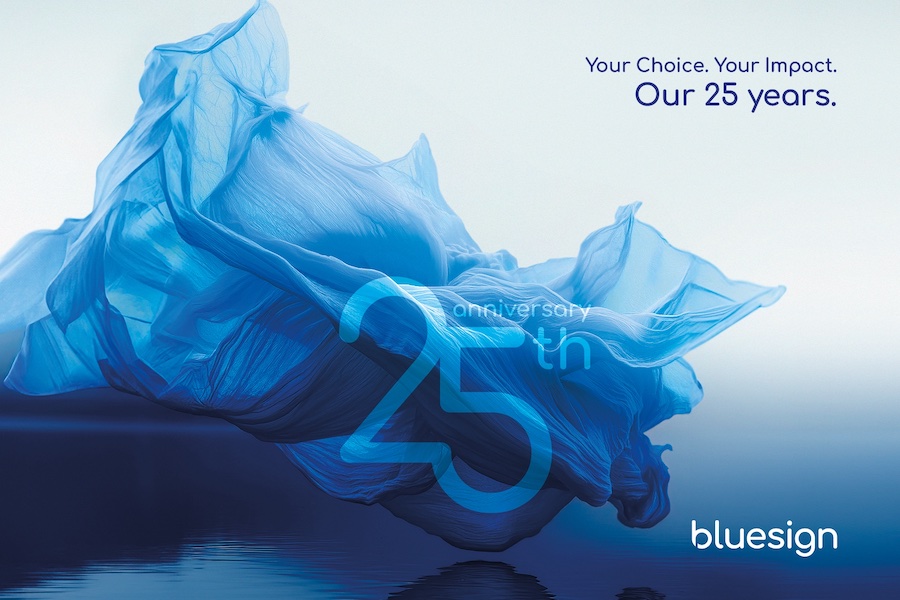
2025 marks a pivotal milestone for bluesign, the global authority in sustainable chemical and environmental management for the textile and fashion industry, as it celebrates 25 years of advancing cleaner, safer, and more responsible manufacturing practices across the global supply chain.
25 years of bluesign – celebrating creative vision for sustainable change. © 2025 bluesign


Since 2000, the Swiss-founded company has led the global charge towards a more sustainable future, developing a science-based, input stream management system to eliminate harmful substances at the source of textile production. Now spanning 900+ system partners across the globe, bluesign continues to deliver measurable reduction in environmental impact at an unprecedented scale. The company sets the global benchmark for responsible production with stringent criteria for chemical use, environmental performance, and resource efficiency, and serves as a one-stop resource for navigating ESG and upcoming legislation (CSDDD, CSR, ESPR, : etc), helping partners stay ahead of global compliance standards while embedding verified sustainability into every stage of production.

Then & now: A mission that endures

From its inception, bluesign’s mission has remained clear: remove harmful chemicals from textile production from the beginning, and hence ensure safer working conditions, reduced harm on the environment, and deliver safer products for consumers. Over 25 years, this mission has only strengthened, evolving to meet global challenges like PFAS elimination, decarbonization, and circularity, while driving continuous improvement across the industry.

Measurable impact at scale

The bluesign System enables its partners to make verified, measurable progress toward sustainability goals:

+ Safer chemistry and materials: Over 28,000 chemical products and 70,000 textile materials carry the bluesign APPROVED status, signaling compliance with the strictest industry criteria and elimination of hazardous substances including CMRs and PFAS.

+ Environmental Performance: Since 2019, bluesign System Partner manufacturers have collectively achieved the following improvements in environmental footprint:

+ Global Reach: The bluesign network now includes over 900System Partners across the world, including chemical suppliers, textile mills, manufacturers, and brands.

+ Worker & Consumer Safety: The bluesign System ensures safe conditions for workers and non-toxic products for consumers, built on a foundation of transparency and accountability.

Why it matters: A holistic, verified approach

bluesign’s unique value lies in its holistic system, which tracks and verifies impact at every stage - from chemical inputs to final product. The independent, science-based verification process goes beyond traditional certification to ensure ongoing compliance and continuous sustainability improvements, building trust with stakeholders and empowering the industry to move forward responsibly.

Looking ahead: The next 25 years

As the industry faces new challenges, including circularity and legislative shifts, bluesign continues advancing solutions that protect workers, consumers, and the environment, and remains committed to innovation and global impact. 

As the industry faces new challenges, including due diligence, extended producer responsibility, and digital product passports, legislative shifts under the EU Green Deal, and rising expectations around circularity, bluesign remains committed to innovation and impact.

“bluesign was born out of a bold idea, that sustainability could be embedded into the DNA of product creation,” said Daniel Rüfenacht, CEO of bluesign technologies. “Twenty-five years later, we’re proud to be a beacon of trust, innovation, and responsibility, and to partner with industry leaders worldwide in building a more sustainable future together.”

To commemorate its 25th anniversary, bluesign will host a series of events, expert panels, and global activations celebrating the progress of its partners and educating the industry on the future of sustainable textiles.

More News from bluesign technologies ag

#Sustainability

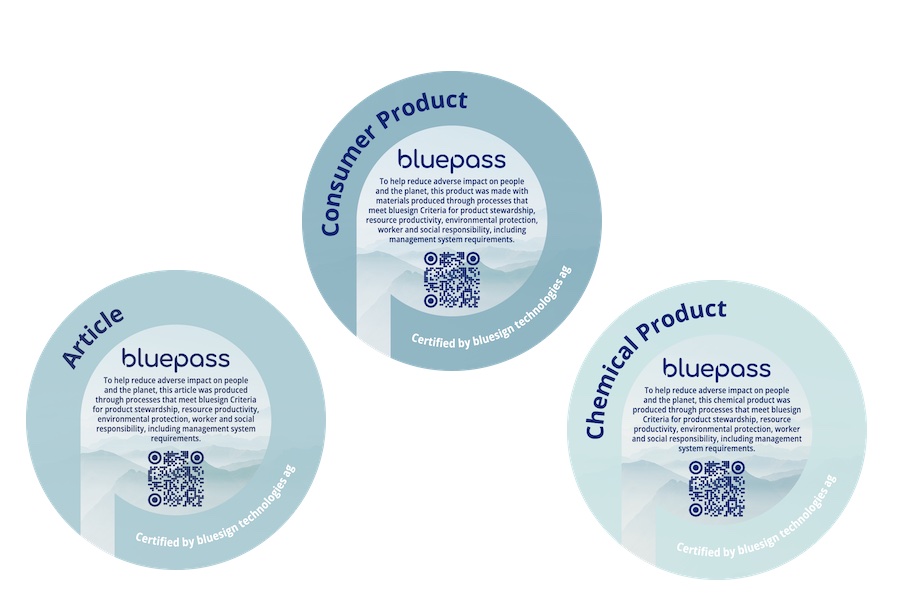
Storm Creek achieves bluesign® PRODUCT status

Storm Creek (ASI#/PPAI#) is proud to announce a meaningful sustainability milestone: the company has achieved bluesign® PRODUCT status: becoming the first US-based supplier in the promotional products industry to earn this globally respected certification. While this marks an industry first, for Storm Creek, it represents something far more important: a continuation of doing what they believe is right.

#Sustainability

bluesign releases 2025 revisions of its Chemical Reference Lists

Effective July 1, 2025, bluesign has published updated versions of its three core chemical reference lists: the bluesign® SYSTEM SUBSTANCES LIST (BSSL v16.0), the bluesign® SYSTEM BLACK LIMITS (BSBL v7.0), and the bluesign® RESTRICTED SUBSTANCES LIST (RSL v16.0). These updates reflect bluesign’s ongoing commitment to safe chemical management, environmental protection, and regulatory alignment.

#Sustainability

bluesign to showcase sustainable textile solutions at Intertextile Shenzhen and Shanghai 2025

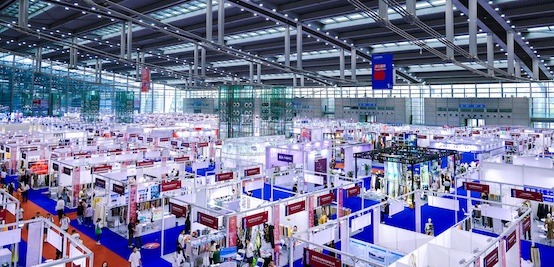
The global authority on sustainable textile production and chemical management, bluesign is pleased to announce its participation as an exhibitor at both Intertextile Shenzhen (June 11 - 13, 2025) and Intertextile Shanghai Apparel Fabrics - Autumn Edition (September 2 - 4, 2025), marking the company's inaugural collaboration with these leading global textile trade fairs.

#Sustainability

NEMO Equipment launches the first bluesign® product backpacking tent

Dagger OSMO™, a top-selling tent in specialty outdoor stores, and a favorite among backpackers and campers, is now a bluesign® PRODUCT. This milestone highlights NEMO’s commitment to clean chemistry and responsible manufacturing, adhering to the industry’s most rigorous environmental and worker safety standards. Made with solution-dyed, 100% recycled, PFAS- and FRC-free fabrics, the 2025 Dagger OSMO has more livable space without adding ounces thanks to new custom hardware and painstaking attention to every detail of the tent’s construction.

More News on Sustainability

#Natural Fibers

Global Standard gGmbH launches second public consultation for GRTS Draft 2 for the textile industry (1–30 April 2026)

Global Standard gGmbH is pleased to announce the release of Draft 2 of the Global Responsible Textile Standard (GRTS) for its second public consultation. The consultation will be open from 1 April 2026 to 30 April 2026, inviting stakeholders across the textile and apparel value chain to provide input and contribute to the further development of this new Standard.

#Sustainability

Practical toolkit to drive coordinated climate action launched

An open-access workshop toolkit enables brands, suppliers, policymakers and investors across the textile industry to apply the System Map in their own work, identifying leverage points to halve emissions and enable a just transition.

#Raw Materials

Textile Exchange publishes cotton Life Cycle Assessment study to strengthen impact data

Textile Exchange has published the first in a series of seven Life Cycle Assessment (LCA) studies designed to improve the quality and robustness of environmental impact data for raw material production across the fashion, textile, and apparel industry. The first LCA study focuses on cotton and addresses critical data gaps and methodology variability through new high-quality data across key producing countries. The study includes organic, regenerative, recycled, and country averages for conventional cotton production systems, providing a clearer picture of the associated environmental impact.

#Sustainability

Experts publish APAC policy priorities

Cascale today announced the publication of its APAC Policy Priorities Paper, developed by the Asia-Pacific (APAC) Policy Member Expert Team (MET) to identify key regional sustainability challenges and provide practical, aligned recommendations for policymakers and industry stakeholders across Asia-Pacific.

Latest News

#Raw Materials

New study shows low environmental impact by Cotton made in Africa Organic Cotton from Tanzania

Today, the Aid by Trade Foundation (AbTF) is announcing the results of a comprehensive life-cycle analysis (LCA) for cotton produced in Tanzania under the Cotton made in Africa Organic (CmiA Organic) standard. The study emphasises the small ecological footprint of CmiA Organic verified cotton. This can largely be traced back to the absence of synthetic pesticides, artificial fertilisers, and artificial irrigation. Consequently, CmiA Organic cotton can help the textile industry meet regulatory requirements as well as science-based targets. The results also show that the consequences of climate change threaten the livelihoods of these cotton farmers, even though the type of agriculture they practise barely contributes to climate change.

#Raw Materials

Better Cotton Initiative strengthens regenerative focus in standard update

The Better Cotton Initiative (BCI) has strengthened the regenerative focus of its field-level standard with the launch of a new version of its Principles & Criteria (P&C), which marks the next step in the organisation’s journey to becoming a regenerative standards system.

#Man-Made Fibers

Selenis and Kintra Fibers partner to scale 100% bio-based synthetic fiber technology

Selenis, a leading global specialty polyester manufacturer, today announced a strategic manufacturing partnership with materials science company Kintra Fibers to scale Kintra’s patented fiber-grade PBS resin - a 100% bio-based and biodegradable material designed for textile applications.

#Functional Fabrics

PERFORMANCE DAYS proves its relevance as the industry’s key meeting point

Held on March 18–19, 2026, PERFORMANCE DAYS once again confirmed its position as a leading international platform for functional textiles. A total of 3.366 trade visitors and around 560 exhibitors gathered in Munich, with the event already kicking off successfully on DAY 0, which received highly positive feedback for its interactive format. Despite challenging conditions caused by the public transport strike in Munich, the event saw strong attendance and a consistently high level of activity across both exhibition days.

TOP