[pageLogInLogOut]

#Sustainability

Updated supply chain taxonomy advances apparel alignment

Produced by the apparel alliance – Apparel Impact Institute, Cascale, Textile Exchange, and ZDHC Foundation – the revised framework delivers consistency, transparency, and collaboration across the textile, clothing, leather, and footwear sectors.

The apparel alliance (Apparel Impact Institute, Cascale, Textile Exchange, and ZDHC Foundation) today announced the launch of Version 2 of the Supply Chain Taxonomy, an updated harmonized framework designed to improve consistency, transparency, and collaboration across the textile, clothing, leather, and footwear (TCLF) sectors of the broader apparel industry.

“Shared definitions are not just administrative; they help the industry make better decisions, improve data quality, and work from the same understanding of the supply chain. Clarifying that wet processing is accounted for across all tiers, not just Tier 2, gives the industry a more accurate picture of where emissions sit and where action is needed most.” — Alma Palacios, senior sustainability reporting coordinator at Aii

“When facilities, products, and processes are classified consistently, the whole industry benefits, from more reliable data and clearer reporting to stronger collaboration on the work that matters most. The updated Supply Chain Taxonomy is foundational infrastructure for a more aligned and effective sustainability ecosystem. It reflects what’s possible when organizations commit to alignment, and we’re confident it will support more effective progress across the value chain.” — Joël Mertens, director of environmental impact methodologies at Cascale

“Aligning on a shared language for the supply chain is fundamental to driving credible, system-wide progress. This updated taxonomy helps bring greater clarity and consistency to how materials, processes, and impacts are understood and reported, enabling more effective collaboration and accelerating the industry’s transition to preferred production systems.”— Luca Mosca, director of impact data and reporting at Textile Exchange

“No single organisation can drive industry transformation alone. Shared language is a crucial foundation to enable collaboration within the ecosystem of like-minded partners. Bringing more depth to the Supply Chain Taxonomy with this new update strengthens the common foundation of the Apparel Alliance to enhance clarity for the wider value chain actors as well as unlock new opportunities to create a more interoperable system.” — Maria Arroyo, sector partnership lead at ZDHC

Building on its initial release in November 2024, the updated taxonomy addresses key challenges in the original framework, including overlapping processes, undefined boundaries, and classification gaps. The result is a clearer, more detailed structure that supports consistent classifications across the TCLF value chain and future alignment across apparel alliance work and joint initiatives.

The Supply Chain Taxonomy supports the apparel industry by:

  • Creating a shared framework and common language across stakeholders.
  • Improving transparency and reporting through more consistent disclosures and supply chain visibility.
  • Supporting compliance and risk management through clearer process ownership and environmental boundaries.
  • Reducing duplication and aligning efforts across organizations.
  • Enabling better benchmarking and supporting collective sustainability initiatives.

The Supply Chain Taxonomy is a jointly developed and maintained resource of the apparel alliance organizations (Apparel Impact Institute, Cascale, Textile Exchange, and ZDHC). Designed as an evolving framework, planned annual updates reflect stakeholder feedback, emerging materials and technologies, and ongoing regulatory and industry developments. While not exhaustive, the taxonomy provides a practical foundation for classifying the most common processes and products across the value chain.

Download the Supply Chain Taxonomy:

https://downloads.roadmaptozero.com/apparel_alliance_supply_chain_taxonomy_V2


More News from Textile Exchange

#Sustainability

Textile Exchange 2026: From sustainability commitments to industry-wide action

More than 1,300 participants and over 90 speakers gathered in Vancouver to discuss how the textile and apparel industry can move from planning to implementation, with a focus on resilient supply chains, circularity, regenerative agriculture and collaboration.

#Man-Made Fibers

Textile Exchange: reporting companies advance on preferred materials as global fiber production reaches new high

Companies participating in Textile Exchange’s Materials Benchmark increased their use of materials from preferred production systems in 2025, while global fiber production continued to grow and reached a record 139 million tonnes. The contrasting trends highlight both the potential for change at company level and the scale of the challenge facing the wider textile industry.

#Sustainability

Action Cohort: Textile Exchange’s new initiative designed to help scale preferred production systems

Textile Exchange has published new guidance to help brands and retailers participating in its Action Cohort prepare for upcoming reporting and target-setting requirements. Earlier this year, the organization evolved its membership to create more action-oriented pathways, designed to accelerate progress toward scaling preferred production systems that create beneficial impacts and resilient supply chains and livelihoods.

#Sustainability

New guidance to help organizations deliver the Material Matter Standard’s human rights commitments

Textile Exchange has published new guidance and tools to help organizations better understand and implement the human rights and livelihoods requirements of the forthcoming Materials Matter Standard.

More News on Sustainability

#Sustainability

Inside the Making at Ecomondo 2026: Textile supply chain calls for transparency and measurable sustainability

Transparency, verifiable environmental claims and closer cooperation across the textile value chain were the central themes of the “Inside the Making: The Power of the Process” panel at Ecomondo 2026 in Rimini. Representatives from denim and sportswear manufacturing, textile finishing, digital printing and branding discussed how technological innovation and supply chain collaboration can help companies meet new European regulatory requirements while making sustainability economically viable.

#Recycling / Circular Economy

H&M Foundation highlights economic barriers to scaling circular textile systems

Discussions at Textile Exchange 2026 underline the need for coordinated investment, reliable material flows and a fair distribution of costs and risks across the textile recycling value chain.

#Recycled Fibers

C&A and Zalando join Altag® Fiber Club to accelerate adoption of agricultural waste-based fibres

Fashion for Good and AltMat announced today that C&A and Zalando have joined the Altag® Fiber Club as its first brand signatories, marking a critical commercial milestone in the journey to mainstream adoption of next-generation fibres derived from agricultural waste.

#Industry 4.0 / Digitalization

Jeanologia and BCome connect factory data with Life Cycle Assessment and Digital Product Passports

A new white paper by EIM by Jeanologia and BCome demonstrates how primary environmental data from denim finishing processes can be integrated into a garment's Life Cycle Assessment (LCA) and prepared for use in a Digital Product Passport (DPP). A comparative case study highlights significant improvements at the production stage while also showing how these translate into the environmental performance of the finished garment.

Latest News

#Textile processing

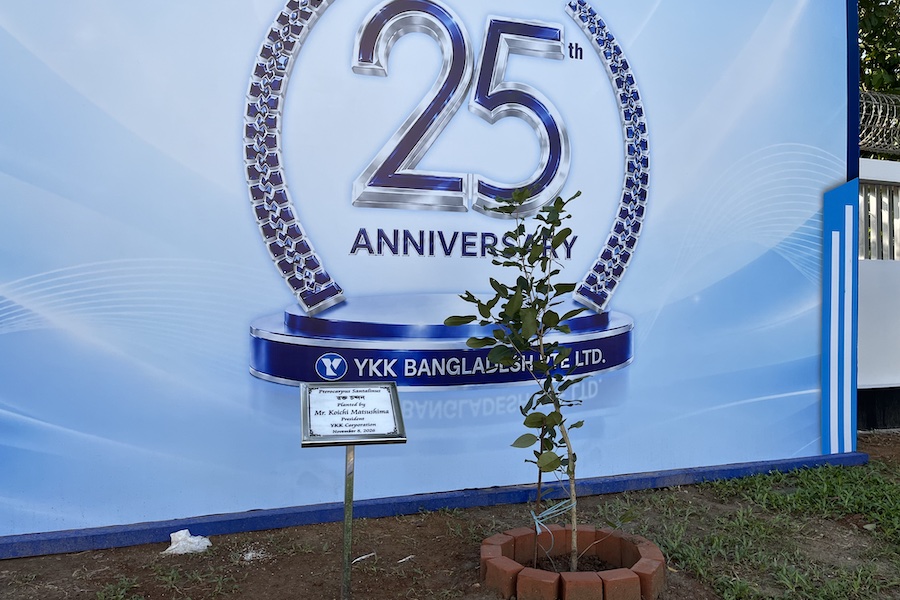
YKK Bangladesh celebrates 25 years of fastening production and business development

YKK Bangladesh Pte. Ltd., a subsidiary of Japanese fastening manufacturer YKK Corporation, has celebrated its 25th anniversary with a commemorative ceremony in Dhaka on November 8, 2026. Since its establishment in November 2000, the company has expanded its manufacturing capacity and business operations alongside the growth of Bangladesh's apparel industry.

#ITMA Asia + CITME 2026

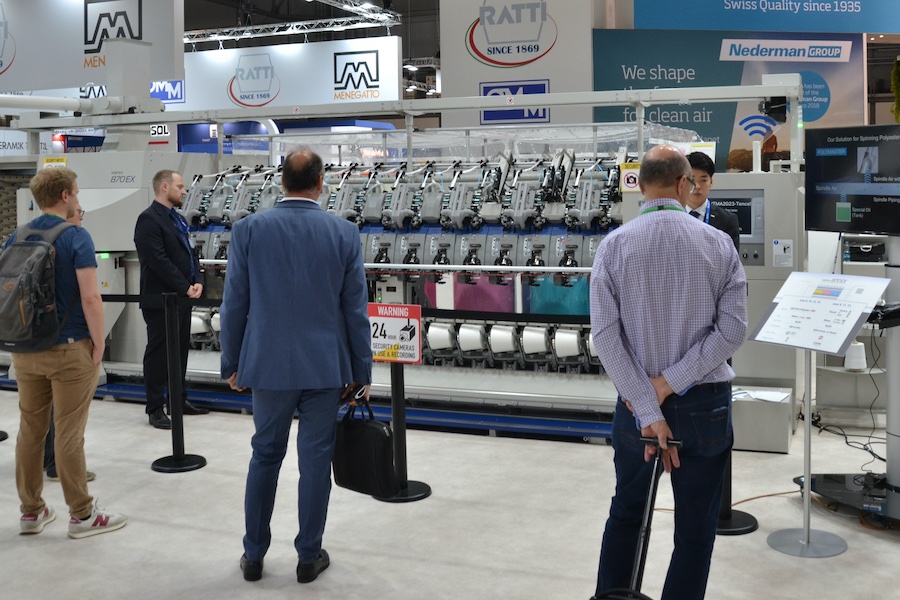
Murata Machinery to showcase AIcone winding and high-speed VORTEX spinning at ITMA ASIA 2026

Japanese textile machinery manufacturer Murata Machinery will present its PROCESS CONER AIcone automatic winder and VORTEX 870 EX spinning machine at ITMA ASIA + CITME 2026. Under the theme “Right Choice, Bright Future”, the company will highlight technologies for efficient yarn manufacturing, combining energy-saving winding solutions with high-speed air-jet spinning. Visitors can meet Murata Machinery in Hall 5, Booths E01 and E02.

#ITMA Asia + CITME 2026

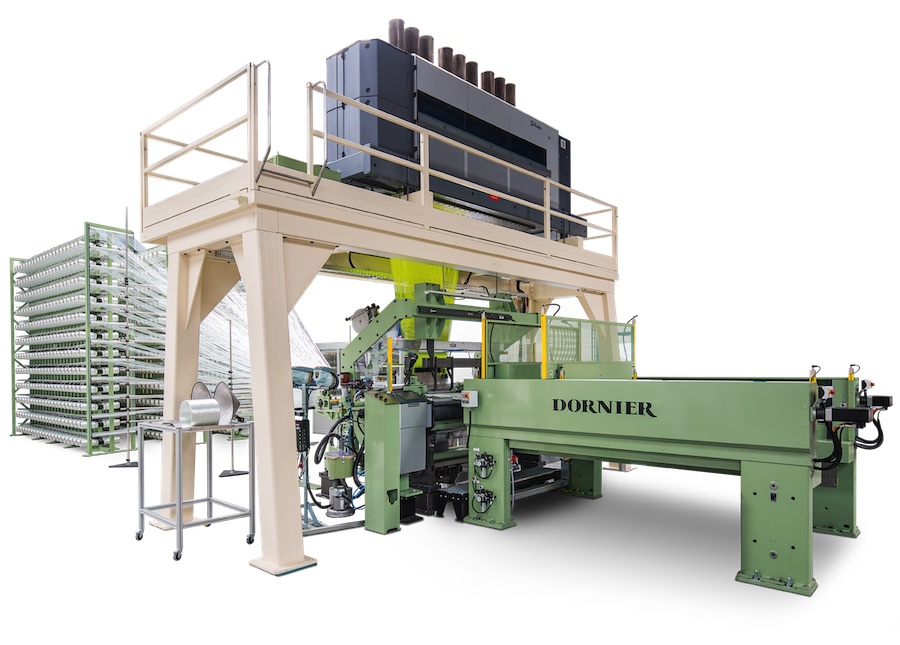
DORNIER highlights airbag, filtration and composite weaving technologies at ITMA ASIA 2026

Lindauer DORNIER will present its latest developments in air-jet and rapier weaving technology for technical textiles at ITMA ASIA + CITME 2026. The German machinery manufacturer will focus on the reliable and efficient production of airbag fabrics, high-density filters and reinforcement textiles for fibre-reinforced composites. Alongside its A2 air-jet and P2 rapier weaving machines, DORNIER will highlight its TRITOS FLEX technology for complex 3D composite preforms, retrofit solutions and expanded service capabilities in Asia. The company will exhibit in Hall 3, Stand E02.

#Retail & Brands

Marks & Spencer expands across Asia Pacific through partnership with Global Fashion Group

Marks & Spencer (M&S) and Global Fashion Group (GFG) have announced a strategic partnership to expand the British retailer's fashion business across Asia Pacific. M&S has launched on Southeast Asian fashion platform ZALORA and plans to enter THE ICONIC in Australia and New Zealand in early 2027. The agreement also introduces regional fulfilment for Australian M&S.com orders, enabling faster deliveries and returns while supporting a capital-light international growth strategy.

TOP