[pageLogInLogOut]

#Research & Development

From smart jackets to laser technology: Mona Neubaur explores Textile Factory 7.0
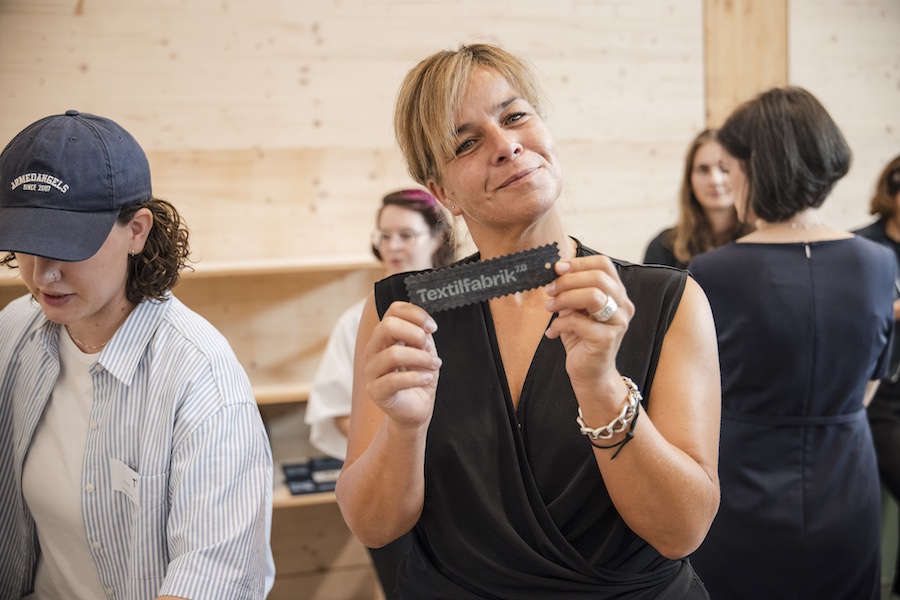
North Rhine-Westphalia’s Minister for Economic Affairs and Climate Action, Mona Neubaur, presents the Textilfabrik 7.0 label during her visit to Mönchengladbach © Tomas Rodriguez
As part of her summer tour, North Rhine-Westphalia’s Minister for Economic Affairs and Climate Action, Mona Neubaur, visited Textilfabrik 7.0 in Mönchengladbach to experience the project’s innovations first-hand. Under the motto “smart and clean”, the visit focused on innovative technologies and sustainable alternatives for textile production - from smart jackets to the decolourisation of textiles using fungal cultures.

Researchers from the Research Institute for Textile and Clothing (FTB) of the Hochschule Niederrhein and the Institut für Textiltechnik (ITA) of RWTH Aachen University presented Minister Neubaur, Mönchengladbach Mayor Felix Heinrichs and representatives of state politics with innovative technologies and processes developed as part of T7.

Textilfabrik 7.0 is being established in the Monforts Quartier as a real-world laboratory where innovative technologies and production processes are developed, tested under real-world conditions and further advanced for industrial application. The goal is to foster economically viable, CO₂-neutral and circular textile production in the Rhenish Mining Area. The halls of the T7-Factory in the Monforts Quartier are currently being equipped with machinery. The innovations already developed were presented to the visitors at the Technology Centre for Textile Finishing at Hochschule Niederrhein.

Smart: Making textile production intelligent and digital

Under the motto “smart”, the Minister explored a range of innovative technologies. She tested one of the project‘s smart jackets which recorded her movements and body data and visualised them via an app. Integrating sensors into textiles opens up new fields of application, particularly in the healthcare sector. Smart jackets, for example, can be used during physiotherapy exercises to digitally track movement patterns and provide targeted feedback.

At an embroidery machine, the visitors were also shown how conductive yarn can be integrated into textile structures. AI applications were demonstrated as well: artificial intelligence can be used to analyse natural fibres and, for example, determine material compositions more quickly and accurately. Project staff also presented digital manufacturing processes such as laser printing.

The Rhenish Mining Area is already shaping the future with innovative and sustainable solutions for industry and the people who live and work here. Digital applications, artificial intelligence and sustainable processes are not merely being demonstrated here; they are being further developed and tested. The focus is on products that are closely aligned with users’ needs. When smart jackets made from intelligent textile fabrics measure vital data, they can provide tangible support to help people stay healthy or regain their health. This benefits not only people, but also creates tangible opportunities for a competitive and sustainable textile industry,” said Mona Neubaur, Minister for Economic Affairs, Industry, Climate Action and Energy of the State of North Rhine-Westphalia.

Clean: Sustainable alternatives for textile processes

Under the motto “clean”, the project partners presented approaches for dyeing textiles using natural dyes, for example from tea or pomegranate peels. Alternative processes for decolourising and bleaching textiles are also being developed. Visitors were shown how a pair of jeans can be decolourised using either laser technology or fungal cultures. The resulting substance can even be used to produce vegan leather alternatives. The visitors also had the opportunity to view a set-up for detecting fibrous microplastics in wastewater from washing machines.

Mönchengladbach Mayor Felix Heinrichs said: “Today’s tour impressively demonstrated just how much textile expertise and innovative strength exists in Mönchengladbach and the surrounding region. A wide range of technologies and applications can already be experienced and tested here in practice. This highlights the potential that lies in bringing together science, industry and Mönchengladbach’s long-standing textile tradition, and the opportunities this creates for sustainable growth and prosperity in the future.
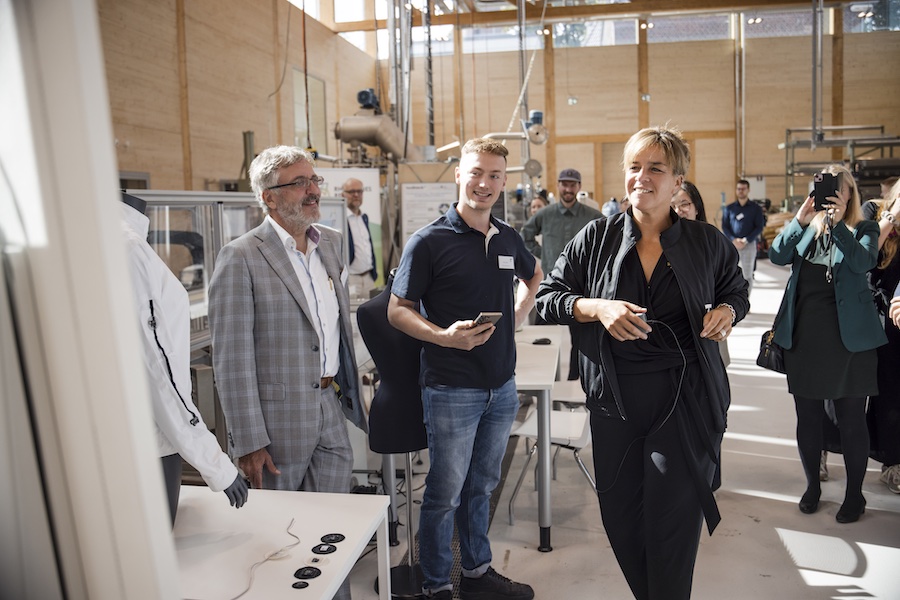
Testing a smart jacket as part of the Textile Factory 7.0 project with Mona Neubaur © Tomas Rodriguez<br />
Testing a smart jacket as part of the Textile Factory 7.0 project with Mona Neubaur © Tomas Rodriguez


A clear shared vision for the future

The visit clearly showed: innovation does not solely happen in the laboratory. The crucial step is translating research into practical applications. This is what the researchers at Textilfabrik 7.0 are doing.

With its four core areas - On-Demand Manufacturing, MicroFactory Engineering, Digital Textiles and Biosphere - T7 combines technological innovation with sustainability and creates a platform for the textile production of tomorrow. At its heart is one shared question: How can textile production become smarter, cleaner and economically viable at the same time?

Prof. Dr. Rabe (Hochschule Niederrhein) and Prof. Dr. Gries (RWTH Aachen University) emphasised to the Minister that the motto “smart and clean” is not an abstract vision. It can already be experienced and tested in practice today and is ready for application.
More News from Institut für Textiltechnik of RWTH Aachen University (ITA)

#Research & Development

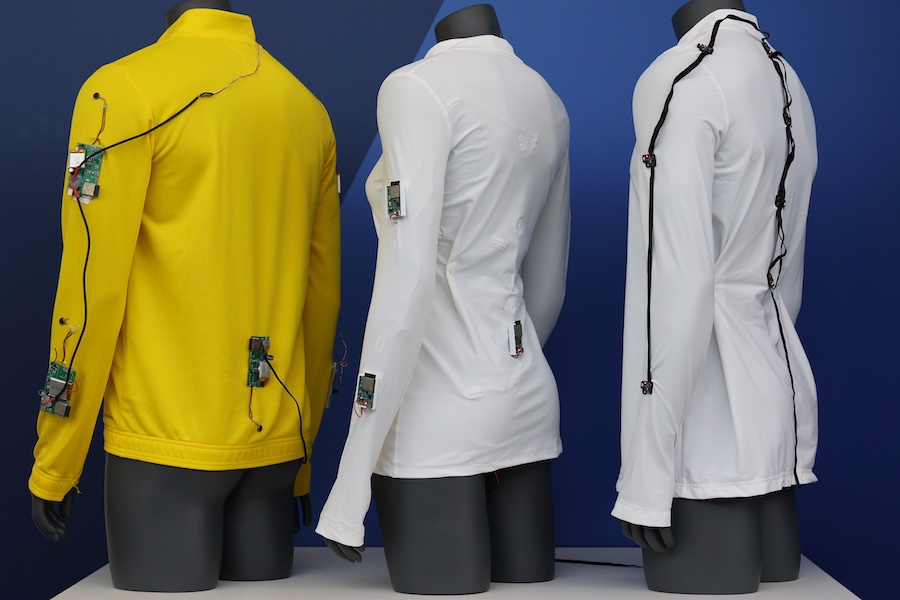
ITA has developed a washable digital smart jacket with real-time feedback and an AI-powered app for rehabilitation

As part of the PhysioTaix research project, the Institut für Textiltechnik (ITA) of RWTH Aachen University is developing a digital smart jacket with integrated sensors. The jacket is washable and reusable; it tracks movements during rehabilitation exercises in real time and transmits the data to an app.

#Recycling / Circular Economy

2. RETRAKT EU Conference - „Join the Circle“: Turning challenges of the textile sector into chances

On 19 November 2026, the second RETRAKT EU Conference – “Join the Circle” will take place in Brussels. The event, which focuses on the transformation of the textile sector towards a circular economy, will be held under the motto: “Turning Challenges in the Textile Sector into Chances.”

#Research & Development

Networking Day 2026: Industry stakeholders unite around textile recycling

In 2026, the Industry Research Group (IRG) Polymer Recycling once again brought together some of the key stakeholders in textile recycling for its annual Networking Day. This year, the event took place at EREMA’s premises in Ansfelden, Austria. It brought together key players from across the textile recycling value chain for a day of structured exchange and in-depth discussions.

#Research & Development

2026 general meeting of the Friends and Supporters of RWTH Aachen at ITA

The Friends and Supporters of RWTH Aachen e. V. (proRWTH) looked back on a successful year of support at their 2026 general meeting. The meeting took place at Institut für Textiltechnik (ITA) of RWTH Aachen and was combined with a joint session of the Executive Board and the Administrative Board. Before the general meeting began, participants were given a guided tour of ITA, providing them with fascinating insights into current research and development topics in textile engineering.

More News on Research & Development

#Research & Development

180 years of TESTEX: From Zurich silk testing to global certification

For 180 years, TESTEX has developed alongside the textile industry while maintaining the same underlying purpose: creating trust through independent and reliable measurement. Founded in Zurich in 1846 as the Zurich Silk Conditioning Institute, TESTEX has grown from a local institution serving the silk trade into an international Swiss testing and certification institute for textiles and leather.

#Recycling / Circular Economy

Moving Advanced Recycling from Innovation to Implementation

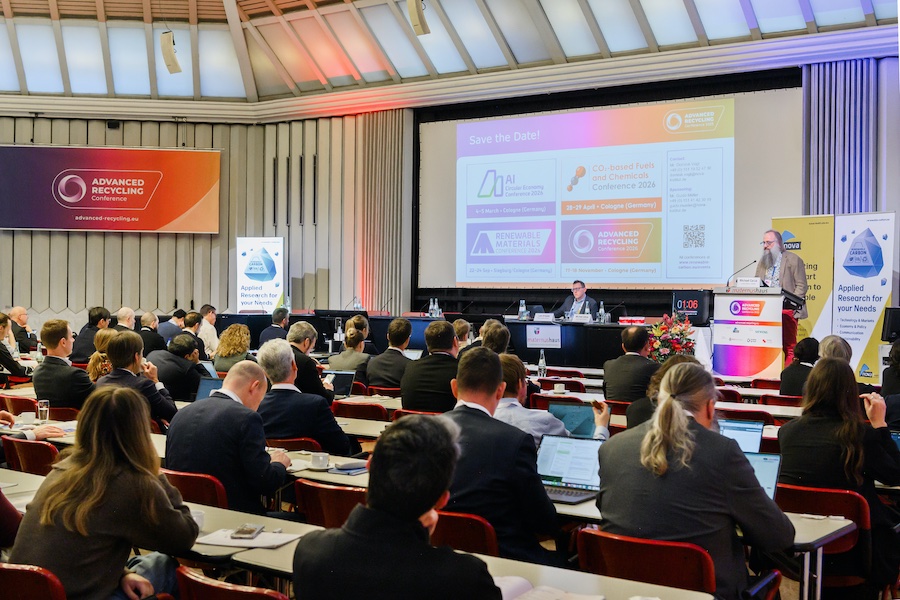
The Advanced Recycling Conference 2026 explores technologies, markets, financing and scale-up of innovative recycling solutions for waste streams including mixed plastic waste, textiles and PVC. Europe’s chemical and materials sector faces growing pressure to close carbon loops, strengthen raw-material safety and resilience and meet increasingly ambitious EU recycling targets. Against this backdrop, the Advanced Recycling Conference (ARC) will bring together industry leaders, technology providers, researchers, innovators and policy-makers on 17–18 November 2026 in Cologne, Germany.

#Research & Development

Reducing development times for technical textiles by accelerated thermo-oxidative aging in a high-pressure autoclave

Synthetic polymers used in technical textiles can be effectively protected against degradation caused by heat, oxygen, and water through the use of stabilizer systems. This enables service lives of several decades, extending to more than 50 years. As the use of durable technical textiles continues to grow, so does the demand for reliable methods to predict their service life within economically feasible testing periods. For the first time the German Institutes of Textile and Fiber Research Denkendorf (DITF) developed methods for robust service life prediction for textiles in an IGF research project.

#Research & Development

ADD-ITC 2026 highlights strong industry participation

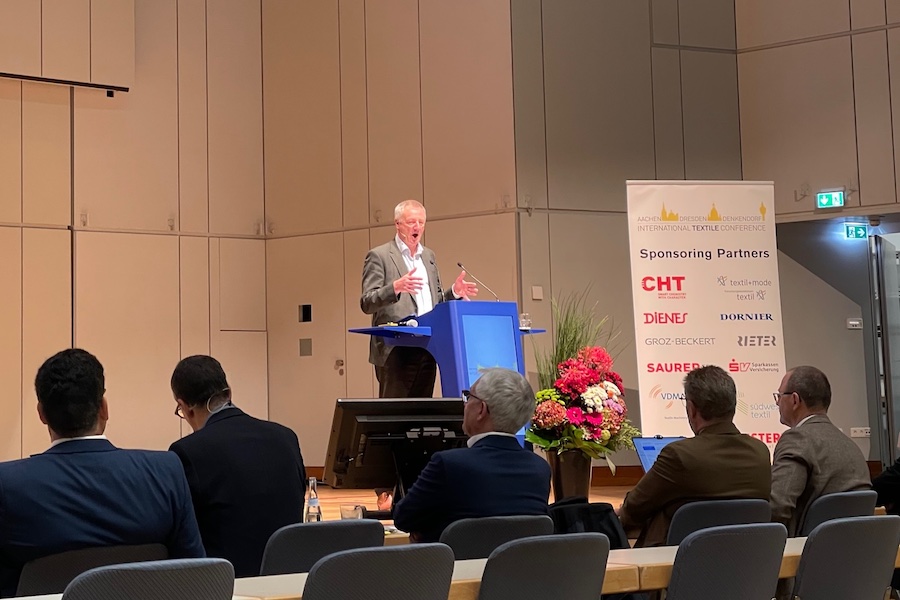
The Aachen-Dresden-Denkendorf International Textile Conference (ADD-ITC) 2026 will place a strong focus on the exchange between textile research and industry when it takes place on November 26–27, 2026, at the International Congress Center Dresden. According to the preliminary conference program, more than two-thirds of all presentations will be contributed by companies or jointly presented by industry and research institutions.

Latest News

#Knitting & Hosiery

KARL MAYER invites the Global Textile Industry to celebrate its 90th anniversary at its German Headquarters in 2027

KARL MAYER is turning its anniversary year 2027 into a milestone for the textile sector. To mark its 90th anniversary, the industry leader is inviting customers, partners, and experts from around the world to a unique event series in September aimed at pushing boundaries, unlocking new opportunities, and jointly setting the course for a new era in textiles – just as KARL MAYER has done throughout its history. The company’s headquarters in Obertshausen, near Frankfurt, is the place to be.

#Associations

ITMF names three winners of the Sustainability & Innovation Award 2026

Three projects from the UK, Korea and China have been selected as winners of the ITMF Sustainability & Innovation Award 2026. The projects address textile-to-textile recycling, chemical recycling for automotive textiles and a regenerative approach combining silk production with ecological restoration.

#Recycling / Circular Economy

nova-Institute launches groundbreaking Advanced Recycling Database for strategic market insight

The new Advanced Recycling Database reduces complexity by providing industry stakeholders with up-to-date expert-reviewed intelligence on companies, technologies, plants, capacities, locations, products and partnerships across the global advanced recycling landscape.

#Yarns

Durak Maxibalance thread supports users’ movement and balance comfort

Durak Tekstil, a leading brand in its industry, has developed Durak Maxibalance, a new product engineered with bio-ceramic and FAR IR technology. Ushering in a new era for sportswear, activewear, and medical textiles, this technology offers features designed to support balance and movement comfort by reflecting the energy absorbed from the body back into it.

TOP