[pageLogInLogOut]
CONNECTED BY NARROW FABRICS.

#Weaving

Getzner Textil steams ahead with energy savings

CASCADE by KARL MAYER leads to significant energy savings when used in the PROSIZE at Getzner Textil
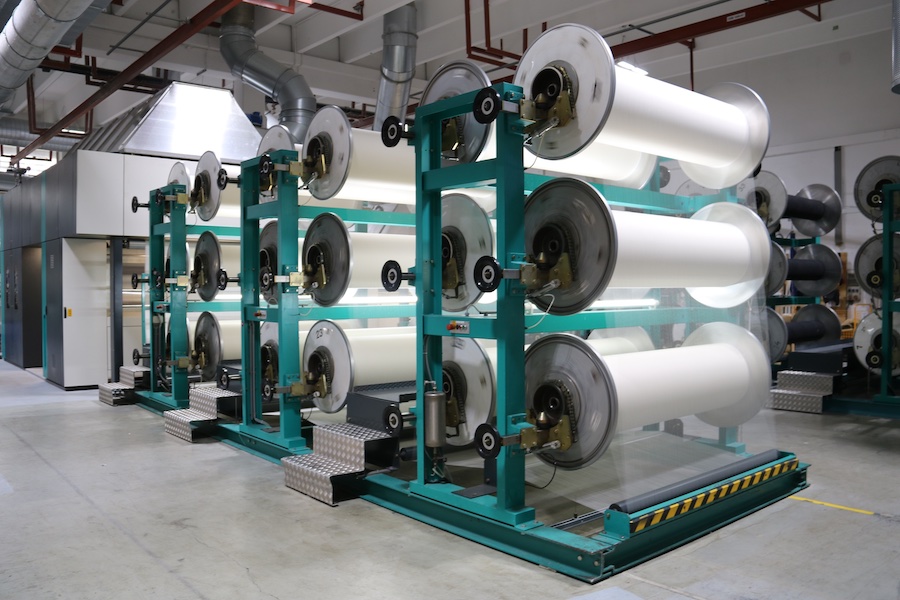
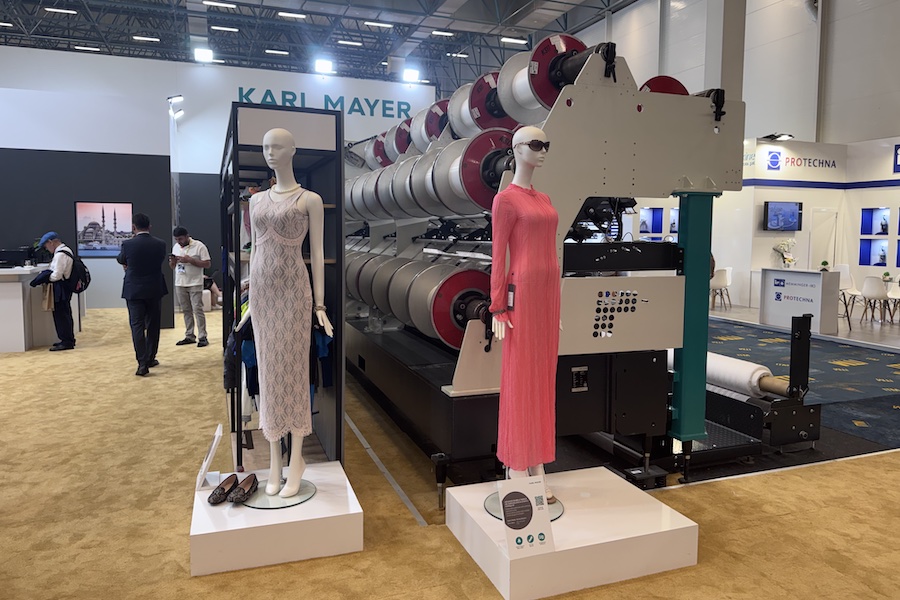
Prosize © 2025 KARLMAYER
Getzner Textil AG is always open to new ideas and committed to investment in innovative technological solutions. This has proven a highly successful approach for more than two hundred years now: founded in 1818 as a family business in Bludenz in the heart of Europe, the company is now one of the world’s leading manufacturers of fabrics for African fashion, shirts and blouses, corporate fashion, and technical textiles, with 1,550 employees, 710 weaving machines, seven locations, and an output of 73 million running meters per year.


It was only in the autumn of 2024 that Getzner installed a new PROSIZE staple fibre sizing machine by KARL MAYER in its warp preparation department. The sizing machine was delivered with the then newly launched CASCADE and raised expectations of greater sustainability and lower energy costs – and justifiably so, as the results of tests carried out during machine operation in August this year showed. The tests confirmed savings in steam consumption of up to 3.9% thanks to the steam and condensation system over a representative period of time. Peaks of up to 7% were measured at times.
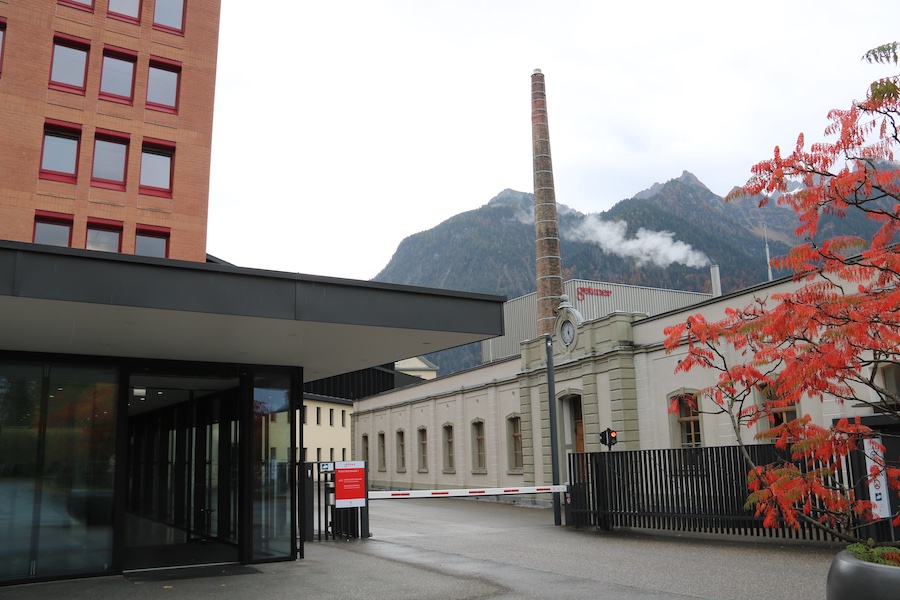
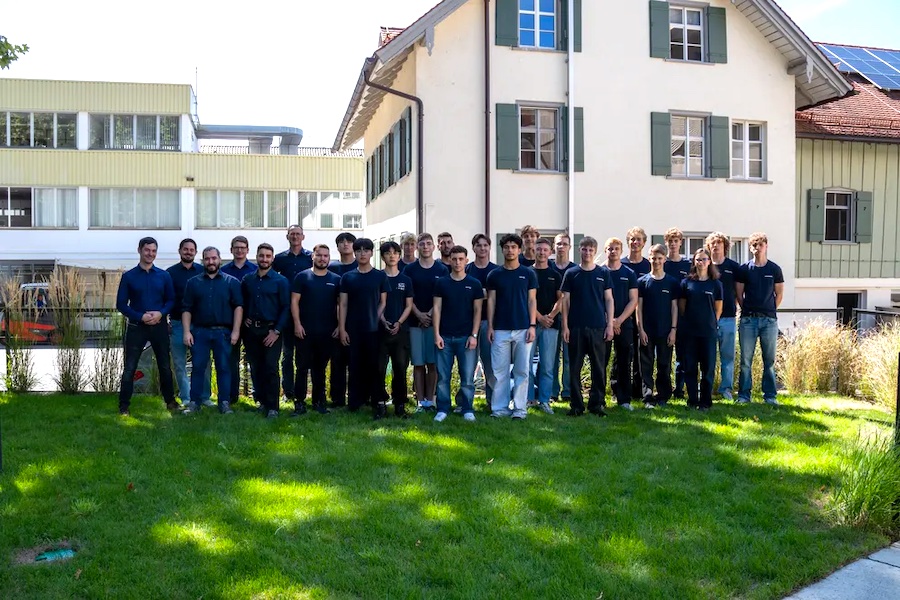
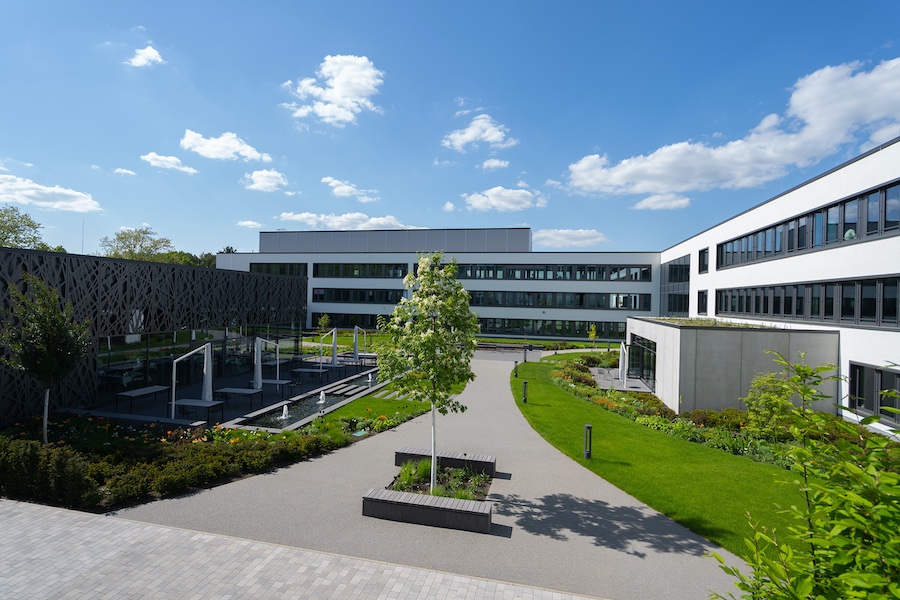
Getaner headquarter © 2025 KARLMAYER


Verifiable benefits

CASCADE recirculates part of the process steam produced during drying in cylinder dryers, enabling genuine, efficient energy recycling within the machine. Specific data on the recycling volumes achievable in practice was gathered in tests carried out at Getzner Textil in Bludenz. The tests looked at a drying line with ten cylinders during one shift and the production of seven weaving beams. The last four cylinders of the systems had been operating with a mixture of recycled flash steam from the first six cylinders and live steam. The respective supply quantities of recycled steam were measured. The results prove CASCADE’s effectiveness. At full machine load, 51 kg/h of the total 1,295 kg/h of steam required was obtained directly through the inline recycling of the CASCADE system.

As plant utilization declined, the potential savings in fresh steam decreased, but even at low-capacity utilization, reduction effects were evident. These are also influenced by the recipe, i.e., the process conditions. The following applies: the greater the temperature difference between the first and second cylinder sections, the greater CASCADE’s efficiency.

CASCADE thus opens up potential that can always be exploited without restrictions on the recipe. However, the magnitude of this potential can be influenced – unlike, for example, the eco mode in a car, which reduces performance and acceleration once activated.
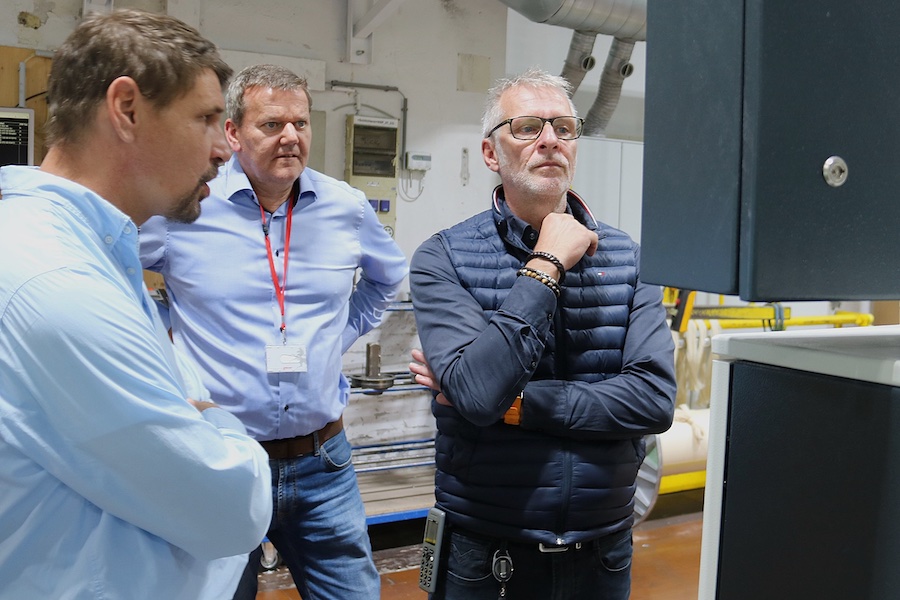
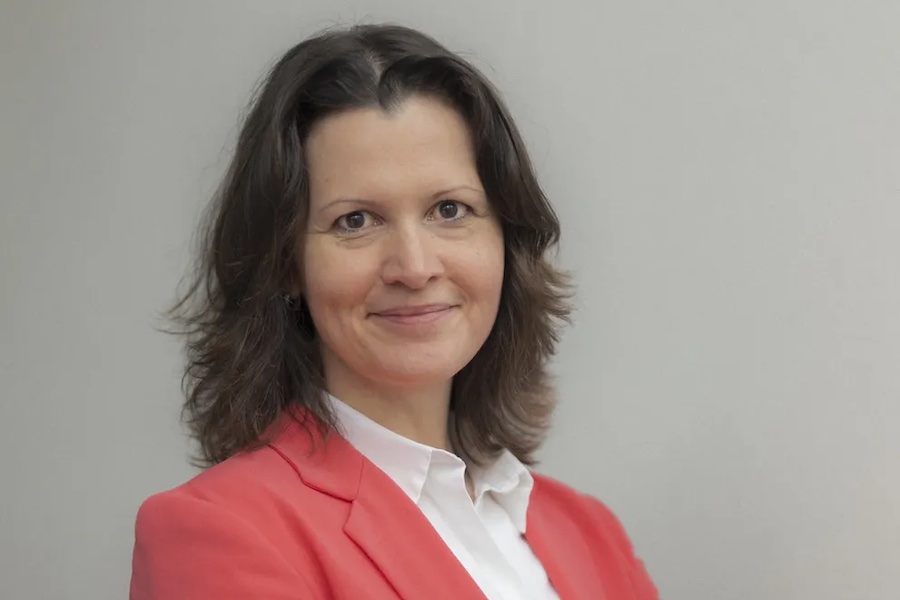
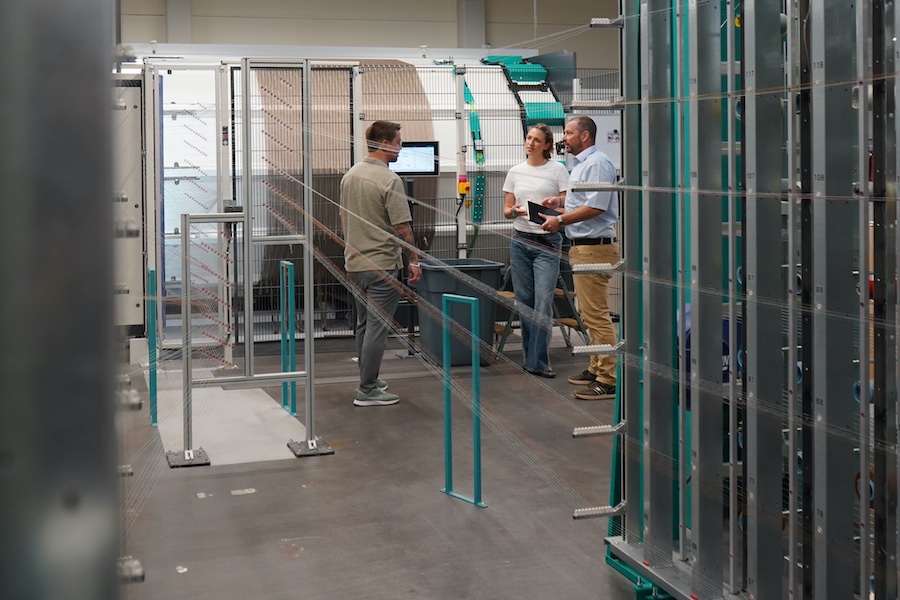
(f.l.t.r.) Thomas Rossi, Karl Heinz Vaassen and Werner Egger © 2025 KARLMAYER


Significant savings potential

The lower live steam consumption enables cost savings and a reduced carbon footprint. At full machine and production utilization – three-shift operation, 5,000 hours/year, 83% efficiency – and a steam price of €40/t, a cost reduction of around €8,500/year can be achieved under the representative practical conditions at Getzner Textil. In addition, in this specific example, it was possible to reduce the company’s environmental impact by 59 tons of CO2e/year.
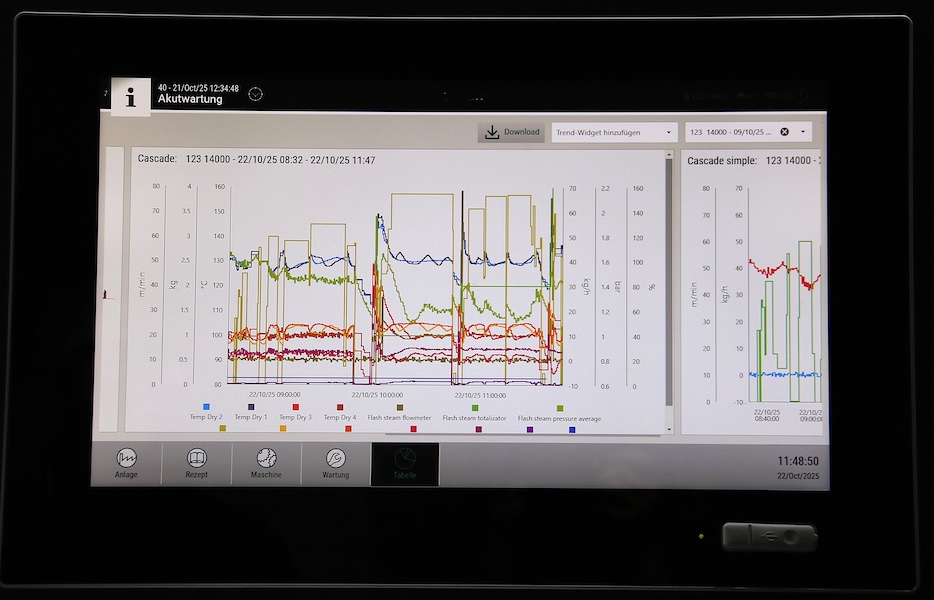
Display © 2025 KARLMAYER


Given the common practice of feeding condensate that is usually too hot for use in the boiler house back into the operating network, thereby losing thermal energy, every contribution from CASCADE pays off. For all customers who operate the feed water tank in the boiler house without pressure, any excess energy above a condensate temperature of 100°C is lost when it is fed back into the company’s own media network. The white steam clouds rising from the boiler house are a visible sign of this. With CASCADE, operators can minimize this loss of power without additional investments in machine peripherals.
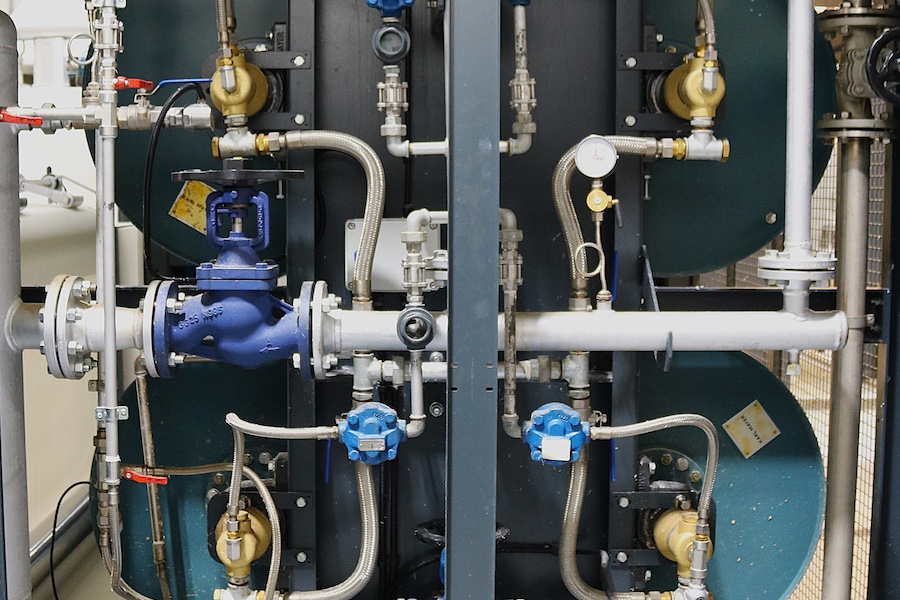
Steam System © 2025 KARLMAYER


More News from KARL MAYER Textilmaschinenfabrik GmbH

#Composites

KARL MAYER strengthens partnerships in the composites industry at JEC World 2026

KARL MAYER further strengthened its role as a reliable and competent partner to the composites industry at JEC World 2026. The global market leader in textile machinery manufacturing used the trade show to meet key customers, establish numerous new contacts, and engage in in-depth technical discussions.

#Knitting & Hosiery

Driving WARP KNIT Inspiration

KARL MAYER sees performance fabrics and next-level textile solutions in particular as potential growth drivers for its customers, as a motor for business development and as real game changers for the entire textile industry. Innovation does not happen by chance. It is the result of close exchange with customers & brands, textile expertise and competence in textile machine engineering. This is why KARL MAYER is investing in progress and collaborative development and opening its TEXTILE INNOVATION CEN-TER (TIC) – a place to be for the entire textile world.

#Knitting & Hosiery

KARL MAYER (China) celebrates its 30th anniversary

On February 6, KARL MAYER (China) celebrated the new year and its 30th anniversary. Employees and the management team at the Changzhou location, as well as representatives from management in Germany, Italy, and Hong Kong, were invited to the festivities. A special highlight was the visit by Lutz Wolf, CEO of KARL MAYER.

#Knitting & Hosiery

KARL MAYER at JEC: Multiaxial reinforced CFRP pultrusion profiles are picking up speed in the mobility sector

KARL MAYER Technical Textiles will be showcasing exciting new application potentials for multiaxial non-crimp fabrics in combination with the pultrusion process at the upcoming JEC in Hall 5, Booth C 46. The advancement of the tried-and-tested pultrusion process enables the cost-efficient production of complex CFRP multi-chamber profiles, which are used in the CETROVO high-speed metro. The world's first carbon-intensive lightweight rail vehicle of this type is designed for speeds of up to 140 km/h.

More News on Weaving

#Techtextil 2026

Groz-Beckert showcases cross-segment innovations for technical textiles in Frankfurt

From April 21 to 24, 2026, Groz-Beckert will present its latest innovations and solutions across the product areas of knitting, weaving, nonwovens and sewing at Techtextil 2026 in Frankfurt (Hall 12, Booth B90).

#Techtextil 2026

Crealet to showcase electronic warp feeding solutions at techtextil 2026

Crealet AG will present its latest developments in electronic warp yarn feeding at Techtextil 2026 in Frankfurt. The company will exhibit at the Swiss Pavilion (Hall 12.0, Booth B01), organised by Swiss Textile Machinery.

#Techtextil 2026

From preparation to 3D weaving: Stäubli’s solutions at Techtextil 2026

Stäubli, a global leader in high performance weaving technologies, is pleased to announce its participation at Techtextil 2026 in Frankfurt, Germany, the leading international trade fair for technical textiles and nonwovens. As technical textiles continue their rapid expansion across demanding markets such as defense, mobility, aerospace, construction, energy… Stäubli will showcase innovative solutions designed to empower mills to produce the next generation of advanced fabrics. Stäubli will exhibit its trend-setting technologies at the Swiss Pavilion Booth B01.6 in Hall 12.0.

#Weaving

Itema America acquires Palmetto Loom Reed, strengthening local manufacturing and service in the U.S.

Itema America, the U.S. subsidiary of Italy-based Itema Group, has acquired – through an Assets Purchase Agreement – Palmetto Loom Reed, a Greenville, South Carolina-based manufacturer of weaving reeds and one of the last remaining domestic producers of these precision components in the United States.

Latest News

#Raw Materials

New study shows low environmental impact by Cotton made in Africa Organic Cotton from Tanzania

Today, the Aid by Trade Foundation (AbTF) is announcing the results of a comprehensive life-cycle analysis (LCA) for cotton produced in Tanzania under the Cotton made in Africa Organic (CmiA Organic) standard. The study emphasises the small ecological footprint of CmiA Organic verified cotton. This can largely be traced back to the absence of synthetic pesticides, artificial fertilisers, and artificial irrigation. Consequently, CmiA Organic cotton can help the textile industry meet regulatory requirements as well as science-based targets. The results also show that the consequences of climate change threaten the livelihoods of these cotton farmers, even though the type of agriculture they practise barely contributes to climate change.

#Raw Materials

Better Cotton Initiative strengthens regenerative focus in standard update

The Better Cotton Initiative (BCI) has strengthened the regenerative focus of its field-level standard with the launch of a new version of its Principles & Criteria (P&C), which marks the next step in the organisation’s journey to becoming a regenerative standards system.

#Man-Made Fibers

Selenis and Kintra Fibers partner to scale 100% bio-based synthetic fiber technology

Selenis, a leading global specialty polyester manufacturer, today announced a strategic manufacturing partnership with materials science company Kintra Fibers to scale Kintra’s patented fiber-grade PBS resin - a 100% bio-based and biodegradable material designed for textile applications.

#Functional Fabrics

PERFORMANCE DAYS proves its relevance as the industry’s key meeting point

Held on March 18–19, 2026, PERFORMANCE DAYS once again confirmed its position as a leading international platform for functional textiles. A total of 3.366 trade visitors and around 560 exhibitors gathered in Munich, with the event already kicking off successfully on DAY 0, which received highly positive feedback for its interactive format. Despite challenging conditions caused by the public transport strike in Munich, the event saw strong attendance and a consistently high level of activity across both exhibition days.

TOP